Quick Take
- SEBI agreed in principle to settle all NSE cases for Rs 1,491.21 Cr ($155.83 Mn) on July 30, 2026.
- NSE pays Rs 714.74 Cr fresh cash, with Rs 776.47 Cr already deposited adjusted against the total amount.
- The deal ends the co-location and dark fibre overhang, clearing NSE’s biggest hurdle before its long-delayed IPO.
In This Article
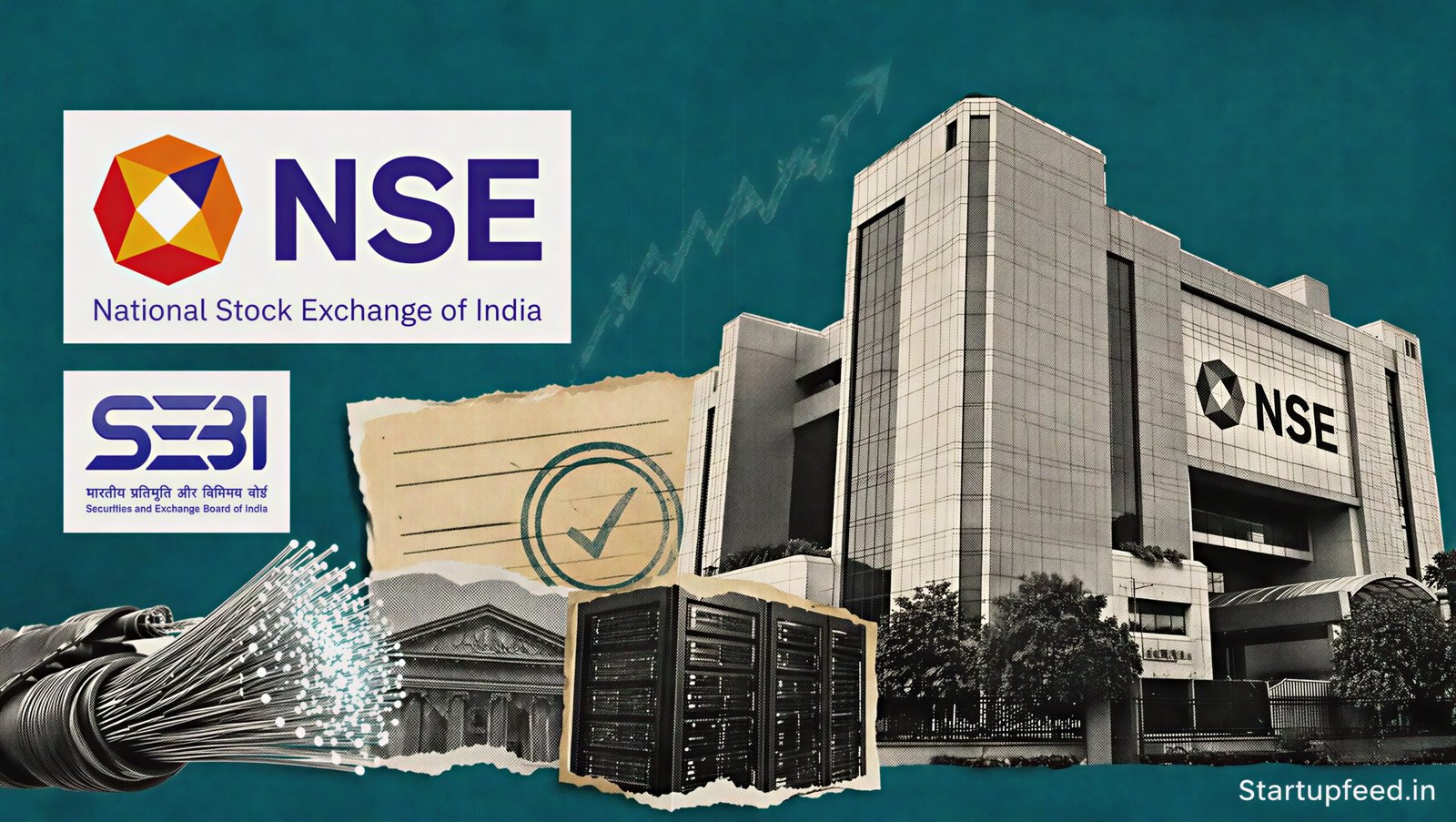
The NSE SEBI settlement is done in principle. On July 30, 2026, the Securities and Exchange Board of India (SEBI) agreed to close all pending cases against the National Stock Exchange (NSE) for Rs 1,491.21 Cr ($155.83 Mn), of which NSE will pay Rs 714.74 Cr in fresh cash, NSE said in an exchange filing.
The rest, Rs 776.47 Cr already lying with SEBI, will be adjusted against the total. The settlement covers the co-location case, which alleged that some brokers got preferential server access, and the separate dark fibre matter over network access, according to the NSE Investor Relations disclosure. It removes the last major legal cloud over the exchange.
StartupFeed Insight
The headline number reads big, but the real cash hit is small. NSE had already provided the full Rs 1,491.21 Cr in its FY26 books, so the fresh outflow of Rs 714.74 Cr barely dents a business that made Rs 3,120 Cr in net profit in a single quarter. That is the tell: this was never about money, it was about clearing the one item blocking the listing. Bankers, LIC, and Canada Pension Plan (both long-time backers seeking an exit) should watch the SEBI order closely. Expect NSE to receive its IPO no-objection certificate and file its draft prospectus before December 2026. By Harshvardhan Jain.
NSE SEBI Settlement: The Numbers
The NSE SEBI settlement totals Rs 1,491.21 Cr, the largest ever agreed with the Indian market regulator. NSE revised its earlier offer of Rs 1,388 Cr upward inside its IPO prospectus, splitting the sum across the two cases.
| Metric | Detail | Notes |
|---|---|---|
| Total settlement | Rs 1,491.21 Cr ($155.83 Mn) | Largest ever with SEBI |
| Fresh cash outflow | Rs 714.74 Cr | Actual new payment |
| Already deposited | Rs 776.47 Cr | Adjusted against total |
| Co-location portion | Rs 1,223.6 Cr | Per IPO prospectus |
| Dark fibre portion | Rs 267.7 Cr | Per IPO prospectus |
| SEBI approval date | July 30, 2026 | In-principle, via email |
The most striking part is the accounting. NSE booked the entire liability in the year ended March 31, 2026, so the settlement lands with no fresh shock to its profit and loss.
About NSE
The National Stock Exchange (NSE), founded in 1992 and headquartered in Mumbai, is India’s largest stock exchange and the world’s most active derivatives exchange by contracts traded. Led by CEO Ashish Kumar Chauhan, it runs listings, trading, clearing, indices, and market data services. Its private valuation touched about $50 Bn in early 2025, backed by investors including Life Insurance Corporation and Canada Pension Plan Investment Board.


What Does This Mean for the NSE IPO?
For the NSE IPO, this settlement is the green light the market has waited years for. SEBI Chairman Tuhin Kanta Pandey had signalled the deal was close, telling reporters earlier in 2026 that the regulator agreed with the settlement in principle.
“It (the settlement) is under the process of our different committees. But in principle, we agree with the settlement,” Tuhin Kanta Pandey, SEBI Chairman, said.
Once SEBI issues the formal settlement order, NSE will withdraw its pending cases before the Supreme Court. The exchange has tried to list since 2016, while its rival BSE Ltd went public back in 2017. A no-objection certificate from SEBI is now the final gate before the draft filing.
What Was the NSE Co-Location Case?
The co-location case involved allegations that certain brokers received preferential access to NSE’s trading systems between 2015 and 2016. Co-location lets trading firms place their servers physically close to the exchange’s systems for faster order execution, and regulators found that access was not equitable.
SEBI first fined NSE in 2019 for failing to give equal access to all trading members. The Securities Appellate Tribunal (SAT) later imposed a Rs 100 Cr penalty for due diligence lapses in 2023, while the Supreme Court directed SEBI to refund about Rs 300 Cr. The separate dark fibre matter concerned alleged preferential network links for select firms. Both are now folded into this single NSE SEBI settlement, ending nearly a decade of litigation.
How Does NSE Compare With BSE?
NSE dwarfs listed rival BSE Ltd on scale, especially in derivatives, where it holds the dominant share of India’s contract volumes. The contrast below shows why investor appetite for the NSE IPO is so high.
| Exchange | Listing Status | Position |
|---|---|---|
| NSE | IPO pending since 2016 | Largest bourse, top in derivatives |
| BSE Ltd | Listed in 2017 | Older exchange, smaller volumes |
| MSEI | Unlisted | Small challenger |
What sets NSE apart is its grip on the derivatives segment, which drives the bulk of its revenue and makes its listing one of the most anticipated in Indian market history.
What’s Next
The next milestone is SEBI’s formal settlement order, followed by the no-objection certificate for the IPO. NSE reported a 7% year-on-year rise in net profit to Rs 3,120 Cr for the June 2026 quarter, keeping its financials strong ahead of the filing. With the last hurdle cleared, could NSE finally list before the end of 2026?


Frequently Asked Questions
Disclaimer: This article is for informational purposes only and does not constitute investment advice. StartupFeed and its authors are not SEBI-registered investment advisors. The analysis above is based on publicly available information and should not be the sole basis for any investment decision. Please consult a SEBI-registered financial advisor before making investment decisions.
Have a tip? Write to us at editorial@startupfeed.in.
Liked this story? Follow StartupFeed on Google so our reporting reaches you first.