Quick Take
- Four robotics ventures now clean Indian rivers, lakes and sewers using AI systems.
- CPCB counts 296 polluted river stretches on 271 rivers across 32 states.
- Solinas works in 30 plus cities; Clearbot pulled 15 tonnes from Umiam Lake.
In This Article
Four robotics ventures now run AI river cleaning operations across Indian water bodies, deploying autonomous boats and pipeline crawlers that replace manual labour. Solinas Integrity, Unscene Innovation, Clearbot and Fluid Robotics form the active core of this sector as of July 2026.
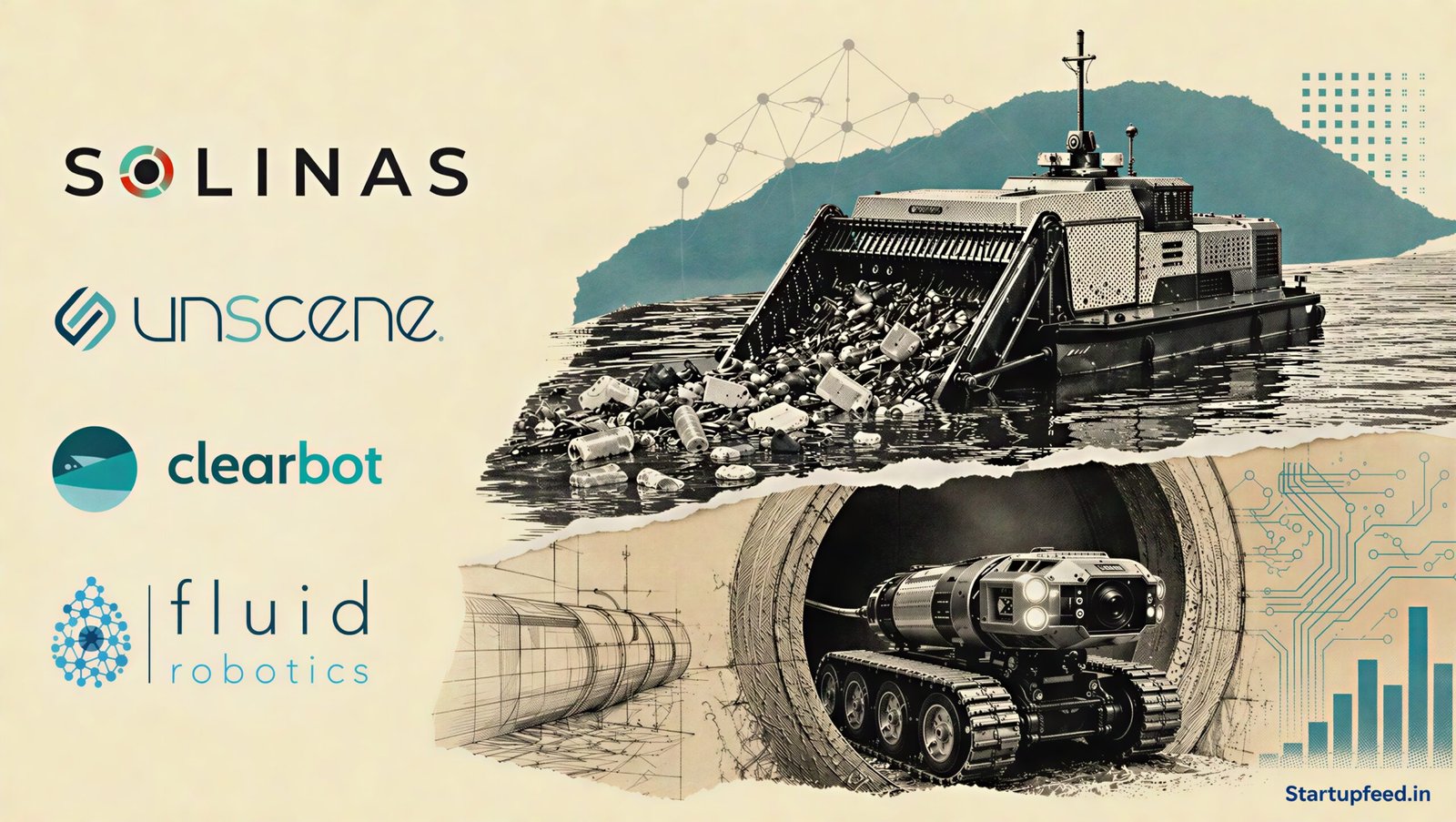
The four operate on different fronts. Solinas and Fluid Robotics work underground, inside sewers and water pipelines. Unscene and Clearbot work on the surface, skimming plastic waste off rivers and lakes. Together they cover the full path that urban waste takes before it reaches open water, according to company disclosures and incubator records.
StartupFeed Insight
The revealing number here is not tonnage collected, it is customer type. Every one of these four sells to municipalities, not consumers, which means their growth curve tracks government sanitation budgets rather than retail demand. That makes Namami Gange Mission-II and its Rs 3,100 Cr allocation for FY 2026-27 the single largest variable in their revenue. Municipal procurement officers and climate fund managers should watch tender volumes, not press releases. StartupFeed expects at least one of these four to close an institutional round above $5 Mn before March 2027, most likely Solinas, given its existing SBICAP Ventures and Rainmatter backing. By Harshvardhan Jain.
Which startups lead AI river cleaning in India?
Four companies dominate AI river cleaning work in India today, split evenly between surface robots and underground pipeline systems. Each targets a different stage of the waste and wastewater path.
| Company | Founded | Founders | Base |
|---|---|---|---|
| Solinas Integrity | 2018 | Divanshu Kumar, Moinak Banerjee | Chennai (IIT Madras Research Park) |
| Unscene Innovation | 2022 | Cephas Joseph, Dr Glen Bennett Hermon and team | Dehradun |
| Clearbot | 2019 | Sidhant Gupta, Utkarsh Goel | Hong Kong, with India operations |
| Fluid Robotics | 2016 | Asim Bhalerao, Nidhi Jain | Pune |
Clearbot is the outlier on geography. The company is headquartered in Hong Kong and runs India as a growth market, per its NVIDIA Inception profile. The other three are India-founded and India-focused.
About Solinas Integrity
Solinas Integrity builds robotic and AI systems for water and sanitation infrastructure. Founded in 2018 at IIT Madras by Divanshu Kumar and Moinak Banerjee, the Chennai company sells three products: Endobot for pipeline inspection, HomoSEP for septic tank cleaning and Swasth AI for asset mapping. It operates across 30 plus cities in 15 states and is a 170 plus person team backed by Neev II Fund and Rainmatter Capital.



Why does India need robotic water cleaning?
India carries 296 polluted river stretches on 271 rivers across 32 states and Union Territories, according to the Central Pollution Control Board (CPCB) assessment. A stretch qualifies as polluted when Biochemical Oxygen Demand (BOD, a measure of organic waste load) crosses 3 mg per litre. Maharashtra alone accounts for 54 stretches, the highest of any state (CPCB).
We believe that humanity’s relationship with the ocean is sort of broken, said Sidhant Gupta, co-founder of Clearbot.
The count has fallen from 351 stretches in 2018, a drop of 15.7% over the period (CPCB). That improvement came mostly from sewage treatment plants, not robotics. The four ventures profiled here target the gap that concrete infrastructure leaves behind: waste already floating in water, and pipelines nobody has mapped.
How does the technology actually work?
Every AI river cleaning system in this group runs on computer vision, cameras that identify waste and feed a navigation model. Clearbot boats measure 10 to 16 feet and carry two cameras, one for steering and one to log each item collected, per NVIDIA’s technical writeup on the deployment. Its NVIDIA Jetson Xavier NX processor supports eight hours of collection per charge.
Unscene Innovation runs a different design. Its flagship vessel, AMIT, operates crewless in both still and flowing water, identifies floating plastic, collects it and returns to base. The Dehradun company is incubated at iHub DivyaSampark, IIT Roorkee, and its boat handles debris loads up to 200 kg.
Underground, the approach changes. Solinas sends miniature crawlers into pipes below 100 mm, including a 90 mm water robot and a 120 mm sewer robot. Fluid Robotics inspects pipes from six inches wide up to 5×5 metre tunnels and has covered over 1.5 million feet of sewers, per company figures published on its corporate site.
How do these four ventures compare?
| Company | Where it works | Named scale metric |
|---|---|---|
| Solinas Integrity | Septic tanks, manholes, pipelines | 30 plus cities, 15 states |
| Clearbot | Lakes, harbours, rivers | 15 tonnes collected at Umiam Lake |
| Fluid Robotics | Sewers, stormwater drains | 1.5 Mn feet of sewers inspected |
| Unscene Innovation | Inland rivers and lakes | 200 kg debris capacity per vessel |
Solinas holds the widest municipal footprint of the four, and it is the only one with disclosed institutional capital from a public sector fund. Neev II Fund, managed by SBICAP Ventures, took a minority stake in 2024, with Rainmatter Capital participating. Fluid Robotics sells on a Robot-as-a-Service model, charging by project scope or annual subscription rather than hardware sale, which separates its unit economics from the rest.
What’s Next
The near-term test is procurement scale. Namami Gange Mission-II carries a Rs 22,500 Cr outlay through March 2026, with Rs 3,100 Cr allocated to the National Ganga Plan for FY 2026-27, per Union Budget documents. Whether robotics wins a meaningful share of that spend, against conventional sewage treatment contracts, will decide if this sector reaches commercial depth by 2028. Which of these four do you expect municipalities to back first?



Frequently Asked Questions
Have a tip? Write to us at editorial@startupfeed.in.
Liked this story? Follow StartupFeed on Google so our reporting reaches you first.