

Quick Take
- India now has 9,000-plus open physical AI roles across robots, autonomous systems and industrial AI, per Xpheno.
- Global demand for these skills has climbed to 80,000 roles, while India’s relevant talent pool sits near 370,000.
- Hiring is shifting from building AI models to deploying them, and companies struggle to onboard multi-skill talent fast.
In This Article
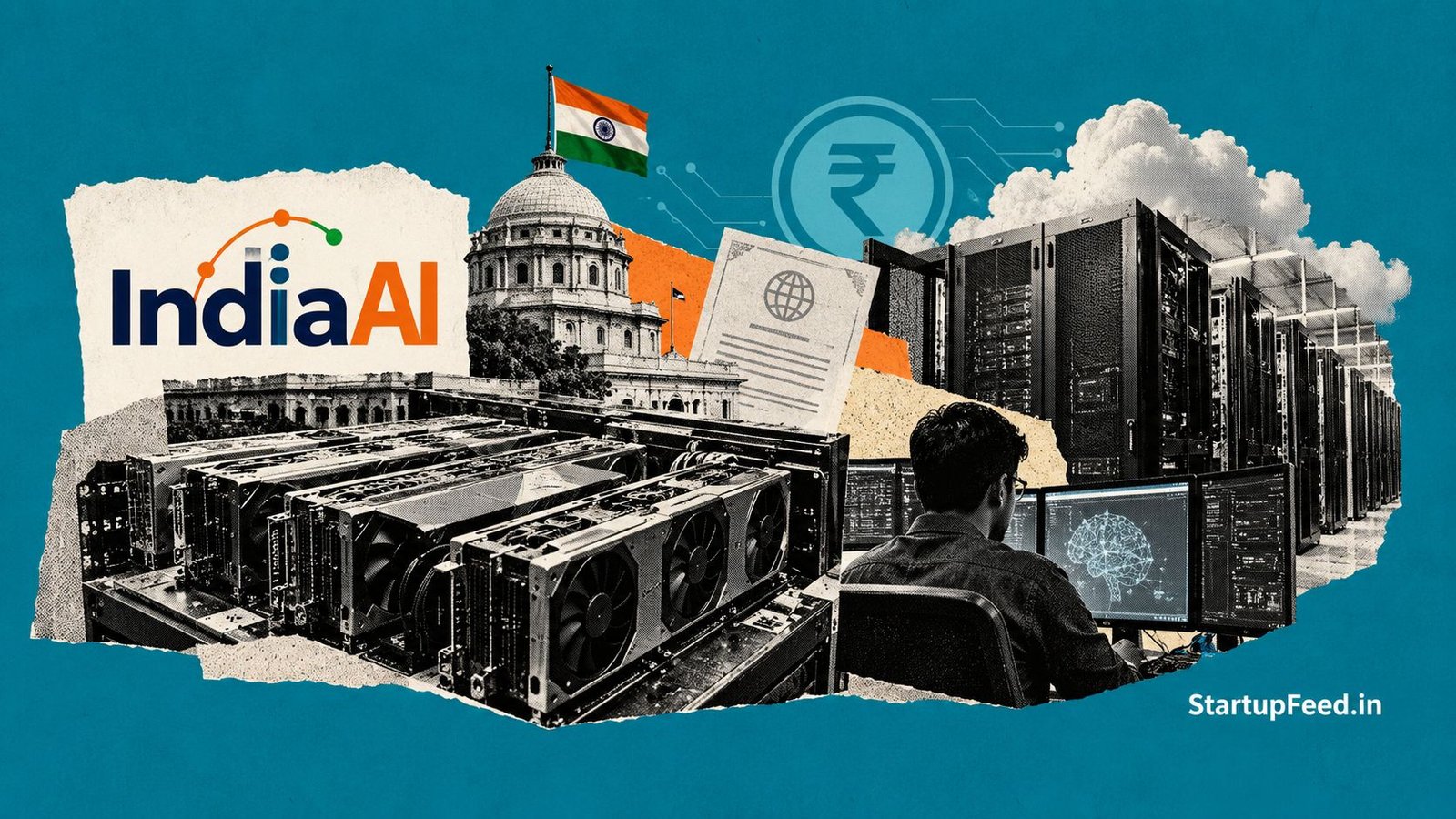
Physical AI Jobs India have crossed 9,000 open roles tied to robots, autonomous systems and industrial artificial intelligence (AI), staffing firm Xpheno said in July 2026. Global demand for the same skills has risen to 80,000 roles.
The count points to a new hiring shift. Companies are moving from building AI models to deploying them in the real world, on factory floors, in warehouses and inside vehicles. India holds a 370,000-strong talent pool with skills relevant to physical AI, spanning robotics, machine learning, embedded systems, hardware and the Internet of Things (IoT). The catch is finding people who can combine several of these at once.
StartupFeed Insight
The 370,000 pool number hides the real problem: breadth, not headcount. A robotics engineer who also handles machine learning, edge devices and multi-stack integration is the profile employers fight over, and that overlap is thin in India today. Founders in manufacturing, quick commerce and defence automation should start building these hybrid teams now, because deployment-stage AI cannot run on model-only skills. StartupFeed expects physical AI openings in India to cross 15,000 by mid-2027 as advanced driver-assistance, telematics and edge projects scale. The firms that train cross-skill talent in-house this year will hire cheaper and ship faster. By Avinash.
Physical AI Jobs India: The Numbers
Physical AI Jobs India now number more than 9,000 open roles, according to Xpheno data cited in July 2026. The figure covers positions in robotics, autonomous systems and industrial AI, the branches where software meets machines. The table below sets out the key metrics behind the story.
| Metric | Detail | Notes |
|---|---|---|
| Open roles in India | 9,000-plus | Robots, autonomous systems, industrial AI (Xpheno) |
| Global demand | 80,000 roles | Rising as deployment scales worldwide |
| India talent pool | 370,000 | Robotics, ML, embedded systems, hardware, IoT |
| Computer-vision hiring | 26 to 32 percent | Share of roles focused on vision (Xpheno) |
| IoT and digital-twin hiring | 18 to 24 percent | Share of roles focused on IoT and twin operations |
| Reported by | Xpheno | Specialist staffing firm, India |
The sharpest signal is where the demand sits. Between 26 and 32 percent of hiring is centred on computer vision, while 18 to 24 percent covers IoT and digital-twin operations, Xpheno reported.
About Xpheno
Xpheno is an Indian specialist staffing firm founded in 2017, headquartered in Bengaluru. It places talent across technology, engineering and enterprise functions and publishes regular hiring outlooks on India’s tech job market. Its data on active tech openings and AI skills is widely tracked. Kamal Karanth is its co-founder and a frequent voice on India’s technology hiring trends.

What is physical AI and why is hiring rising?
Physical AI is artificial intelligence that acts in the real world through robots, sensors, machines and edge devices, rather than staying inside software. Hiring is rising because firms have moved past the model-building phase and now want to run these systems in production. Francis Padmanabhan, chief executive at Xpheno, framed the difficulty plainly.
“There is talent, but spotting and onboarding people with multi-function and multi-stack experience is the hard part,” said Francis Padmanabhan, chief executive, Xpheno.
Manufacturing leads the trend, as plants add vision systems, sensors and autonomous equipment. Specialists and ideal-fit experts are heavily ring-fenced by their current employers, which makes them hard to tap. That scarcity, not a lack of raw numbers, is pushing the open-role count higher.
Why is India short on physical AI talent?
India is short on physical AI talent because the roles demand a rare mix of skills that few professionals hold together. A single job may need robotics, machine learning, embedded systems, hardware knowledge and IoT, all at once. The 370,000 pool looks large, yet the slice with true cross-domain depth is small.
This mirrors a wider pattern. Xpheno has noted that out of an estimated 18,000 to 20,000 Indian professionals with AI exposure, only about 4,000 to 5,000 qualify as true specialists, with the rest trained to apply tools rather than build systems. Physical AI raises the bar further, because it adds hardware and real-world deployment on top of software skill. The result is a market where employers compete hard for a thin layer of ready talent.
How does India compare on global AI hiring?
India’s 9,000 open physical AI roles sit inside a global pool of 80,000, so the country holds a meaningful but minority share of worldwide demand. The talent crunch is not unique to India. A global staffing survey found that 72 percent of employers reported difficulty finding the skills they need in 2026, a figure that has stayed above 70 percent for several years.
| Market signal | Figure |
|---|---|
| India open physical AI roles | 9,000-plus |
| Global physical AI demand | 80,000 roles |
| Employers reporting talent shortage (global) | 72 percent |
What sets India apart is the size of its base pool and its strength in AI services and implementation. The gap is depth in core, cross-skill engineering, exactly the profile physical AI needs. Closing it is the country’s next big hiring test.
What’s Next
The next phase will be led by manufacturing, quick commerce and mobility, where autonomous systems move from pilots to daily use. Expect a visible push on advanced driver-assistance, telematics and edge AI roles through 2027, alongside more in-house cross-skill training. Watch whether India can grow specialists fast enough to fill the 80,000 global gap. Will your team build these hybrid skills before rivals do?


Frequently Asked Questions
Written by Avinash. Have a tip? Write to us at editorial@startupfeed.in.
Liked this story? Follow StartupFeed on Google so our reporting reaches you first.