

Quick Take
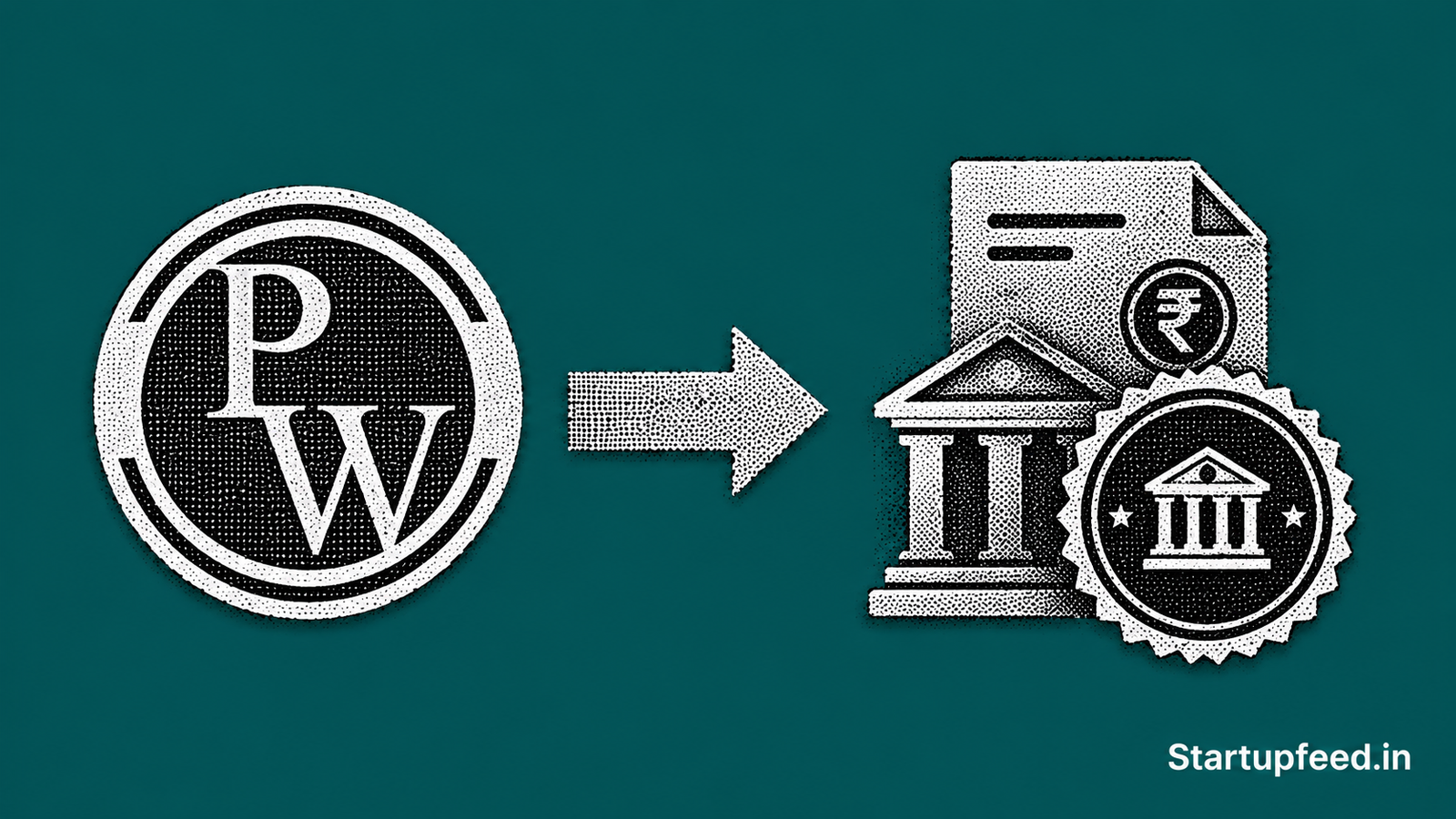
- PhysicsWallah FinZ Finance ends direct student lending, with PW opting for regulated NBFC partners instead.
- PW reverses course weeks after committing Rs 120 Cr to FinZ Finance amid sharp stakeholder pushback.
- Shares gained nearly 10% after the news. Q4 FY26 revenue rose 51% year-on-year to Rs 919 Cr ($109 Mn).
PhysicsWallah FinZ Finance will end direct student lending, with edtech company PhysicsWallah (PW) switching to regulated NBFC (non-banking financial company) partnerships for student financing. The company announced the change on June 4, 2026, through an official press release.
The reversal comes weeks after PW committed Rs 120 Cr (approximately $14.3 Mn) to FinZ Finance to scale its direct-lending book. That announcement drew sharp feedback from stakeholders who felt lending fell outside PW’s core strength in education. The company has moved swiftly to course-correct.
StartupFeed Insight
This reversal signals post-IPO governance discipline from PW. Listed companies face shareholder scrutiny on capital allocation that private firms do not. PW’s founders still hold over 70% of the company, but institutional investors from the November 2025 IPO are watching every move. The real risk is FinZ Finance’s RBI licence. A licence with no active lending book may not survive the next renewal cycle. If PW does not resume some form of direct lending within 12 months, regulators may flag FinZ as dormant. Watch for a board resolution on FinZ Finance’s future before March 2027. By StartupFeed Desk.
What Changed in PhysicsWallah FinZ Finance’s Lending Model?
PW had invested in PhysicsWallah FinZ Finance after the subsidiary received its RBI NBFC licence in September 2025. FinZ began lending operations in March 2026. A Rs 120 Cr capital infusion was then approved to grow the loan book further. That plan is now shelved.
Under the revised model, PW will act as a technology platform that matches students with regulated NBFC lenders. Student selection will be based on their learning progress and academic outcomes on the PW platform. PW says this approach will improve affordability and scalability while cutting credit-related risk from its own balance sheet.
| Metric | Detail | Notes |
|---|---|---|
| Action announced | Ends direct student lending via FinZ Finance | Announced June 4, 2026 |
| Trigger | Stakeholder feedback after Rs 120 Cr commitment | Original Rs 120 Cr plan approved May 27, 2026 |
| New model | Ties up with multiple regulated third-party NBFCs | Multiple lending partners confirmed |
| FinZ Finance status | Future direction undecided | Subject to board and regulatory approval |
| Q4 FY26 revenue | Rs 919 Cr, +51% YoY (year-on-year) | Quarter ended March 2026 |
| Share price reaction | +10% on the day of announcement | Listed on NSE and BSE since November 2025 |
The market’s reaction tells its own story. Shares rising 10% on news of a lending rollback suggests investors were not comfortable with PW’s NBFC ambitions from the start.


About PhysicsWallah
PhysicsWallah is an edtech company headquartered in Noida, Uttar Pradesh. Founded in 2020 by Alakh Pandey and Prateek Maheshwari, it started as a YouTube channel for JEE (Joint Entrance Examination) and NEET (National Eligibility cum Entrance Test) exam preparation. The company listed on NSE and BSE in November 2025, with a valuation of roughly Rs 31,500 Cr (approximately $3.7 Bn), making it India’s first pure-play edtech IPO. Its NBFC arm, PhysicsWallah FinZ Finance, holds an RBI licence obtained in September 2025. Key investors include WestBridge Capital, Hornbill Capital, and GSV Ventures.
Why Did PhysicsWallah Pull Back from Direct Student Lending?
Co-founder Prateek Maheshwari cited stakeholder and partner feedback as the reason. He said PW’s strengths are in building learning communities and running its education business. Regulated NBFCs, by contrast, have established underwriting capabilities and credit risk systems that PW cannot replicate quickly.
Direct lending through PhysicsWallah FinZ Finance would have put credit risk squarely on PW’s own balance sheet. NPA (non-performing asset) provisions, RBI (Reserve Bank of India) compliance costs, and collection infrastructure would all have become PW’s responsibility. The partner-led model avoids all of this.
PW had already built a solid two-year track record via NBFC partnerships before FinZ Finance entered the picture. The company disbursed Rs 200 Cr (approximately $23.8 Mn) in education loans to over 80,000 students. NPAs stayed below 1%. Loans were short-duration, mostly under one year, with 70 to 75% going to students already enrolled on the platform.
“Our strengths lie in building communities and operating our education business, while lending is better handled by regulated financial institutions with established underwriting capabilities.”
How Does Indian Edtech Handle Student Financing in 2026?
India’s edtech sector has a complicated history with student loans. BYJU’s, once India’s most valuable startup, collapsed partly because its loan-selling model created serious problems. Sales teams pushed expensive courses funded by loans without making repayment risks clear to students. That triggered regulatory action, consumer complaints, and eventually insolvency.
PW’s decision to keep credit risk with NBFC partners is a deliberate contrast to the BYJU’s model. Here is how India’s major edtech platforms currently approach student financing:
| Company | Lending Approach | NBFC Arm | Current Status |
|---|---|---|---|
| PhysicsWallah | NBFC partnerships only | FinZ Finance (future undecided) | Reversed direct lending June 2026 |
| BYJU’s | Aggressive third-party loan selling | None | Wound down post-insolvency |
| Unacademy | No active lending programme | None | Focused on cost reduction |
| Vedantu | No lending | None | Significantly scaled down |
PW remains the only major Indian edtech unicorn testing student financing at scale in 2026. PhysicsWallah FinZ Finance’s switch to regulated NBFC partners puts credit governance outside PW’s own operations, a structurally sounder model than what BYJU’s attempted.

What Is Next for PhysicsWallah?
The key question is the fate of FinZ Finance itself. PW has confirmed that the subsidiary’s direction is undecided and will require board and regulatory approval. One option is pivoting FinZ into a technology services provider for PW’s NBFC lending partners, processing applications and academic data without holding loans. Another is surrendering the RBI licence entirely if no active lending is planned.
A board decision on FinZ Finance is expected before the end of FY27. Will PW eventually return to direct lending once its student base and risk infrastructure scale further?
Frequently Asked Questions
Why did PhysicsWallah FinZ Finance stop direct student lending?
PhysicsWallah FinZ Finance is stepping back from direct lending after feedback from partners and stakeholders. Co-founder Prateek Maheshwari said PW’s core strength is in education, not credit underwriting. PW will now connect students to regulated NBFC lenders instead. This reduces PW’s balance sheet risk and aligns with its edtech mission.
What happens to PhysicsWallah FinZ Finance’s RBI NBFC licence now?
FinZ Finance still holds its RBI NBFC licence, obtained in September 2025. PW has not surrendered it. The subsidiary’s future is subject to board approval and regulatory review. FinZ Finance could shift into a technology services role, supporting PW’s NBFC lending partners without holding loans on its own books.
How much did PhysicsWallah invest in FinZ Finance before reversing course?
PW committed Rs 120 Cr (approximately $14.3 Mn) to FinZ Finance for working capital and expansion. That plan was approved in late May 2026. PW reversed the direct-lending strategy weeks later after receiving criticism from stakeholders who felt direct lending was outside PW’s core competence in education technology.
Disclaimer: PhysicsWallah (PW) is a company listed on NSE and BSE. This article is for informational purposes only and does not constitute investment advice. Investors should consult a SEBI (Securities and Exchange Board of India)-registered investment advisor before making any financial decisions. Past performance does not guarantee future results.