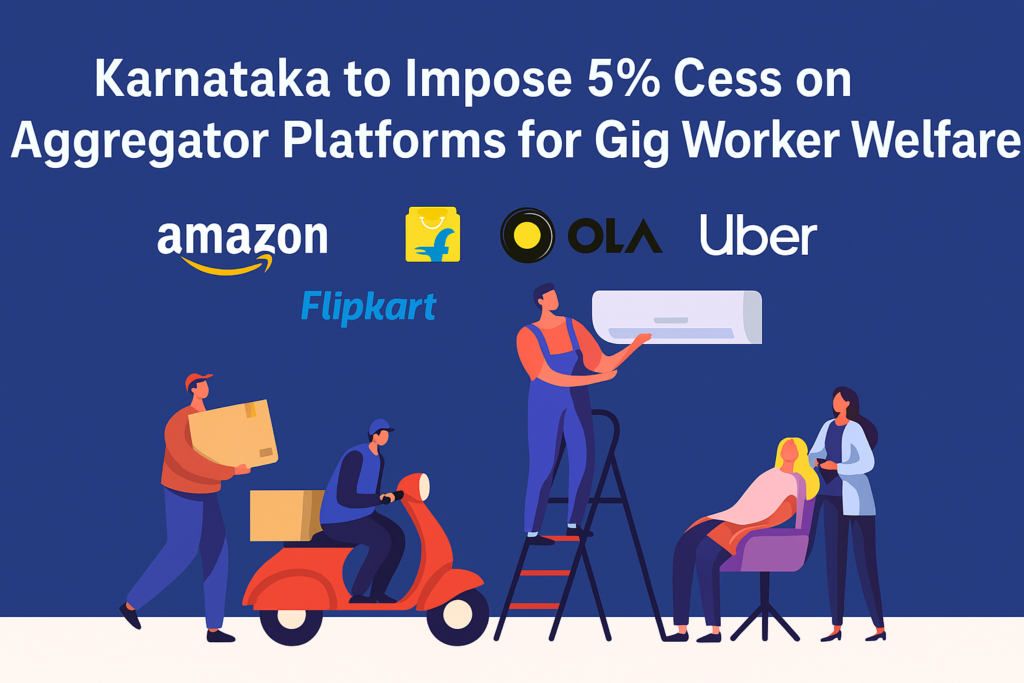

The Karnataka government is set to introduce a 5% cess on major aggregator platforms such as Amazon, Flipkart, Ola, and Uber to support a welfare fund dedicated to gig workers across the state.
The move was announced by the Chief Minister’s Office (CMO) via a post on X, following a meeting between Chief Minister Siddaramaiah and Congress leader Rahul Gandhi. The meeting also included senior ministers and gig worker representatives.
A Welfare Board for Gig Workers
The cess will help fund a new state-level welfare board. This board will focus on:
Health coverage
Social security benefits
Income protection during emergencies
The government will match any additional funds needed beyond what’s collected through the cess.
Key Developments at a Glance
5% cess will be collected from platform aggregators
Funds will be directed to a dedicated welfare board
The state will cover the remaining cost of the schemes
A comprehensive bill covering gig workers’ welfare will be presented to the state cabinet
The announcement followed a meeting in New Delhi between Siddaramaiah, Rahul Gandhi, and gig economy leaders
ALSO READ: From Swiggy to Zepto: FSSAI Handles 21K Food Delivery Complaints From Five Years

Who Attended the Meeting?
The meeting was attended by:
CM Siddaramaiah
Rahul Gandhi
Labour Minister Santosh Lad
IT & BT Minister Priyank Kharge
Minister MB Patil
Gig worker representatives Rakshitha Dev, Sheikh Salahuddin, and Nikhil Dev
A National-Level Push for Gig Workers’ Rights
This decision comes just days after the union government hinted at a 2% mandatory contribution from aggregators towards gig workers’ pensions. This is part of a larger effort to bring structured social protection to India’s growing gig economy.
During the 2025–26 Union Budget, Finance Minister Nirmala Sitharaman announced plans for a comprehensive social security scheme that would cover one crore gig workers, including access to health insurance.
Where Does India Stand on Gig Worker Rights?
Gig workers have often raised concerns about:
Low pay
Poor working conditions
Lack of job security
No health or retirement benefits
Last year, platforms such as Ola, Uber, and Porter scored zero in Fairwork India’s report on working conditions for gig workers.
These findings sparked renewed calls for stronger regulation and protection measures for India’s estimated 7.7 million gig workers (as per NITI Aayog 2022 estimates).
The Role of e-Shram Portal
According to recent reports, 70,000 gig workers in Karnataka have registered on the e-Shram portal, making them eligible for central welfare schemes. But experts say that’s still a small fraction of the total workforce.

What’s Next?
The Karnataka government will draft a detailed bill covering all aspects of gig workers’ welfare. This includes:
Pension planning
Health and accident insurance
Paid leave for medical or family emergencies
The bill will be tabled before the state cabinet soon.
Will this decision push other states to follow?
As more workers shift to gig-based platforms, governments may be forced to address the social security gap. Karnataka’s move could set a precedent.
Keep watching this space for updates on the bill, reactions from aggregators, and how this decision impacts the gig economy in India.