
Quick Take
- Indian startups now use AI to cut costs, replacing seat-based SaaS with lean agentic workflows.
- The need to reduce costs and automate drives 48% of AI adoption, IBM reported.
- Founders should pick task-specific tools, track per-seat spend, and audit savings every quarter.
In This Article
Startups use AI to cut costs by swapping expensive software seats and manual work for automated tools that handle code, support, content, and research at a fraction of the price.
The shift is sharp in India. In 2026, founders in Bengaluru, the National Capital Region (NCR), and Indore brag about low burn rates, not headcount, NovaEdge Digital Labs reported. The need to reduce costs and automate key processes drives 48% of AI adoption, according to IBM. This guide shows you the exact tools, the real savings, and the traps to avoid.
StartupFeed Insight
The real story is not that AI is cheap. It is that AI moves cost from fixed to variable. A seat-based tool costs the same whether you use it once or 1,000 times. An AI workflow costs per task, so lean teams pay only for output. Solo founders and pre-Series A teams should watch this closest, because variable cost is what keeps runway long during a funding squeeze. StartupFeed predicts that by December 2026, most Indian seed-stage startups will run at least three core functions (support, content, and basic coding) primarily through AI tools rather than full-time hires. By Dr. Mayank Raj.
How Do Startups Use AI to Cut Costs?
Startups use AI to cut costs by automating repeat tasks that once needed a salaried person or a paid software seat. The savings come from four areas: engineering, customer support, content, and research.
Code generation leads the way. 92% of teams use AI for code generation, with 39% at scaled deployment, an Elevation Capital survey of Indian CTOs found. This means one engineer ships work that earlier needed two or three. Support is next: AI chat agents handle tier-1 queries day and night, so small teams skip large support hires. Content and research round it off, with AI drafting blogs, decks, and market scans in minutes.
Which AI Tools Deliver the Biggest Savings?
The biggest savings come from task-specific AI tools, not one giant platform. The table below maps common startup needs to the tool type and the cost it replaces.



| Function | AI Tool Type | Cost It Replaces |
|---|---|---|
| Engineering | Developer copilot (code generation, debugging) | Extra junior engineer hires |
| Customer support | AI chat agent for tier-1 queries | Round-the-clock support staff |
| Content and SEO | AI writing and drafting tools | Freelance writers, agency retainers |
| Indic language reach | Bhashini APIs for 22 Indian languages | Paid translation vendors |
| Research and ops | AI agents for market scans, data entry | Analyst time, manual back-office work |
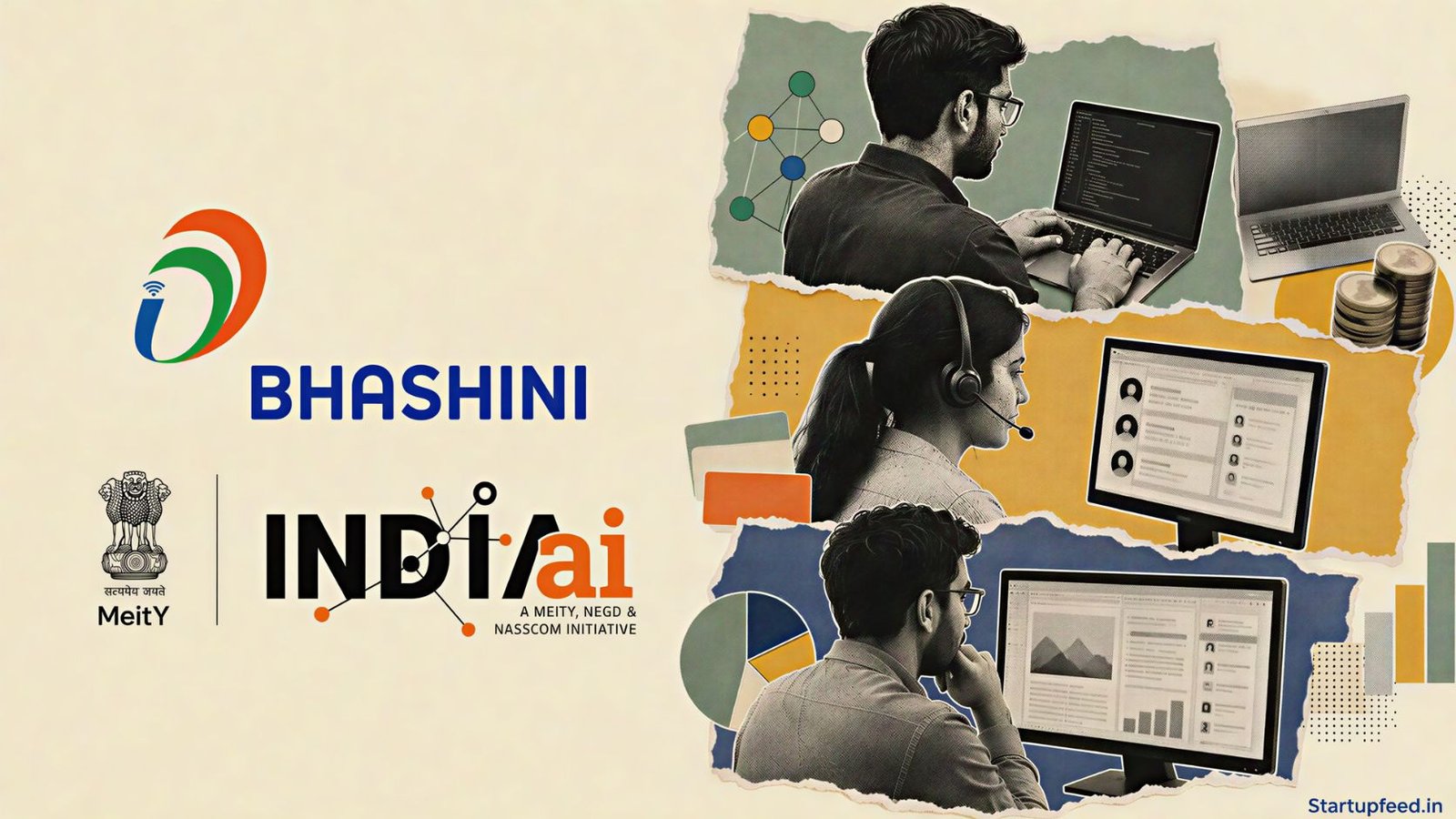
One smart move stands out: Bhashini, the government’s free language AI platform, lets startups serve customers in 22 Indian languages at near-zero cost. This is uplift no paid vendor can match for a lean team.
About Bhashini
Bhashini is a free government AI platform for Indian-language translation, speech-to-text, and text-to-speech across 22 languages. Launched in July 2022 under the Ministry of Electronics and Information Technology (MeitY), it offers low-volume APIs free to developers. Partners include the Reserve Bank Innovation Hub, Snapdeal, and UiPath, making it a core building block for India-first startups.
How Does AI Boost Team Productivity?
AI boosts productivity by removing the slow, repetitive parts of a job so people focus on high-value work. The gain is real but uneven across tasks.
“In 2026, technology is no longer the bottleneck, integration and execution are,” NovaEdge Digital Labs noted.
Code generation sees near-universal use at 92%, but DevOps and infrastructure sit at just 44% adoption with only 11% scaled, the Elevation Capital survey showed. The lesson for founders is clear. Use AI hard where work is routine, like documentation (72%) and debugging (72%). Keep human owners on architecture, complex integrations, and quality, where mistakes are costly and AI still struggles.
What Are the Hidden Costs and Risks?
The hidden cost is that AI tools carry their own price tag, and savings shrink if you over-promise. CTOs are happy with the return on investment, but the price still stings, the Elevation Capital survey found.
| Risk | What Happens | Fix |
|---|---|---|
| Over-estimated savings | Budgets assume 40-50% cuts that never arrive | Plan for modest, measured gains |
| Tool sprawl | Many small subscriptions add up quietly | Audit spend every quarter |
| Hallucinations | Wrong output reaches customers or code | Keep human review on critical work |
WEQ Technologies warns that architecture, integration, and quality assurance stay largely human, and these often form the bulk of a project’s true cost. What makes a disciplined startup different is not how many AI tools it buys, but how tightly it tracks output against spend.
What’s Next
The next milestone is agentic AI moving from pilots into daily operations. By the end of 2026, expect more Indian seed-stage teams to run support, content, and basic coding mostly through AI agents rather than new hires. The winners will own their workflows instead of renting expensive seats. Is your startup tracking AI cost per task yet?



Frequently Asked Questions
Last updated: June 20, 2026 at 14:30 IST
Written by Dr. Mayank Raj. Published: June 20, 2026. Updated: June 20, 2026. Have a tip? Write to us at editorial@startupfeed.in.
Liked this story? Follow StartupFeed on Google so our reporting reaches you first.