

Quick Take
- The Diet Coke Shortage India faced since April 2026 came from an aluminium can crunch, not the drink itself.
- Aluminium hit a four-year high near $3,672 per tonne (Rs 375 per kg) as Gulf supply routes froze.
- Coca-Cola India has now revived 200 mL glass bottles, with fuller recovery likely in late 2026.
In This Article
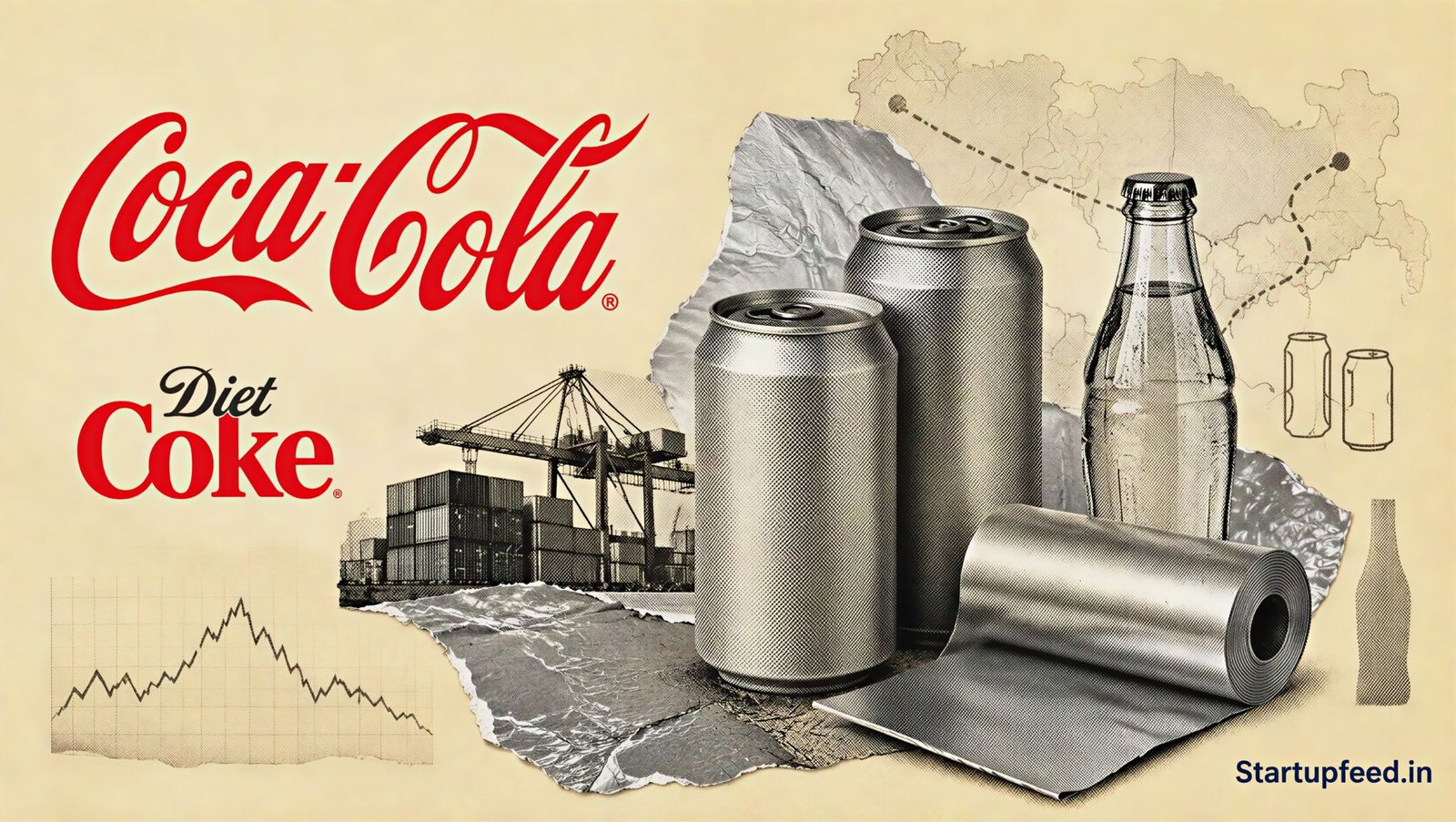
The Diet Coke Shortage India saw through 2026 started in April, when an aluminium can crunch tied to the Iran conflict pulled the sugar-free drink off shelves across Mumbai, Bengaluru, Delhi NCR, Ahmedabad and Pune. The drink was never in short supply. The metal cans that hold it were.
Diet Coke in India sells only in aluminium cans, with no plastic or glass option before the crisis. When Gulf shipping routes froze and aluminium prices spiked, the packaging simply ran out. Aluminium touched a four-year high near $3,672 per tonne (Rs 375 per kg) in April, according to London Metal Exchange data, and cans became the choke point for a whole product.
StartupFeed Insight
The real lesson here is packaging concentration risk, not a soda story. A single-format product with no domestic can-body stock supply is one shipping lane away from vanishing, and India imports nearly all its can substrate. Watch consumer brands and quick-commerce category managers, because SKU fragility now sits on every risk review. StartupFeed expects at least two major Indian beverage or D2C brands to publicly add a second pack format (glass or PET) for their can-only lines by the first quarter of 2027, framing it as supply resilience rather than a marketing choice. By Avinash.
What caused the Diet Coke Shortage India saw?
The Diet Coke Shortage India experienced came from three shocks hitting at the same time, not one single cause. Each one alone was manageable. Together they emptied shelves within weeks.
First, the Iran conflict choked the Strait of Hormuz, and the Gulf supplies roughly 9% of global aluminium, according to SupplyChain Digital. Second, missile strikes on March 28, 2026 hit two major Gulf smelters, cutting output further. Third, India’s Bureau of Indian Standards (BIS) certification rules for aluminium cans had already tightened domestic supply for a year before the war, a BIS official told ThePrint.
About Coca-Cola in India
The Coca-Cola Company sells its soft drinks in India through local bottlers and distributors, led by Hindustan Coca-Cola Beverages. It offers brands such as Coca-Cola, Thums Up, Sprite, Coke Zero and Diet Coke. India is a key growth market, with Coca-Cola’s India sales reaching around $533 Mn (Rs 5,130 Cr) in FY25, according to Reuters. Diet Coke has long been positioned as a premium, status product in urban metros.
The Aluminium Numbers Behind Empty Shelves
Aluminium prices, not drink demand, explain the Diet Coke Shortage India tracked through 2026. The metal sits inside the can, and its price ran up fast once Gulf routes closed.
| Metric | Detail | Notes |
| April 2026 peak | $3,672 per tonne | Four-year high (LME) |
| Late July 2026 level | $3,159.50 per tonne | 3-month close, off the peak (LME) |
| India retail price | Around Rs 375 per kg | April 2026 spike |
| Gulf share of supply | About 9% | SupplyChain Digital |
| 2026 supply deficit | Up to 2 to 3.5 Mn tonnes | Wood Mackenzie, JP Morgan |
The most telling figure is the swing itself. Prices have eased to around $3,159.50 per tonne by late July from the April peak, according to LME data, which shows some relief but no full recovery yet.
How is Coca-Cola India responding?
Coca-Cola India responded to the Diet Coke Shortage India faced by bringing the drink back in 200 mL glass bottles across parts of the country, a first for a market that had only sold it in cans. The company also pushed Coke Zero harder, since it sells in plastic bottles and stayed available.
An increased demand for products consumed at home and shortages of aluminium and certain ingredients have impacted our supply chain in some places, The Coca-Cola Company said in an official statement.
The glass six-pack reportedly costs more than the old can format, and retailers expect prices to stay high until aluminium supplies steady. The switch shows how fast a brand can move when a single pack format fails, though a permanent glass line brings its own cost and logistics questions.
What did quick commerce and shoppers do?
Quick commerce felt the Diet Coke Shortage India first, since apps show stock in real time. Blinkit capped Diet Coke orders at four cans per customer to stop hoarding, while Swiggy Instamart and Zepto listed the product as unavailable across major cities.
| Channel | What happened |
| Blinkit | Capped orders at four cans to limit hoarding |
| Swiggy Instamart, Zepto | Product shown as unavailable in metros |
| Kirana and supermarkets | Empty shelves across Bengaluru, Mumbai, Pune |
Social media turned a real but local supply gap into a national talking point, with Reddit tracking threads and Instagram reels. What sets this episode apart is how a niche premium SKU became a cultural moment, driven more by scarcity than by mass demand.
What’s Next
Aluminium prices have cooled from the April peak but stay elevated, and new can lines need 10 to 12 months to come online. Analysts expect a partial recovery in the second half of 2026 if Gulf shipping stabilises. The bigger shift may be permanent: brands rethinking single-format packaging for good. Will Diet Coke keep its new glass bottle once cans return?


Frequently Asked Questions
Written by Avinash. Have a tip? Write to us at editorial@startupfeed.in.