
Quick Take
- India asked quick commerce firms to drop the 10-minute delivery promise .
- Blinkit, Zepto, Instamart and Flipkart Minutes scrapped the tagline after the Labour Ministry meeting.
- The reset follows a 200,000-worker strike and targets rider safety, not delivery speed itself.
In This Article
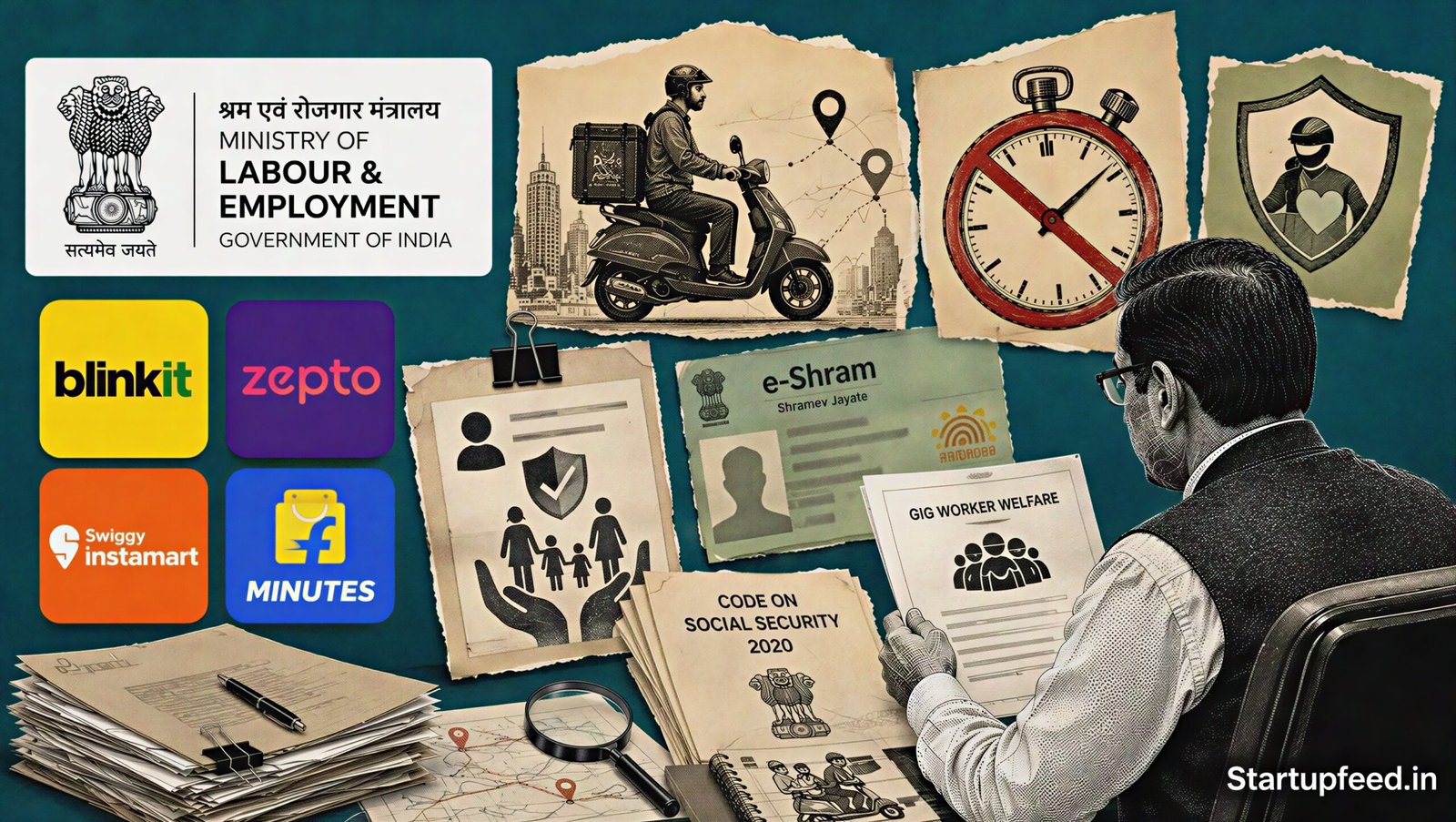
India told its quick commerce platforms to drop the 10-minute delivery promise , after Union Labour Minister Mansukh Mandaviya met the top companies over gig worker safety, PTI reported.
The directive came days after roughly 200,000 gig workers struck across major cities on New Year’s Eve, according to the Indian Federation of App Based Transport Workers. Blinkit, Zepto, Swiggy Instamart and Flipkart Minutes all pulled the promise from their branding within days. India’s quick commerce sector is worth about $11.5 Bn (Rs 10,983 Cr), per industry estimates.
StartupFeed Insight
The 10-minute delivery ban hits the marketing, not the operations. Average delivery times were already 15 to 20 minutes, so the customer experience barely shifts. The real pressure sits on unit economics: rider incentives, penalty systems, and the new labour codes that now cover gig workers. Founders and investors in quick commerce should watch the draft Social Security Code rules closely, because a mandatory welfare levy on aggregators would reshape margins. Expect at least one major platform to announce a formal rider-safety and insurance policy by the end of Q2 2026 to get ahead of regulation. By Soumya Verma.
What did India change about 10-minute delivery?
India directed quick commerce platforms to stop advertising the 10-minute delivery promise, but it did not ban fast delivery itself. The change targets the public marketing claim, which the government said pushes riders into unsafe speeds. StartupFeed confirmed the directive came from the Labour Ministry, not a formal written law.
| Detail | What we know | Source |
|---|---|---|
| Directive date | PTI | |
| Issued by | Union Labour Ministry, Mansukh Mandaviya | Reuters |
| Firms affected | Blinkit, Zepto, Swiggy Instamart, Flipkart Minutes | Company apps |
| Format | Oral directive, no written notification yet | GIPSWU |
| Trigger | 200,000-worker strike, December 31, 2025 | IFAT |
The most telling detail is the absence of a written order. Worker unions have flagged that an oral directive is hard to enforce or penalise, per GIPSWU.
About the Labour Ministry action
The Ministry of Labour & Employment, led by Mansukh Mandaviya, oversees India’s labour codes and gig worker welfare. It has run the e-Shram worker registration drive since 2021 and is drafting rules under the Code on Social Security, 2020. The Ministry met Blinkit, Zepto, Zomato and Swiggy in a closed-door session before the 10-minute delivery reset. Its stated focus is rider safety and social security, not competition control.



Why did the government act now?
The government acted after mounting worker protests made rider safety a national issue. On December 31, 2025, gig workers struck across major cities, demanding better wages, social security, and an end to automated penalties, per the IFAT. Aam Aadmi Party MP Raghav Chadha had also raised the 10-minute delivery issue in Parliament.
Ultra-fast delivery models of 10 to 15 minutes materially change the risk and stress profile of gig work, said Prabir Jha, founder of Prabir Jha People Advisory.
The pressure had turned deadly. Riders racing potholed, congested roads faced real safety risks, and one worker in Noida was killed in traffic during a delivery, Al Jazeera reported. The strike gave the government a clear reason to step in through the Labour Ministry’s gig worker welfare push.
What does this mean for quick commerce firms?
For quick commerce firms, the 10-minute delivery reset changes marketing more than money. Average delivery already ran 15 to 20 minutes, so operations shift little, per industry data. The bigger risk is regulation: India notified four new labour codes in November 2025, extending social security to gig and platform workers.
| Platform | Old tagline | New tagline |
|---|---|---|
| Blinkit | 10,000+ products delivered in 10 minutes | 30,000+ products delivered at your doorstep |
| Zepto | 10-minute grocery claim | Groceries in minutes |
| Swiggy Instamart | Sub-10-minute delivery | Groceries and More |
The draft rules under the Code on Social Security, 2020 propose a 90-day annual work threshold for gig workers to access benefits, per the Labour Ministry. That threshold, plus any aggregator welfare levy, is the number founders should model now.
How did each platform respond?
Each major platform quietly removed the 10-minute delivery claim while staying largely silent publicly. Blinkit, owned by Eternal, acted first and dropped the promise from its branding, sources told PTI. Zepto, Instamart and Flipkart Minutes followed within days. You can track Blinkit’s parent through the e-Shram portal for platform aggregators, where leading firms register workers.
Tata-owned BigBasket kept a “10 min grocery app” label live even after peers changed, per ET Brand Equity. The mixed response shows how central speed remains to quick commerce identity, even as firms adjust the words on their apps.
What’s Next
Watch the draft Social Security Code rules, which closed for public comment after December 31, 2025. A final notification could set a welfare levy on aggregators and formalise rider protections during 2026. That would matter far more than any tagline change. Will platforms lead with voluntary safety policies, or wait for the rules to force their hand?



Frequently Asked Questions
Have a tip? Write to us at editorial@startupfeed.in.
Liked this story? Follow StartupFeed on Google so our reporting reaches you first.