
QUICK TAKE
- What Happened: Tim Cook announced he will step down as Apple CEO on September 1, 2026 — ending a 15-year run
- Who Takes Over: John Ternus, 50, SVP Hardware Engineering — Apple veteran since 2001; engineer behind iPhone, iPad, AirPods, Mac
- Cook’s New Role: Executive Chairman of Apple’s Board — will focus on global policymaker engagement
- Cook’s Legacy: $350 Bn → $4 Tn market cap (+1,043%); revenue $108 Bn → $416 Bn; AAPL stock +1,886% vs S&P’s +483%
- Ternus’s #1 Priority: Fix Apple’s AI problem — Siri has been delayed multiple times; Apple now relies on Google Gemini
- Timeline: Board approved unanimously; Cook stays CEO through summer; Ternus takes over September 1, 2026
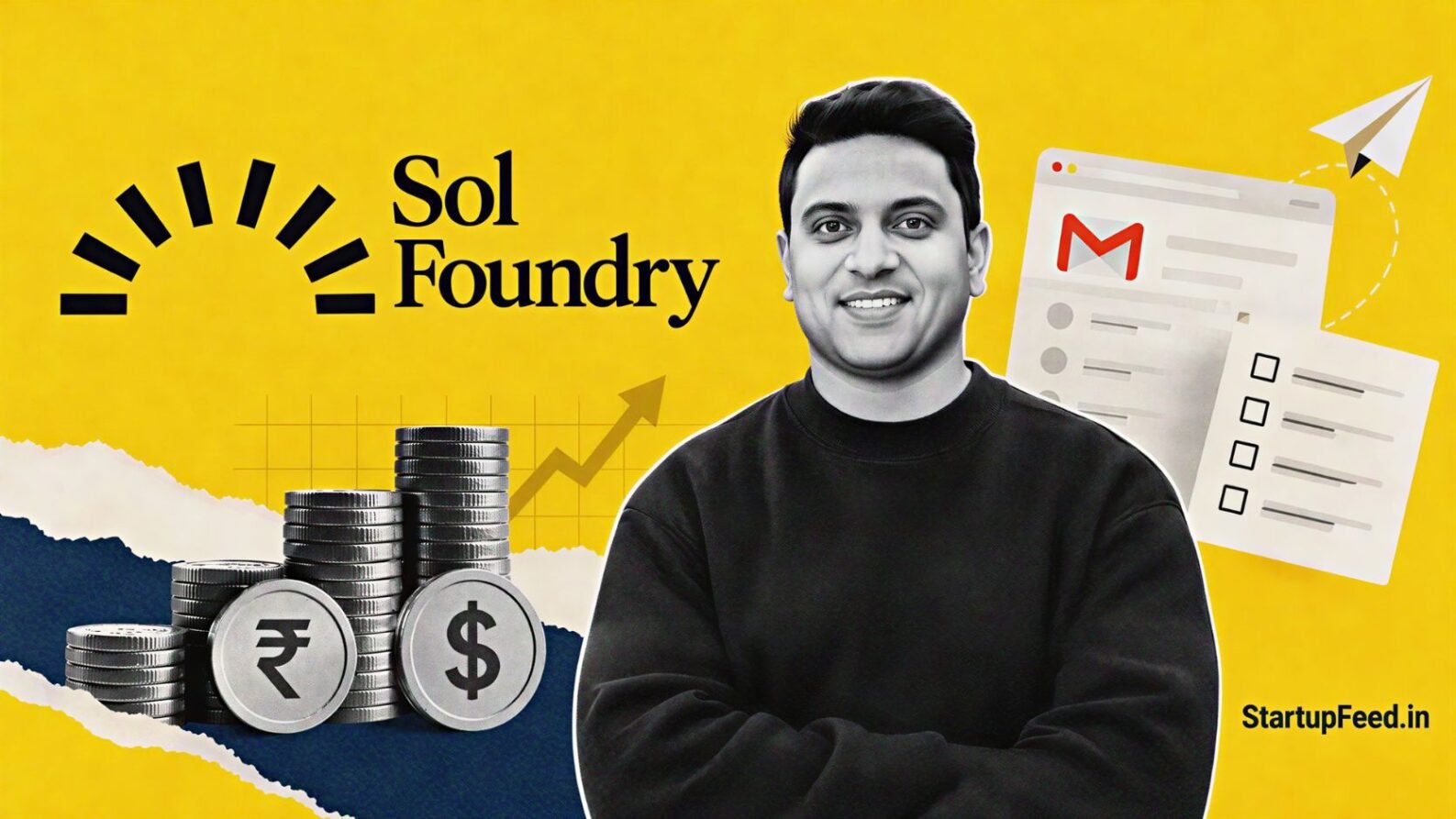
Apple announced on April 20, 2026 that Tim Cook will step down as CEO on September 1, 2026, ending a 15-year tenure as the steward of the world’s most valuable company. John Ternus, Apple’s Senior Vice President of Hardware Engineering, will become Apple’s eighth CEO — the first leadership transition since Cook succeeded Steve Jobs in 2011, shortly before Jobs’ death from pancreatic cancer. Cook, 65, will become Executive Chairman of Apple’s Board of Directors.
This is the most consequential leadership change in the technology industry in 15 years. Cook took over a company that the world struggled to imagine without its founder — and turned it into the largest company on earth by market capitalisation. Ternus inherits a $4 trillion enterprise with 2.5 billion active devices, $100 Bn+ in services revenue, and one enormous unresolved question: can Apple compete in AI? The board’s choice of a hardware engineer as CEO signals a clear answer to that question — not “build better AI models,” but “build better hardware that AI lives inside.”
StartupFeed Insight
What the numbers say: Apple stock fell less than 1% in after-hours trading on Monday — a remarkably muted reaction to the largest CEO transition in tech since Satya Nadella took Microsoft in 2014. The market’s reaction signals two things: Ternus was the expected choice (prediction markets had him at 76–80% odds), and investors trust the succession planning. The real test is whether Ternus can do for Apple’s AI what Cook did for Apple’s supply chain — build an operational moat that competitors cannot quickly replicate.
What this means for you:

- If you’re an Apple investor: The short-term dip is noise. The long-term question is Ternus’s AI strategy. Cook’s era was defined by services growth (+2,600% from ~$4 Bn to $100 Bn). Ternus’s era will be defined by whether AI becomes Apple’s third platform — after the Mac (1984) and iPhone (2007). Hardware-first CEOs (Jobs, Ternus) have historically been Apple’s strongest.
- If you’re in the Indian tech ecosystem: Cook’s Apple committed $600 Bn to US investment during the Trump era — but Cook also quietly accelerated Apple’s India manufacturing expansion (Foxconn, Tata). Ternus has a hardware engineering background that understands supply chain geography deeply. Expect Apple’s India manufacturing push to accelerate, not slow, under his leadership.
- If you’re a startup founder building AI products for Apple devices: Ternus is an engineer who understands what Apple hardware can and cannot do at a physical level. His era will likely mean tighter Apple Intelligence integration, stricter privacy-first AI standards, and more opportunities for third-party AI tools that complement (not replace) Apple’s ecosystem. If your AI app runs beautifully on-device, pitch Apple now.
Our prediction: Ternus will announce an Apple Intelligence 2.0 strategy at WWDC 2027 — including Apple’s own foundational AI model (not Gemini-dependent) and a dedicated AI chip in the iPhone 18 Pro line. The hardware engineer CEO will see AI as a physical-layer problem, not a software-services problem. Within 3 years, Apple’s AI story will be about what the hardware makes possible, not which model powers it.
Profile: John Ternus — Apple’s Eighth CEO
| Aspect | Details |
| Full Name | John Patrick Ternus |
| New Role | Chief Executive Officer, Apple Inc. — effective September 1, 2026 |
| Previous Role | Senior Vice President, Hardware Engineering — reporting to Tim Cook |
| Age | 50 (born May 1975) — same age Cook was when he became CEO |
| Education | B.S. in Mechanical Engineering, University of Pennsylvania (1997); varsity swimmer, all-time letter winner |
| Career Before Apple | Mechanical engineer at Virtual Research Systems (VR headsets), 1997–2001 |
| Joined Apple | 2001 — product design team; worked on Apple Cinema Display |
| Promoted to VP | 2013 — VP Hardware Engineering under Dan Riccio; oversaw AirPods, Mac, iPad, iPhone 12 |
| Promoted to SVP | January 2021 — youngest member of Apple executive team at the time; succeeded Dan Riccio |
| Key Products Led | iPad, AirPods, Apple Watch (multiple generations), Mac (Apple Silicon transition), iPhone 17 lineup, MacBook Neo |
| Notable Achievements | Apple Silicon introduction; recycled aluminium compound across product lines; 3D-printed titanium in Apple Watch Ultra 3; hearing health AirPods; repairability advances; carbon footprint reduction |
| Board Status | Joins Apple Board of Directors effective September 1, 2026 |
| Described As | “Charismatic and well-liked” — Bloomberg / Mark Gurman; prediction markets gave him 76–80% odds as Cook’s successor |
Ternus is, in the most literal sense, an Apple lifer. He joined in 2001 at 26 and has spent 25 of his 50 years inside Cupertino’s reality distortion field. He is unusual in the CEO succession conversation for tech companies precisely because he is not a finance person, not a former Google or McKinsey executive, and not a “professional CEO.” He is, in his own words, a person who has “been lucky to have worked under Steve Jobs and to have had Tim Cook as my mentor” — suggesting a lineage of stewardship rather than disruption.
John Ternus has the mind of an engineer, the soul of an innovator, and the heart to lead with integrity and with honor. He is a visionary whose contributions to Apple over 25 years are already too numerous to count, and he is without question the right person to lead Apple into the future.”
— Tim Cook, on John Ternus, Apple press release, April 20, 2026
I am profoundly grateful for this opportunity to carry Apple’s mission forward. Having spent almost my entire career at Apple, I have been lucky to have worked under Steve Jobs and to have had Tim Cook as my mentor. I am humbled to step into this role, and I promise to lead with the values and vision that have come to define this special place for half a century.”
— John Ternus, incoming Apple CEO, April 20, 2026
The profile of a hardware engineer as CEO is not as surprising at Apple as it might appear elsewhere. Steve Jobs was obsessed with the physical object — the weight of the MacBook hinge, the curvature of the iPhone glass. Cook was obsessed with the supply chain that produced it. Ternus is obsessed with what the object is made of and how it works. Apple’s most iconic moments have all been hardware moments — the original Mac, the iPod click wheel, the first iPhone, the M1 chip. A hardware engineer CEO is, arguably, the most Apple-like CEO Apple could choose.
Why Now — The Context Behind the Transition
The transition was not sudden. Apple’s board unanimously approved the succession — a “thoughtful, long-term succession planning process,” in their words. Several signals had pointed toward Ternus for over a year:
- Jeff Williams, Apple’s COO and once considered Cook’s most likely successor, stepped down from operational responsibilities in July 2025, clearing the field.
- Bloomberg’s Mark Gurman profiled Ternus extensively in early 2026, noting he was “charismatic and well-regarded by Apple loyalists” and had been granted progressively more strategic responsibilities by Cook.
- Ternus himself became more visible at Apple’s public events — it was Ternus, not Cook, who greeted iPhone 17 customers at Apple’s Regent Street store in London in September 2025. Cook did that at Fifth Avenue in prior years.
- Cook downplayed retirement rumours as recently as last month, saying he “can’t imagine life without Apple” after 28 years — but the board had already made its decision by April 18, 2026 (two days before the announcement).
The timing — announced in April 2026, effective September 1 — gives Cook five months to work closely with Ternus on transition, avoiding the abruptness of Jobs’ 2011 handover.
Tim Cook’s Legacy — The Numbers That Define 15 Years
| Metric | 2011 (Cook Takes Over) | 2026 (Cook’s Final Day) |
| Market Capitalisation | ~$350 Bn | $4 Tn+ (+1,043%) |
| Annual Revenue | $108 Bn (FY2011) | $416 Bn+ (FY2025) — nearly 4x |
| Stock Return (AAPL) | Baseline | +1,886% (vs S&P 500’s +483%) |
| Services Revenue | Nascent | $100 Bn+ — 2nd largest Apple segment |
| iPhone Revenue | $47.1 Bn (FY2011) | $209.6 Bn (FY2025) |
| Active Device Install Base | ~500 Mn | 2.5 Bn+ active devices |
| Countries / Territories | ~100 | 200+ (500 retail stores) |
| Key Products Launched | iPhone 4S era | Apple Watch, AirPods, Apple Silicon, Vision Pro, Apple TV+, Apple Pay, iCloud |
| Cook’s Total Compensation (FY25) | — | $74.6 Mn (incl. $3 Mn base + stock awards) |
Cook’s greatest contribution was arguably not a product — it was a proof of concept. When Jobs died in October 2011, many analysts questioned whether Apple could survive without its visionary founder. Cook answered that question not with vision, but with execution. He turned Apple’s supply chain into the most efficient manufacturing system the consumer technology industry has ever seen. He built the services business — App Store, iCloud, Apple Pay, Apple Music, Apple TV+ — from near-zero to over $100 Bn in annual revenue. He navigated Trump tariffs, China tensions, and a global pandemic without a single year of declining revenue.
For India specifically, Cook’s tenure saw Apple become a serious manufacturing and retail presence. The first Apple Store in India opened in Mumbai in 2023. Tata-owned manufacturing plants in Tamil Nadu now produce iPhones for global export. Cook personally cultivated relationships with Indian Prime Minister Modi and announced India-specific investment commitments. Ternus inherits an India story that is, for the first time, genuinely important to Apple’s future.
Full Leadership Restructuring — All Changes
| Person | Previous Role | New Role | Effective |
| John Ternus | SVP Hardware Engineering | Chief Executive Officer | September 1, 2026 |
| Tim Cook | Chief Executive Officer | Executive Chairman (Board) | September 1, 2026 |
| Johny Srouji | SVP Hardware Technologies | Chief Hardware Officer (expanded role) | Immediately (April 2026) |
| Arthur Levinson | Non-Executive Chairman (15 years) | Lead Independent Director | September 1, 2026 |
| Sona Chavan Marieb | Prior role | Takes over elements from Ternus | Immediately (April 2026) |
The most strategically significant secondary change is Johny Srouji’s elevation to Chief Hardware Officer. Srouji, Apple’s SVP of Hardware Technologies and the architect of Apple Silicon, takes on Ternus’s former engineering responsibilities. This move ensures continuity in Apple’s chip strategy — arguably the most important competitive differentiator Apple has built in the Cook era. Srouji-designed chips (M-series for Mac, A-series for iPhone) have given Apple a performance and efficiency lead that competitors have spent years trying to close.
The Ternus Mandate — 6 Challenges He Must Solve
| Challenge | Current State | What Ternus Must Do |
| AI Strategy | Siri delayed multiple times; AI chief left late 2025; now relying on Google Gemini for Apple Intelligence | Build a credible own-AI layer; reduce Gemini dependency; accelerate Apple Intelligence for iPhone 18 lineup |
| Apple Vision Pro | Released 2024; struggling to find mass market adoption despite $3,499 price point | Either reduce price dramatically for Vision Pro 2 or pivot the platform to enterprise-first to build install base |
| Supply Chain / Tariffs | Trump tariffs; China manufacturing concentration; some production moved to US and India | Accelerate India/Vietnam diversification; leverage Cook-era US commitment ($600 Bn) to negotiate tariff relief |
| Services Growth | $100 Bn+ — but regulatory scrutiny of App Store fees rising globally | Defend App Store economics while expanding services portfolio; Apple Intelligence as a new premium subscription tier |
| iPhone Beyond AI | iPhone 17 has done well; but upgrade cycles lengthening as feature differentiation slows | Hardware-first CEO advantage: Ternus understands the physical device roadmap — needs to define iPhone’s AI identity |
| Post-Cook Culture | Cook = operations excellence, collaboration. Ternus = engineer, product obsession, charismatic presenter | Preserve what Cook built; accelerate what Cook couldn’t — Apple as a genuine AI-first company |
The AI challenge is the one that will define Ternus’s tenure. Apple’s AI chief departed at the end of 2025. Siri’s upgrades have been delayed multiple times, forcing Apple to lean on Google Gemini as the backbone of Apple Intelligence. For a company built on owning its own technology stack — its own chips, its own OS, its own silicon — depending on Google for AI is an uncomfortable contradiction. Ternus, as a hardware engineer, may solve this differently than a software executive would: not by out-modeling OpenAI, but by making Apple’s hardware the substrate where AI becomes most powerful.
What’s Next — 4 Milestones to Watch
- Apple Q2 2026 Earnings (April 30, 2026): The first public event with both Cook and Ternus’s future on the agenda. Watch for any AI roadmap signals and whether investors ask Ternus directly about succession strategy.
- WWDC 2026 (June 2026): Traditionally Apple’s software/developer showcase — now the first major event where Ternus will be introduced to the developer ecosystem. Expect an AI strategy announcement that begins to answer the Siri question.
- Ternus’s first iPhone keynote (September 2026): Cook will still be CEO for iPhone 18’s September launch. Ternus will attend — and the industry will watch their body language closely for who leads the stage.
- Apple’s first quarter under Ternus as CEO (Q4 2026 results, October/November 2026): The first financial results under the new CEO will set the tone for how markets evaluate the transition.
Tim Cook took over an Apple that people doubted could survive without Steve Jobs. He proved them wrong. John Ternus takes over an Apple that people doubt can compete in AI. The question is whether history will repeat itself — whether another Apple executive can prove the doubters wrong by playing to his own strengths, rather than trying to be what the critics expect.
What do you think — will Ternus be Apple’s best CEO yet, or does Apple need an AI-native leader? Share your view at @StartupFeed_official
Liked this story? Follow StartupFeed on Google so our reporting reaches you first.