
Published: [October 24, 2026]
StartupFeed Quick Take
- Swiggy Instamart starts owning the stock it sells from the middle of Q3 FY27
- Swiggy says the change can add 80 basis points to Instamart’s contribution margin
- That same margin fell 82 basis points in one quarter, to minus 1.0% of GOV
Swiggy will start buying and owning the goods Instamart sells from the middle of this quarter, the Bengaluru company told shareholders on October 22.
Swiggy’s shareholder letter of October 22 puts the prize at 80 basis points of contribution margin, once the change is fully rolled out.
Instamart lost almost exactly that much in the September quarter alone. Its contribution margin fell to minus 1.0% of gross order value, from minus 0.2% in June. That is a slide of 82 basis points in three months.
The year-on-year picture looks better. A year earlier the same margin was minus 2.6%. Instamart has gained 157 basis points over twelve months.

Losses still grew. Instamart’s adjusted EBITDA loss widened to Rs 895 crore from Rs 778 crore in the June quarter. A year earlier it was Rs 849 crore.
Why Swiggy Wants to Own the Stock
Instamart today is a marketplace. Seller companies own the goods inside its dark stores, and Instamart earns a commission on each sale. From the middle of Q3 FY27 Swiggy itself buys the stock and sells it to you.
The move gives Swiggy control over assortment, pricing, availability and daily operations. The working capital cycle should improve by 8 to 10 days. The full switch will take two to three quarters.
The stock sits in a large network. Instamart ran 1,240 dark stores across 133 cities at the end of September, after adding 69 in the quarter. Every one of them holds goods that a seller company owns today.
Sriharsha Majety, who co-founded Swiggy and runs it, put the thinking this way:
“As speed and price become table stakes, we believe differentiated assortment will decide the winners.”
Sriharsha Majety, co-founder, managing director and Group CEO, Swiggy. From the Q2 FY27 shareholders’ letter, October 22, 2026.
What Changes for Brands Selling on Swiggy Instamart
A brand that sells on Instamart today invoices a seller company. After the switch, Swiggy itself is the buyer. Swiggy also carries the stock and the money tied up in it.
The change needed a rule fix first. India’s foreign investment rules let a company hold its own stock only if Indians own and control it. Shareholders capped foreign ownership at 49.5% in August 2026, and domestic ownership has since crossed 58%.

Swiggy tried this once and failed. A May 2026 resolution won 72.36% of votes, short of the 75% it needed. The second attempt, in early August, passed.
Swiggy has not put the 80 basis points into its own guidance. That is the honest way to read it. The gain arrives only when the switch is complete.
Blinkit Got There First
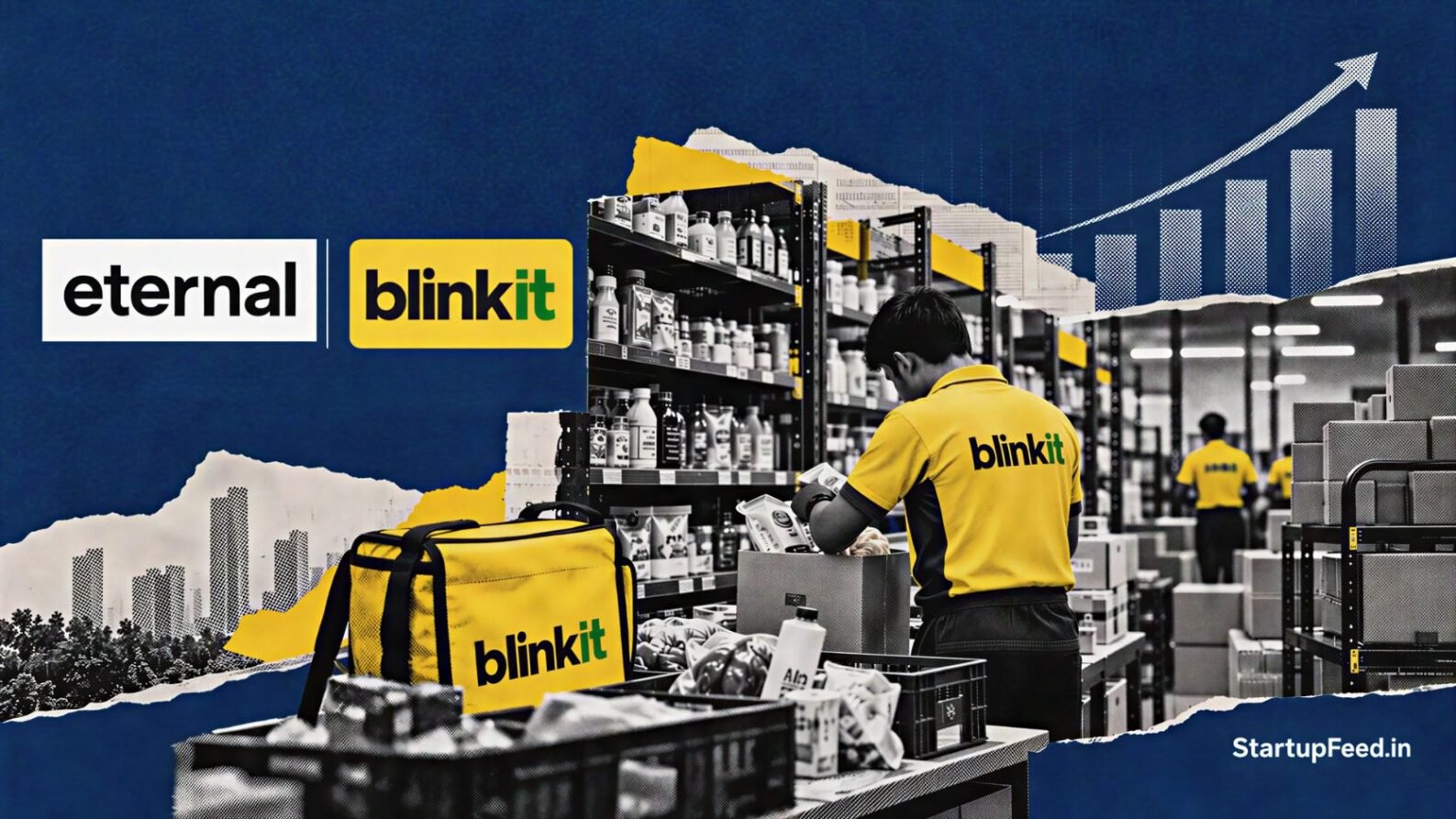
Blinkit made the same move earlier. About 90% to 95% of what it sells is now its own stock. The money gap is wide.
Blinkit posted adjusted EBITDA of Rs 184 crore in the September quarter. A year earlier it lost Rs 156 crore.
| September 2026 quarter | Instamart | Blinkit |
|---|---|---|
| Adjusted EBITDA | Loss of Rs 895 Cr | Profit of Rs 184 Cr |
| Same quarter last year | Loss of Rs 849 Cr | Loss of Rs 156 Cr |
| Owns its stock | From mid-Q3 FY27 | About 90% to 95% |
Size explains part of the gap. Instamart’s gross order value grew 31.4% to Rs 9,230 crore in the quarter, from Rs 7,022 crore a year earlier. Blinkit is the larger business and turned the corner first.
The Number That Decides It
Owning stock does not by itself make Instamart profitable. Swiggy puts adjusted EBITDA break-even at Rs 30 of contribution per order. It also needs about 2.3 times today’s scale.
In money, that means annualised net order value of Rs 60,000 crore, against Rs 26,400 crore now. Two-thirds of the improvement is meant to come from higher revenue per order. One-third comes from lower cost per order.
Swiggy believes Instamart’s adjusted EBITDA losses peaked in the September quarter. It expects the adjusted EBITDA margin to improve by about 100 basis points in the December quarter.
The market was not convinced. Swiggy shares fell as much as 17% on October 23 to Rs 174.90 on the BSE, a 52-week low.
What this means for you: If you run a D2C brand or an FMCG supplier selling through Instamart, your buyer changes from a seller company to Swiggy itself. Expect new purchase orders and payment terms from the middle of this quarter, and plan your working capital for them.
StartupFeed Insight
The 80 basis points Swiggy hopes to win from owning stock is about what Instamart gave away in one quarter. The margin fell 82 basis points between June and September. So a switch that takes two to three quarters buys back roughly one quarter of price cuts. It is a floor, not a turnaround. Watch the Q3 FY27 letter, due around late January 2027. If the contribution margin is not back above minus 0.5% of GOV by then, the gain is funding price cuts. Not profit.
By Saraswati Chaubey, Writer
Disclaimer: This article is for information only and is not investment advice. StartupFeed and its authors are not SEBI-registered investment advisors. Please speak to a SEBI-registered advisor before investing.
Have a tip? Write to us at editorial@startupfeed.in.
Liked this story? Follow StartupFeed on Google so our reporting reaches you first.