Quick Take
- Pranos Fusion says it has created plasma inside Pragya, its private tokamak.
- The Bengaluru startup has raised about $7.22 Mn across two rounds since 2024.
- It wants to build a 50 to 100 MW fusion reactor, with construction around 2030.
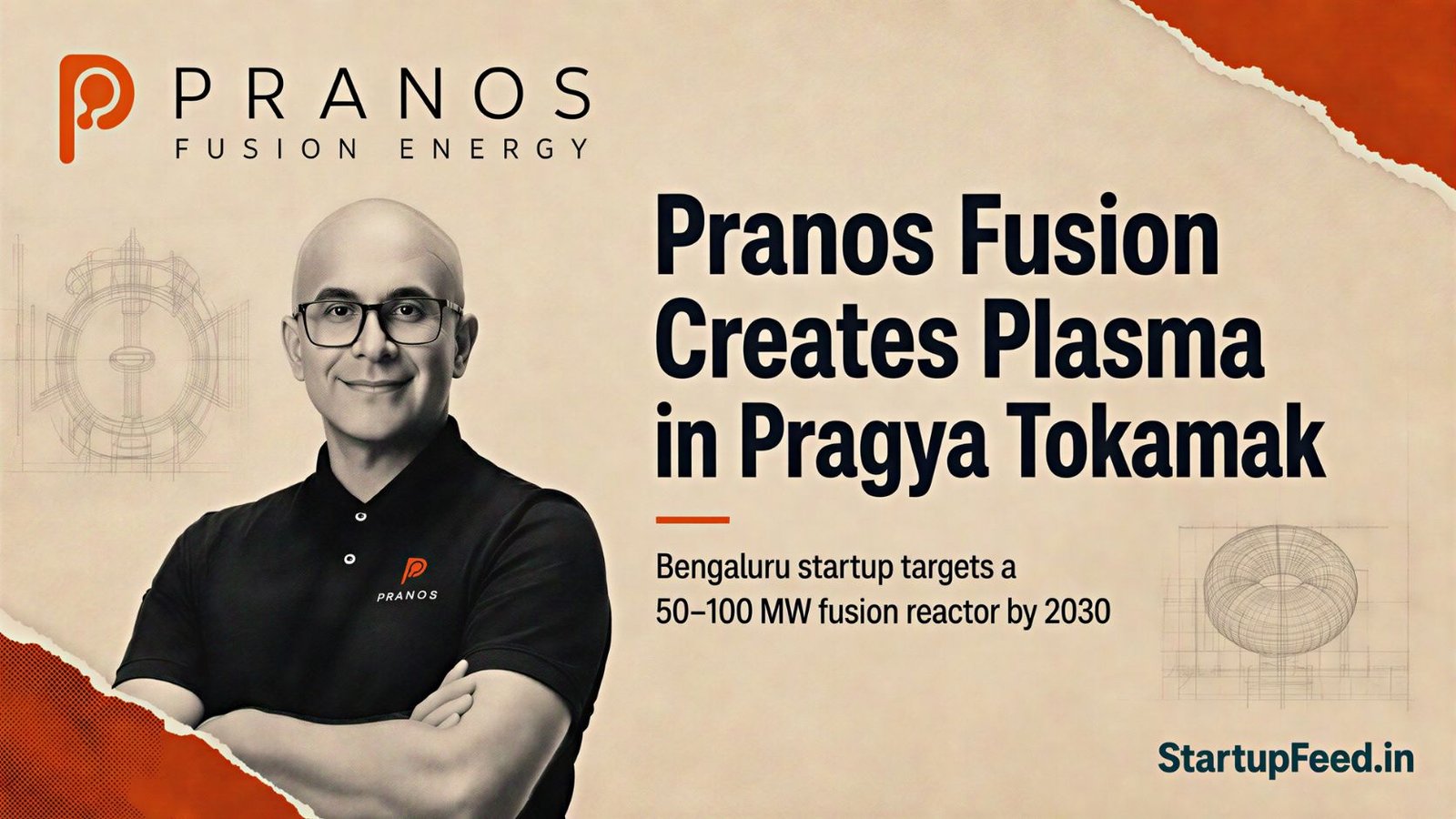
Bengaluru startup Pranos Fusion says it has produced plasma inside Pragya, its experimental reactor. The step marks a milestone as India’s private sector joins the global race for clean fusion energy.
Pragya is a compact tokamak. A tokamak holds plasma in a magnetic field shaped like a doughnut. Pranos Fusion calls Pragya India’s first privately developed tokamak of its kind.
The company took two and a half years to reach this point. It started building the reactor in June 2025. Software to run the machine came first, then the physical build.
Plasma is the fourth state of matter. It is a hot, electrically charged gas. Fusion reactors use plasma to squeeze atomic nuclei together and release energy.
What did Pranos Fusion achieve?
Pranos Fusion produced plasma inside Pragya, a working experimental tokamak. Getting plasma is an early step, not a finished reactor. It shows the machine can hold the charged gas it needs.



Shaurya Kaushal, chief executive and co-founder of Pranos Fusion, described the process. “The first step is to get a good vacuum inside the tokamak,” Kaushal said, according to the company.
The vacuum must be leak-tight. Its inner surfaces need to be very clean. Only then can gas be injected and turned into plasma.
Kaushal explained the next stages in plain terms. The gas is sent through high voltage. That voltage breaks the gas down. The result is plasma.
A tokamak also uses magnets to contain the super-hot charged plasma. The magnets sit under electrical systems that reach very high temperatures. In a future plant, that heat drives a turbine and makes electricity.
Who is behind Pranos Fusion?
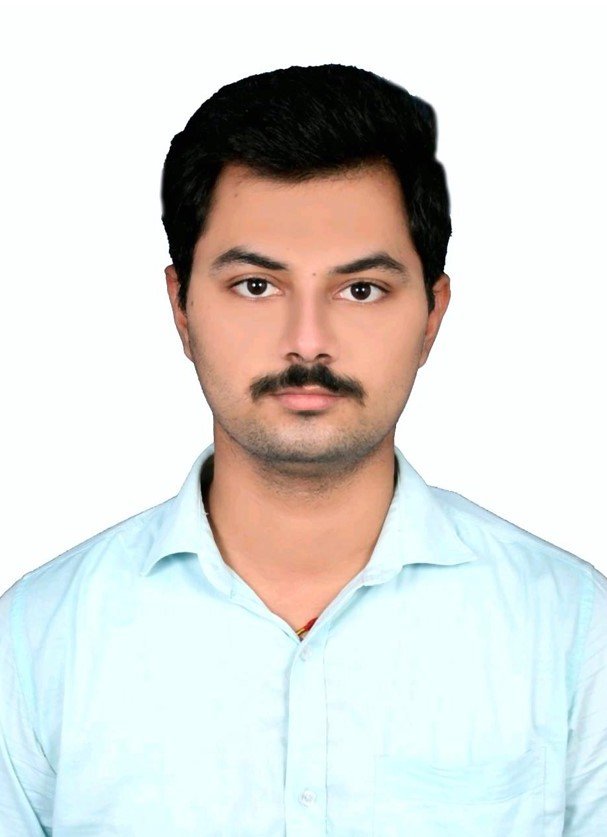
Pranos Fusion was founded in May 2024 in Bengaluru. Its two co-founders are Shaurya Kaushal and Roshan George. Kaushal is chief executive and George is chief operating officer.
Kaushal holds a PhD in computational physics from JNCASR in Bengaluru. He has an engineering degree from BITS Pilani. He earlier worked with the UK Atomic Energy Authority.
George comes from a computer science background. He spent years building software platforms for the energy industry. At Pranos Fusion, he leads the software and control side.


The startup is co-incubated at JNCASR and the Institute for Plasma Research. JNCASR stands for the Jawaharlal Nehru Centre for Advanced Scientific Research.
How much funding has Pranos Fusion raised?
Pranos Fusion has raised about $7.22 Mn across two rounds. Its backers include pi Ventures and Ankur Capital, who co-led. It also holds a Startup India Seed Fund grant.
The company builds three things together. JENGA is its design and control software. Pragya is the physical tokamak. MAGGA is its programme to build high-temperature superconducting magnets in India.
The bigger goal is a full reactor of 50 to 100 MW. Pranos Fusion targets construction around 2030. That would put India alongside global peers chasing fusion power.
What this means for you: India now has a private fusion startup at the plasma stage, a signal that deep-tech founders here are taking on hardware bets that were once state-lab territory.
StartupFeed Insight
Plasma inside Pragya is a real step, but the honest read is that it is a first step. Global machines already hold plasma for many minutes. China’s tokamak ran one for 1,066 seconds. Pranos Fusion is betting on the engineering around fusion, the magnets and control software, more than the reaction itself. On about $7.22 Mn, that is a lean bet against Western rivals holding hundreds of millions. Watch for two markers: a stable, repeatable plasma shot, and a first paying partner for its MAGGA magnets. Expect the reactor build to slip past its 2030 target unless a large new round lands first.
— Avinash Mishra, Business Correspondent
Have a tip? Write to us at editorial@startupfeed.in.
Liked this story? Follow StartupFeed on Google so our reporting reaches you first.