
Quick Take
- Nvidia signed MOUs with six Wall Street firms to mobilize over $500 Bn (Rs 47.6 Lakh Cr) for AI infrastructure.
- Partners are Apollo, BlackRock, Blackstone, Brookfield, Goldman Sachs and KKR, announced August 10, 2026.
- The capital funds compute for Nvidia customers, not Nvidia itself, and deals await final agreements.
In This Article
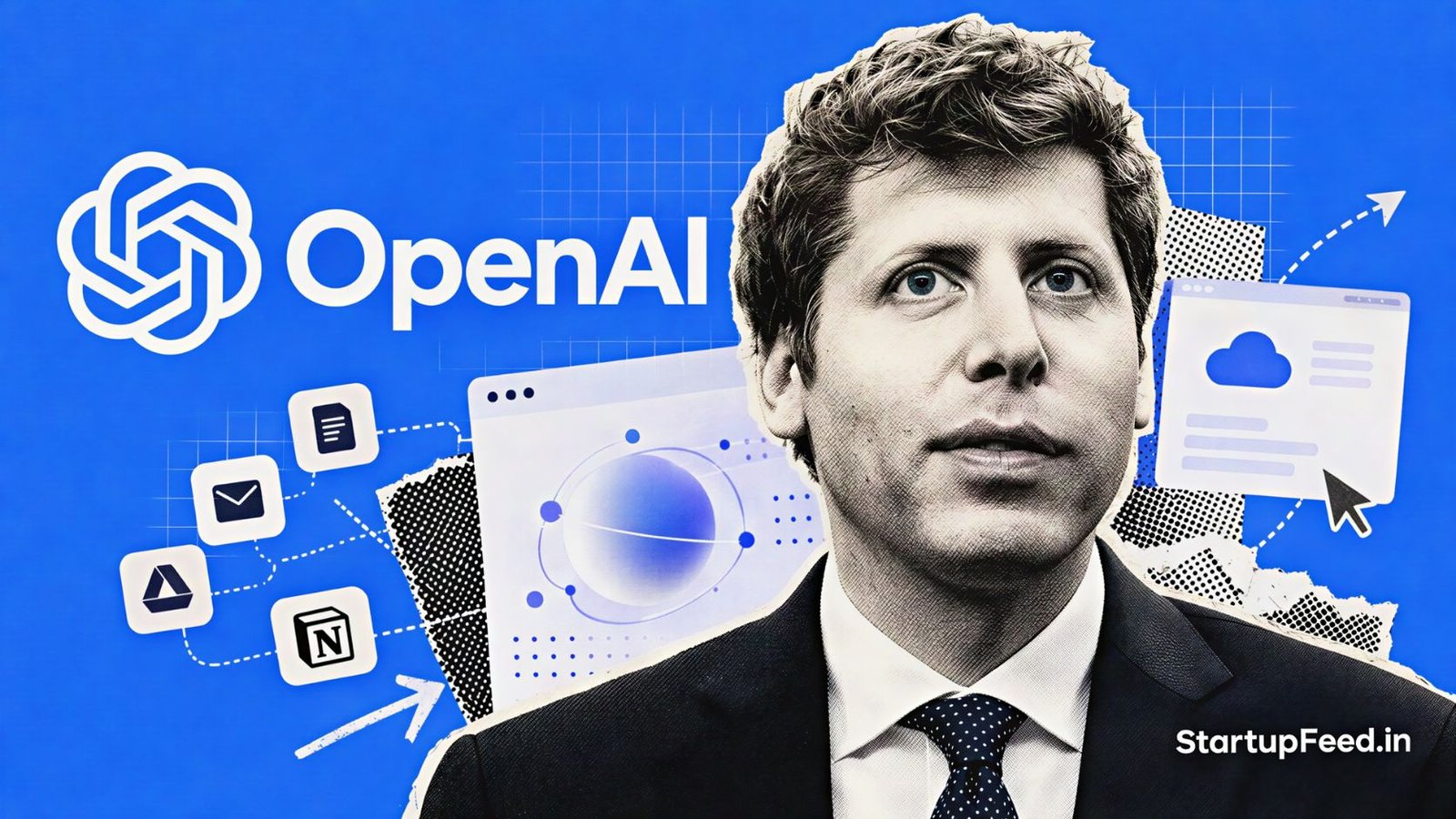
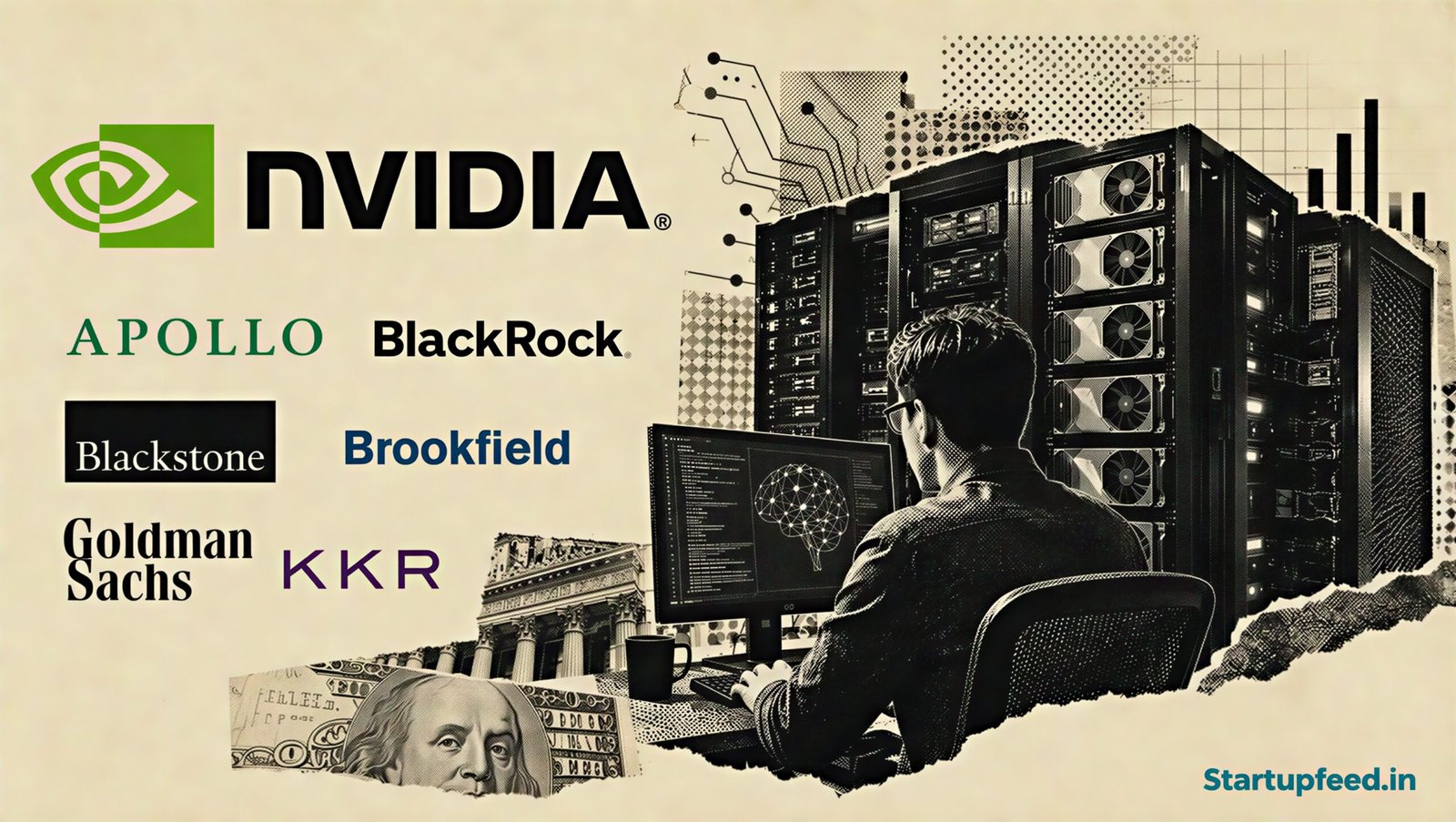
The Nvidia AI deal brings six Wall Street firms together to mobilize more than $500 Bn (Rs 47.6 Lakh Cr) of third-party capital for AI infrastructure, announced on August 10, 2026, through signed memorandums of understanding (MOUs).
The chipmaker will work with Apollo, BlackRock, Blackstone, Brookfield, Goldman Sachs and KKR to build dedicated compute financing platforms, per Nvidia’s official newsroom. The plan treats AI compute as an investable asset, letting customers fund data centers and chips without stretching their own balance sheets. Individual firm commitments and a deployment timeline were not disclosed.
StartupFeed Insight
The real story sits in one word: offtake. Nvidia is not lending its own cash. It is arranging outside money and lending its balance-sheet credibility, so pension funds and private credit desks feel safe underwriting graphics processing units (GPUs). That shifts risk off customer books and onto institutional investors. For Indian data-center players and financiers, this is the template to study, because compute-backed lending will reach this market next. Expect at least one large India-focused compute financing structure, backed by a global asset manager, to be announced by mid-2027. If AI demand holds, the model prints. If it stalls, someone outside the room absorbs the loss. By Harshvardhan Kothari.
Nvidia AI Deal: The Numbers
The Nvidia AI deal targets over $500 Bn (Rs 47.6 Lakh Cr) in third-party capital, structured through MOUs rather than a closed fund. Nvidia is arranging financing for its ecosystem, not raising the sum for itself, according to Nvidia’s statement.
| Metric | Detail | Notes |
|---|---|---|
| Total Capital Target | $500 Bn+ (Rs 47.6 Lakh Cr) | Third-party capital, mobilized over time |
| Partners | Apollo, BlackRock, Blackstone, Brookfield, Goldman Sachs, KKR | Six financial institutions |
| Structure | Compute financing platforms | Via signed MOUs |
| Beneficiaries | Frontier AI labs, enterprises, AI clouds | Nvidia customers, not Nvidia |
| Status | Subject to final agreements | Terms not disclosed |
| Announcement Date | August 10, 2026 | Reported first by Financial Times |
The standout detail is the structure. This is not a single mega-loan but a set of platforms designed to recycle institutional money into compute, per Nvidia’s announcement.
About Nvidia
Nvidia is a US chipmaker founded in 1993 by Jensen Huang, Chris Malachowsky and Curtis Priem, headquartered in Santa Clara, California. It designs GPUs and AI computing platforms built on its CUDA software ecosystem. Data center products drive most of its revenue, and it serves hyperscalers, AI labs and enterprises worldwide as the leading supplier of AI training chips.
What Does This Mean for AI Buildout?
The Nvidia AI deal signals that private capital is now central to funding the AI boom. By using institutional credit and insurance funds to underwrite GPUs, Nvidia helps customers secure compute without tapping their own cash, per Reuters reporting.
We began by building chips; today, we are helping create a new class of productive, investable infrastructure: AI factories, said Jensen Huang, founder and CEO of Nvidia.
Huang framed compute itself as revenue, arguing Nvidia chips are transferable across customers and improve over time through software. That pitch is what lets long-term capital treat GPUs like toll roads or real estate. Big Tech is on track to spend more than $730 Bn (Rs 69.5 Lakh Cr) on AI this year, so the appetite for outside financing is large.
Is the Nvidia AI Deal Financing Risky?
The Nvidia AI deal has reignited concern about circular financing in the AI sector. Critics note that a chip supplier helping fund its own customers can blur the line between real demand and vendor-supported demand, per Axios.
The arrangement follows earlier reports that Nvidia was in talks to backstop financing for a large AI data center tied to a key customer. The core risk is simple. If the data centers get built and demand does not follow, the loss lands on lenders, pension funds or private credit investors who were told this was infrastructure. Nvidia shares fell over 3% in afternoon trading on the day of the news, per Reuters, a sign that markets are weighing both the scale and the exposure.
How Does It Compare to Other AI Bets?
The Nvidia AI deal dwarfs most single AI infrastructure commitments in size and design. It routes capital through many customers rather than one project.
| Approach | Scale | Model |
|---|---|---|
| Nvidia compute platforms | $500 Bn+ target | Third-party capital across customers |
| Nvidia June bond sale | $25 Bn | Own debt, own balance sheet |
| Big Tech 2026 AI capex | $730 Bn+ (industry-wide) | Direct spending by hyperscalers |
What sets this deal apart is that Nvidia arranges the money but does not own most of the risk, unlike its own bond sales where the debt sits on its books.
What’s Next
The partnerships remain subject to final agreements, so the next milestone is the first signed platform with disclosed terms, likely within the coming months. Watch for how much capital each firm commits and which AI labs draw first. Will institutional investors keep treating compute as safe infrastructure if AI demand wobbles?
Disclaimer: This article is for informational purposes only and does not constitute investment advice. StartupFeed and its authors are not SEBI-registered investment advisors. The analysis above is based on publicly available information and should not be the sole basis for any investment decision. Please consult a SEBI-registered financial advisor before making investment decisions.
Frequently Asked Questions
Have a tip? Write to us at editorial@startupfeed.in.
Liked this story? Follow StartupFeed on Google so our reporting reaches you first.