
Published: October 28, 2026
StartupFeed Quick Take
- National Startup Awards 6.0 pays Rs 25 Lakh a category, up from Rs 10 Lakh in the fifth edition
- 20 sectoral categories and 3 special ones, and 12 of the 20 sectors are new
- Applications close on November 20, 2026, a window of just 25 days
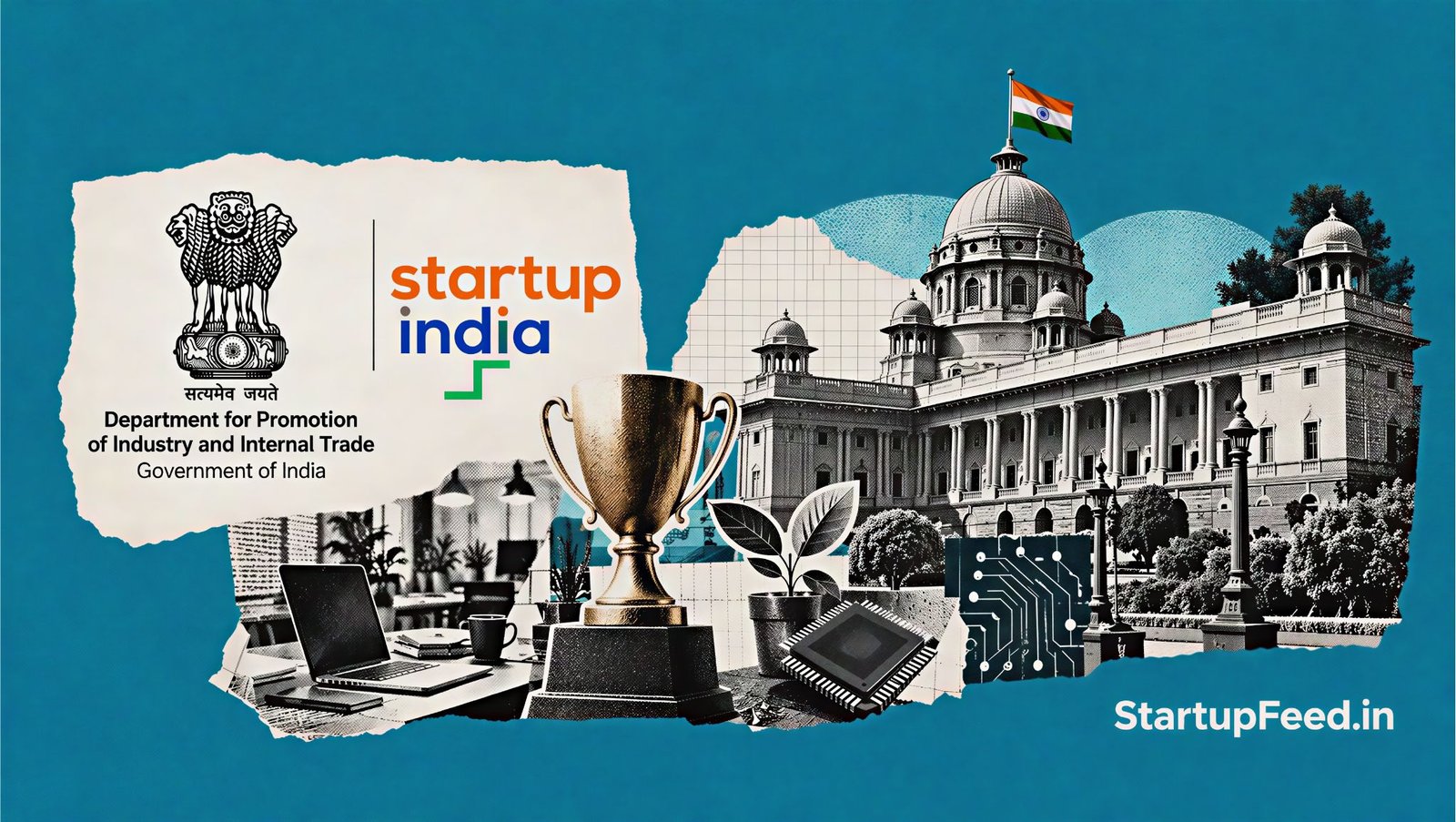
The National Startup Awards are India’s main government prize for startups, run by DPIIT under Startup India since 2019. The sixth edition opened in New Delhi on October 27, 2026. The prize has more than doubled.
In This Article
- Prize Money Rises From Rs 10 Lakh to Rs 25 Lakh a Category
- The 20 Sectoral Categories, and the 12 That Are New in 2026
- Three Special Categories, Including a First Award for Students
- Who Can Apply to the National Startup Awards, and by When
- What a Win Is Worth Beyond the Cash
- How Hard It Is to Win: the Numbers From Past Editions
Prize Money Rises From Rs 10 Lakh to Rs 25 Lakh a Category
The DPIIT release of October 27 sets the cash prize at Rs 25 Lakh a category. That covers all 20 sectoral categories and two of the three special ones.
Startup India’s award page for the fifth edition put the same prize at Rs 10 Lakh. So the money per winner has gone up by Rs 15 Lakh. That is a rise of 150%.
StartupFeed counted the full pot. Twenty-two categories at Rs 25 Lakh each comes to Rs 5.5 Cr. The student award adds another Rs 25 Lakh.


Total cash on offer: Rs 5.75 Cr.
The fifth edition offered far less. Twenty categories at Rs 10 Lakh each came to Rs 2 Cr. Special category winners then got certificates and no money.
The pot is now about 2.9 times bigger. Payment still runs under the award rules, which say a winner will qualify for the prize subject to those rules.
Amardeep Singh Bhatia, secretary at DPIIT, launched the awards in New Delhi. He set out the wider plan this way:
“government procurement can also be better used for promoting startups”
Amardeep Singh Bhatia, secretary, Department for Promotion of Industry and Internal Trade. From remarks at the National Startup Awards 6.0 launch, New Delhi, October 27, 2026.
| Edition | Application window | Sectoral categories | Cash prize per category |
|---|---|---|---|
| Fourth, 2023 | April 1 to May 31, 2023 | 20 | Rs 10 Lakh |
| Fifth, 5.0 | Opened July 15, 2025 | 20 | Rs 10 Lakh |
| Sixth, 6.0 | October 27 to November 20, 2026 | 20 | Rs 25 Lakh |
The 20 Sectoral Categories, and the 12 That Are New in 2026
Twelve of the 20 sectors are new, the release says. StartupFeed counted the rest. Only eight carry over.
The new twelve follow the money. Biomanufacturing, Defence & Security, Electronics, Semiconductors & Advanced Manufacturing, and Space-Tech, Drones & Aerospace all sit in areas the centre has been funding hard since 2024.
Three more new sectors reach a wider set of founders. Rural Economy, Traditional Industries & Livelihoods, Education & Skilling, and Travel, Tourism & Hospitality cover far more Indian firms than chip design does.
The last three are Sports, Fitness & Sports-Tech, Consumer Industries, and Telecom, Connectivity & Digital Infrastructure. Ocean & Blue Economy and Future Mobility & Automotive complete the new list.
| Sectoral category | Status in NSA 6.0 |
|---|---|
| Agriculture, AgriTech & Food Systems | Carried over |
| Biomanufacturing | New |
| DeepTech & Frontier Technologies | Carried over |
| Climate-Tech, Clean Energy & Sustainability | Carried over |
| Consumer Industries | New |
| Creative Industries, Media & Digital Content (Orange Economy) | Carried over |
| Defence & Security | New |
| Rural Economy, Traditional Industries & Livelihoods | New |
| Education & Skilling | New |
| Electronics, Semiconductors & Advanced Manufacturing | New |
| FinTech, Financial Services & Inclusion | Carried over |
| Food-Tech, Biotechnology & Nutrition | Carried over |
| Healthcare, MedTech & Life Sciences | Carried over |
| Supply Chain & Logistics | Carried over |
| Sports, Fitness & Sports-Tech | New |
| Future Mobility & Automotive | New |
| Ocean & Blue Economy | New |
| Space-Tech, Drones & Aerospace | New |
| Telecom, Connectivity & Digital Infrastructure | New |
| Travel, Tourism & Hospitality | New |
Three Special Categories, Including a First Award for Students
Three special categories sit beside the 20 sectors. They are Women-Led Startup of the Year, North-East Startup Excellence, and the Student Innovator / Aspiring Entrepreneur Award.
The student award is the first of its kind at these awards. It is open to school and college students across all 36 states and union territories.
Its prize pool is Rs 25 Lakh, split across four sub-categories. DPIIT says the aim is to build the habit of starting up early, among the next set of founders.
The other two are treated as startup categories. A Women-Led Startup of the Year winner gets Rs 25 Lakh. A North-East Startup Excellence winner gets the same.
That is the quiet change. In the fifth edition, special category winners got certificates and nothing more. Two of the three now carry the full sector prize.
Who Can Apply to the National Startup Awards, and by When
Applications opened on October 27, 2026 and close on November 20, 2026. That is a window of 25 days. Entries go through the Startup India portal at startupindia.gov.in.
The window is tight by past standards. The fourth edition ran from April 1 to May 31, 2023, which is 61 days. The sixth gives founders less than half that time.
DPIIT’s 2023 award notice asked each entrant for a DPIIT recognition certificate, capped each startup at two categories, and said the form had to be in English. Taking part was voluntary.
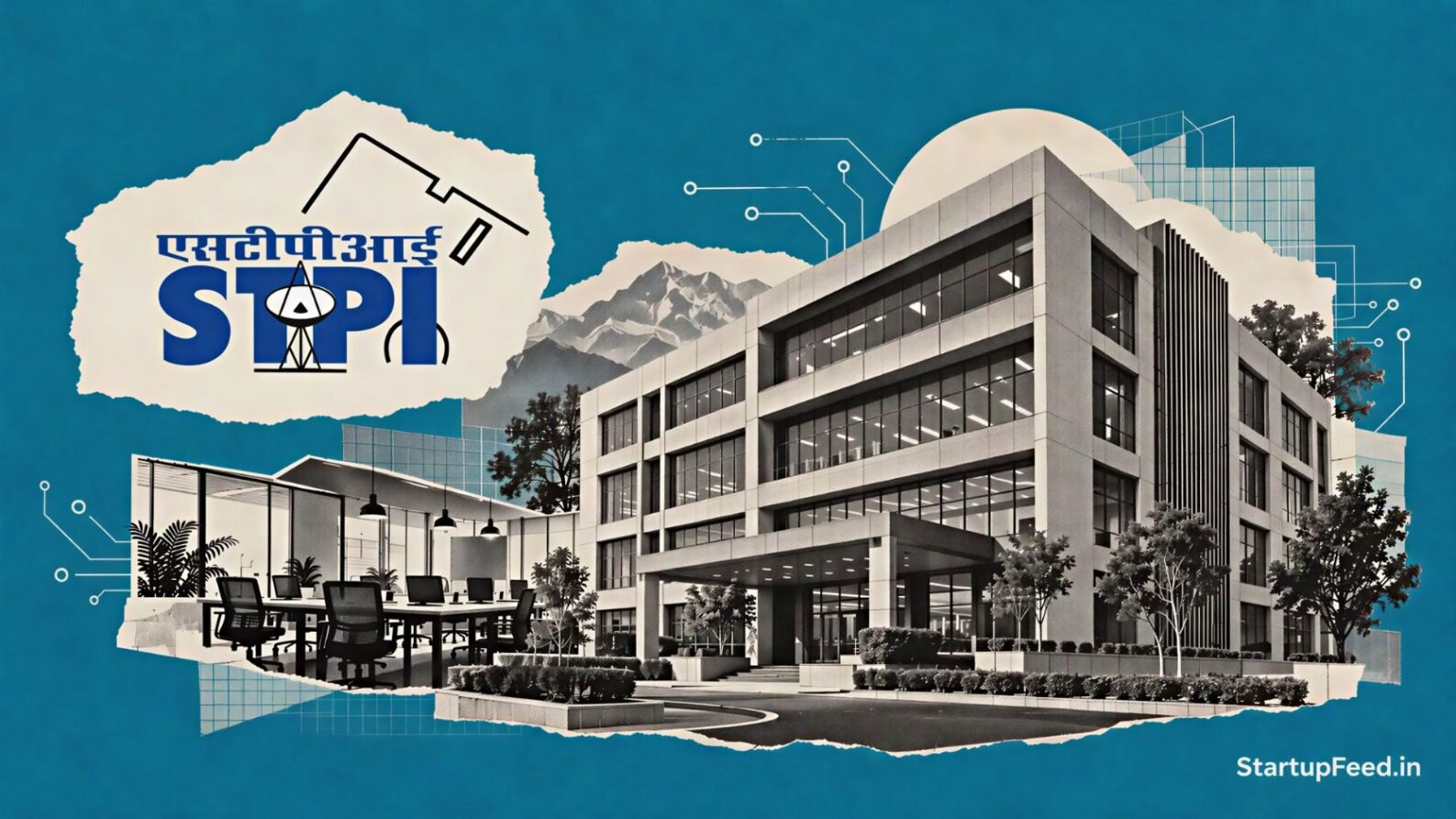
Startup India treats a startup as a private limited company, a registered partnership or an LLP. It must be under 10 years old from the date it was set up. Its turnover must not cross Rs 100 Cr in any year.
StartupFeed’s checklist, built from the 2023 rules and the category list above:
- Your DPIIT recognition certificate, downloaded and ready to upload
- The one or two categories that fit your product best
- Revenue, user and job numbers for the last full financial year
- A short, plain account of the problem you solve and who it helps
- Names, roles and shareholding of every founder
- Proof of any pilot, order or grant from a government buyer
- The NSA 6.0 rules page on startupindia.gov.in, read before you start
What a Win Is Worth Beyond the Cash
Cash is not the whole prize. The release lists mentoring, investor meetings, market access, tie-ups with large firms, and more visibility for winners.
Startup India’s award page adds one more benefit from past rounds. Winners and finalists got priority at Indian and foreign startup events where DPIIT takes part.
Government buying is the piece to watch. DPIIT Additional Secretary Ateesh Kumar Singh said relaxations under the General Financial Rules already help startups bid for state work.
He also put a number on the base. India now has over 2.5 lakh recognised startups. More than half sit in tier-3 towns and smaller places.
DPIIT says it will work with central ministries, state and union territory governments, incubators, colleges, banks, alternative investment funds and industry bodies. They will spread the word and help judge entries. The department also wants entries from smaller cities, not only from Bengaluru, Delhi and Mumbai.
About the National Startup Awards
DPIIT began the awards in 2019 under Startup India, and the first winners were named in 2020. Each edition rewards startups for new ideas, growth, lasting impact and social value. Entries are judged in stages by a jury. Five editions are done. The sixth closes on November 20, 2026.
How Hard It Is to Win: the Numbers From Past Editions
The odds are not published. The record still gives a feel for them.
DPIIT’s 2023 award notice said the first three editions drew over 6,400 startups and enablers. Those three rounds named over 450 winners and finalists in all.
StartupFeed worked out the share. That is about 7 in every 100 entries reaching winner or finalist.
Recent editions name far fewer winners. The fourth named 21 startups across 20 categories. The fifth honoured 20.
The sixth edition offers 22 paid category slots. One winner a category has been the normal pattern.
| Edition | Categories offered | What is on record |
|---|---|---|
| First, 2020 | 12 sectors, 35 sub-categories | Over 1,600 startups and enablers applied |
| Second, 2021 | 15 sectors, 49 sub-sectors | Over 2,200 applied, 46 startups won |
| Third, 2022 | 17 sectors, 50 sub-sectors | Applications closed March 15, 2022 |
| Fourth, 2023 | 20 categories | 21 startups named winners |
| Fifth, results 2026 | 20 categories | 20 startups honoured |
| Sixth, 2026 | 20 sectors and 3 special | Closes November 20, 2026 |
StartupFeed Insight
The prize went up 150%, but the time to apply went down. Twenty-five days is short for a founder who has to pull numbers, write a case and pick categories. Expect a rush in the last week of November, and expect smaller firms to miss it. The bigger signal is the category list. Twelve new sectors, with defence, chips, space and the ocean economy among them, tell you where government money and government buying are headed next. Watch for a DPIIT move on buying rules for startups before January 16, 2027, National Startup Day.
By Saraswati Chaubey, Writer
Frequently Asked Questions
Have a tip? Write to us at editorial@startupfeed.in.
Liked this story? Follow StartupFeed on Google so our reporting reaches you first.