
Quick Take
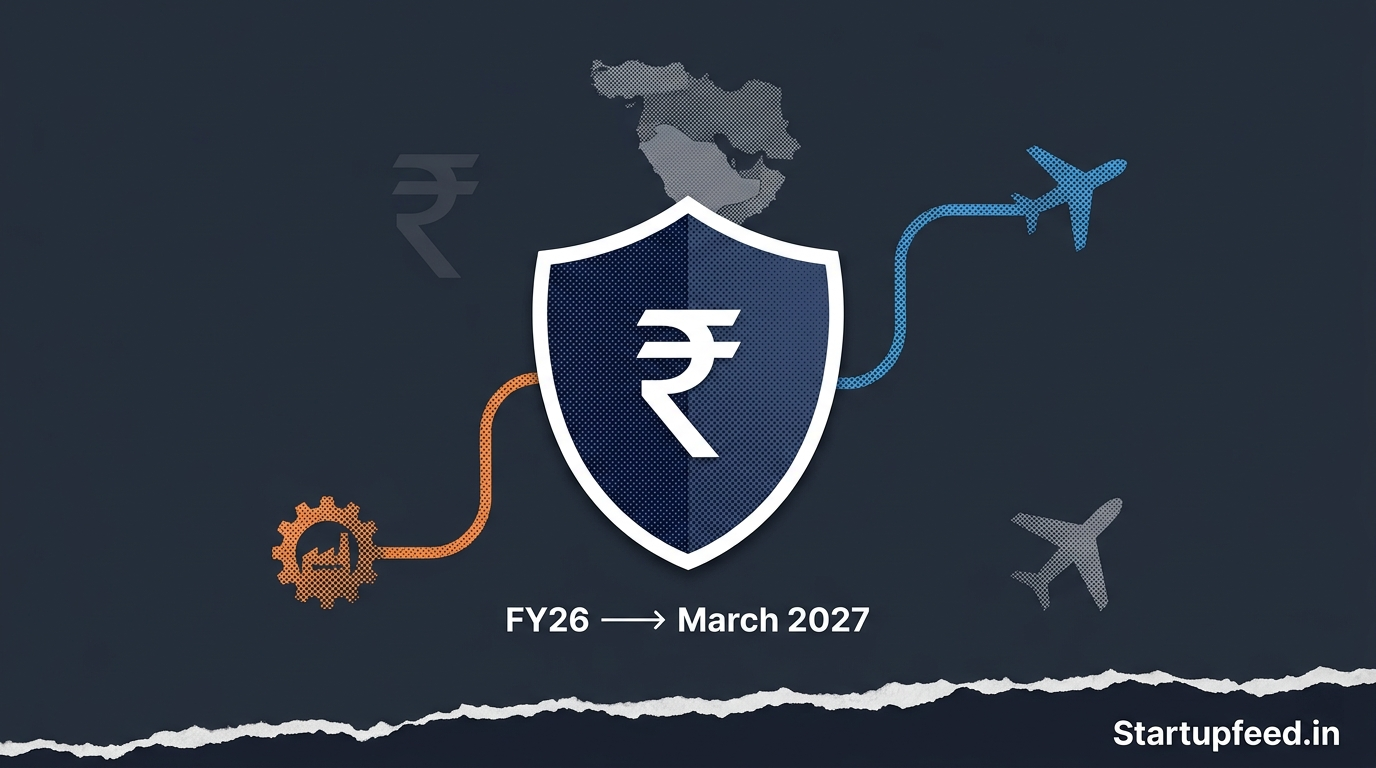
- The Union Cabinet approved ECLGS 5.0 on May 5, 2026 — a ₹18,100 crore outlay that the government expects to enable ₹2.55 lakh crore in additional credit flow to MSMEs, non-MSMEs, and scheduled passenger airlines impacted by the West Asia conflict.
- MSMEs receive 100% credit guarantee coverage via NCGTC; non-MSMEs and airlines receive 90%. MSMEs can borrow up to 20% of Q4 FY26 peak working capital utilisation (capped at ₹100 crore); airlines can borrow up to 100% of eligible exposure (capped at ₹1,500 crore per borrower).
- The scheme charges zero guarantee fee, operates through existing Member Lending Institutions, and is valid for loans sanctioned until March 31, 2027. Eligibility requires a standard-category account as of March 31, 2026.
ECLGS 5.0, approved by the Union Cabinet on May 5, 2026, is India’s most targeted financial policy response yet to the West Asia conflict — a geopolitical shock that has disrupted shipping routes, spiked freight costs by 15–20%, weakened the rupee past ₹94–95 per USD, and pushed India’s manufacturing PMI to a four-year low. The Emergency Credit Line Guarantee Scheme’s fifth iteration is structurally identical to its COVID-era predecessors in mechanism — the government guarantees bank loans to reduce lender risk and unlock credit — but differs in its precision targeting: two specific sectors (MSMEs and airlines) hit by one specific external shock (West Asia), with a defined validity window (until March 31, 2027) and a zero guarantee fee for borrowers.
The scheme is administered by the National Credit Guarantee Trustee Company Limited (NCGTC) and operates through all Member Lending Institutions — scheduled commercial banks, NBFCs, and financial institutions already in the NCGTC network. No new application channels or onboarding processes are required for eligible borrowers who already have working capital facilities with these lenders.
StartupFeed Insight
ECLGS 5.0 is important for Indian founders and MSMEs to understand clearly — not just as a liquidity instrument, but as a signal about how seriously the government is reading the West Asia disruption’s downstream economic effects. The scheme’s design is calibrated for a specific diagnosis: businesses that are fundamentally viable, have existing standard-category credit facilities, and are experiencing temporary working capital stress because their supply chains are disrupted, their export orders are delayed, or their operating costs have spiked due to freight and energy price surges. It is emphatically not designed for businesses with pre-existing credit stress — the standard-account eligibility requirement makes that explicit.
For founders eligible to access ECLGS 5.0, the most important operational point is this: the additional credit is capped at 20% of Q4 FY26 peak working capital utilisation. This is not a blank cheque — it is a precisely calibrated top-up. A business with ₹5 crore in peak working capital utilisation in Q4 FY26 can access up to ₹1 crore in additional credit under the scheme. That capital, borrowed at whatever rate your lending institution charges (there is no ECLGS-specific interest rate cap in the ECLGS 5.0 announcement, unlike earlier iterations), is backed by a 100% NCGTC guarantee for MSMEs
Your bank has zero default risk on that incremental lending. In a tight credit environment, that guarantee is the difference between a loan officer saying yes and saying no. Apply through your existing bank relationship — do not wait for new channels to open. — StartupFeed Desk
ECLGS 5.0: Who Is Eligible and What Can MSMEs and Airlines Actually Claim?
| Parameter | MSMEs | Non-MSMEs | Scheduled Passenger Airlines |
|---|---|---|---|
| Credit guarantee coverage | 100% | 90% | 90% |
| Maximum additional credit | Up to 20% of peak working capital utilisation in Q4 FY26, capped at ₹100 crore | Up to 20% of peak working capital utilisation in Q4 FY26, capped at ₹100 crore | Up to 100% of eligible exposure, capped at ₹1,500 crore per borrower |
| Loan tenure | 5 years (including 1-year principal moratorium) | 5 years (including 1-year principal moratorium) | 7 years (including 2-year moratorium) |
| Guarantee fee | Nil | Nil | Nil |
| Guarantee validity | Full loan duration | Full loan duration | Full loan duration |
| Eligibility baseline | Existing working capital limits or outstanding credit facilities as of March 31, 2026; account classified as “standard” | Existing working capital limits as of March 31, 2026; account classified as “standard” | Outstanding credit facilities as of March 31, 2026; account classified as “standard”; specific additional conditions apply |
| Scheme validity | Loans sanctioned from NCGTC guideline issuance date until March 31, 2027 | Same | Same |
| Administering body | NCGTC via Member Lending Institutions | Same | Same |
The scheme’s most critical eligibility gate is the “standard” account classification as of March 31, 2026. Under RBI’s asset classification framework, a loan account is classified as standard (performing) if it has not missed payment for 90 consecutive days. Businesses that were already under stress — with accounts classified as sub-standard, doubtful, or loss — are explicitly not eligible for ECLGS 5.0. This mirrors the design of earlier ECLGS iterations and reflects the government’s stated objective: supporting businesses facing temporary liquidity stress from an external shock, not restructuring the balance sheets of fundamentally distressed companies.
About the Emergency Credit Line Guarantee Scheme (ECLGS)
The Emergency Credit Line Guarantee Scheme was launched in May 2020 as part of India’s Atmanirbhar Bharat economic package to provide emergency working capital to MSMEs impacted by the COVID-19 pandemic. ECLGS 1.0 thcrough 4.0 collectively mobilised over ₹5 lakh crore in credit guarantees, supporting more than 1.14 crore borrowers. ECLGS 1.0 (May 2020) targeted MSME working capital; ECLGS 2.0 extended coverage to 26 stressed sectors;
ECLGS 3.0 covered hospitality, travel, and related sectors; ECLGS 4.0 expanded hospital infrastructure financing. ECLGS 5.0, approved May 5, 2026, is the first iteration triggered by a geopolitical rather than a pandemic shock — the West Asia conflict that began intensifying from early 2026, disrupting the Gulf trade corridor, spiking freight rates, weakening the rupee, and creating acute working capital pressure for Indian exporters, manufacturers, and airlines. The scheme is administered by NCGTC under the Ministry of Finance’s Department of Financial Services.

What Is the West Asia Crisis and Why Is India’s Economy Exposed?
The West Asia conflict — centred on the US-Israel-Iran axis of tension — has created multiple simultaneous economic shocks for India since early 2026. India imports approximately 90% of its crude oil, and the Gulf corridor — the Strait of Hormuz, the Red Sea, and broader Arabian Sea shipping lanes — is the primary route for both India’s energy imports and its merchandise exports to the Middle East, Europe, and beyond. The crisis has created a cluster of compounding pressures.
| Impact Channel | Magnitude | Most Affected Sectors |
|---|---|---|
| Freight rate surge | Container rates up 15–20%; war-risk insurance premiums spiking; rerouting via Cape of Good Hope adding 15+ days per voyage | Exporters (textiles, food, pharma, gems); importers of raw materials and inputs |
| Energy price escalation | Oil import costs elevated; LPG shortage of 25–30 cargoes; industrial gases (argon, acetylene) up 50–60% | MSMEs in manufacturing, plastics, medical devices; agriculture (fertiliser inputs) |
| Currency depreciation | Rupee weakened past ₹94–95 per USD; ₹1.8 lakh crore FPI outflow in 2026 | Importers of dollar-denominated inputs; all businesses with foreign currency exposure |
| Export market disruption | Gulf is India’s largest regional export market; orders cancelled, deliveries delayed, perishables diverted to domestic markets | Agricultural exporters (Andhra, Telangana); textiles; gems and jewellery; engineering goods |
| Input cost spikes | Plastics and packaging up 30–50%; pharmaceutical inputs up; crude-linked materials across sectors | Medical devices (90% MSME sector); FMCG packaging; automotive |
| Macroeconomic indicators | Manufacturing PMI at 4-year low; services PMI at 14-month low; port cargo volumes and air traffic declining | Broad-based — most visible in export-dependent MSMEs and airlines |
MSMEs are the most structurally exposed segment. They contribute approximately 45% of India’s total merchandise exports, operate on margins of 5–10%, have no currency hedging capability, no buffer inventory, and no alternative supplier qualification processes. A 40–50% freight surge that a large corporation absorbs through treasury management can eliminate an MSME’s entire margin for a quarter. ECLGS 5.0 is designed to prevent that margin compression from becoming a liquidity crisis that triggers loan defaults and job losses.
Why Is the Airline Sector Getting a Separate, More Generous Treatment?
Scheduled passenger airlines receive significantly more generous treatment under ECLGS 5.0 than standard MSMEs — 100% of eligible exposure (versus 20% of working capital), capped at ₹1,500 crore per borrower (versus ₹100 crore), with a 7-year loan tenure and 2-year moratorium (versus 5 years and 1-year moratorium). The rationale is structural: Indian airlines face a simultaneous fuel cost shock (jet fuel prices elevated by crude oil price volatility),
a demand shock (suspended flights and reduced Gulf corridor traffic have cut passenger volumes on key India-Middle East routes), and a revenue shock (reduced international capacity without proportional cost reduction). The ₹5,000 crore ring-fenced for airlines within the total ₹2.55 lakh crore credit target reflects the government’s assessment that the aviation sector’s exposure is acute enough to require specific additional headroom beyond the standard working capital formula.
How Does ECLGS 5.0 Compare to Previous ECLGS Iterations?
| Scheme | Year | Trigger | Total Credit Mobilisation | Key Sectors |
|---|---|---|---|---|
| ECLGS 1.0 | May 2020 | COVID-19 pandemic | Part of ₹5 lakh crore combined ECLGS 1.0–4.0 | MSMEs broadly |
| ECLGS 2.0 | November 2020 | COVID-19 second wave threat | Part of combined total | 26 stressed sectors including healthcare, hospitality |
| ECLGS 3.0 | March 2021 | COVID-19 third wave / sector distress | Part of combined total | Hospitality, travel, leisure, sporting |
| ECLGS 4.0 | 2021–2022 | COVID-19 healthcare infrastructure gap | Part of combined total | Hospitals and healthcare providers |
| ECLGS 5.0 | May 5, 2026 | West Asia geopolitical conflict | ₹2.55 lakh crore (₹18,100 crore outlay) | MSMEs, non-MSMEs, scheduled passenger airlines |
ECLGS 5.0 is the first ECLGS iteration triggered by a geopolitical shock rather than a pandemic — a significant structural distinction. COVID-era ECLGS was responding to a demand collapse and supply lockdown with no defined end date. ECLGS 5.0 is responding to a supply chain disruption and cost shock that is geopolitically driven and therefore potentially resolvable within the scheme’s March 2027 validity window if the conflict de-escalates. The March 2027 sunset is the government’s implicit assessment of the disruption’s expected duration.
What Should MSMEs and Startups Do Right Now?
The practical action list for MSME founders and business owners is short and time-sensitive. First, confirm eligibility: check whether your working capital account with your bank was classified as “standard” as of March 31, 2026. If your account was standard as of that date, you are potentially eligible regardless of what has happened to your business performance since.
Second, calculate your maximum claim: identify your peak working capital utilisation during Q4 FY26 (January–March 2026) and apply the 20% formula to determine your maximum additional credit entitlement.

Third, contact your relationship manager at your primary lending institution and ask specifically about ECLGS 5.0 — the scheme operates through existing Member Lending Institutions, so no new bank relationship is required. Fourth, wait for NCGTC guidelines: the scheme is valid from the date NCGTC issues its operational guidelines to Member Lending Institutions — those guidelines have not yet been publicly released as of May 5, 2026 and will be the trigger for banks to begin processing applications.
What’s Next
Two near-term signals to track. First, the NCGTC guidelines issuance — this is the operational starting gun for ECLGS 5.0. Once NCGTC issues guidelines to Member Lending Institutions, banks can begin sanctioning loans under the scheme. The speed of guideline issuance will determine how quickly liquidity actually reaches stressed MSMEs and airlines.
Second, whether the government extends the scheme’s March 2027 validity if the West Asia conflict persists beyond the government’s implicit resolution timeline — the rupee’s position past ₹94–95 per USD and the manufacturing PMI at a four-year low suggest the macroeconomic stress is not yet peaking. If the conflict drags into H2 FY27, expect either an ECLGS 5.0 extension or a sectoral extension of the RELIEF scheme framework already deployed for MSME exporters since February 2026.
For the 63 million MSMEs in India’s economy and the six-plus scheduled passenger airlines operating domestic and international routes, ECLGS 5.0 is a bridge. Whether it is long enough depends on a geopolitical outcome no one in New Delhi controls.
Frequently Asked Questions
What is ECLGS 5.0 and who approved it?
ECLGS 5.0 — the Emergency Credit Line Guarantee Scheme 5.0 — was approved by the Union Cabinet chaired by Prime Minister Narendra Modi on May 5, 2026. It is a ₹18,100 crore government-backed credit guarantee scheme designed to provide additional working capital to MSMEs, non-MSMEs, and scheduled passenger airlines impacted by the West Asia conflict. The scheme is expected to enable a total additional credit flow of ₹2.55 lakh crore, including ₹5,000 crore ring-fenced for the airline sector. It is administered by the National Credit Guarantee Trustee Company Limited (NCGTC) through Member Lending Institutions and is valid for loans sanctioned until March 31, 2027.
How much additional credit can an MSME access under ECLGS 5.0?
An MSME can access additional credit of up to 20% of its peak working capital utilisation during Q4 FY26 (January–March 2026), subject to a maximum cap of ₹100 crore per borrower. The additional credit carries a 100% credit guarantee from NCGTC, meaning the lending bank faces zero default risk on the incremental loan amount. There is no guarantee fee charged to the borrower. The loan tenure is 5 years, including a 1-year moratorium on principal repayment. Eligibility requires that the borrower had existing working capital limits or outstanding credit facilities as of March 31, 2026, and that the account was classified as “standard” on that date.
What is the difference in ECLGS 5.0 treatment between MSMEs and airlines?
MSMEs receive 100% credit guarantee coverage and can borrow up to 20% of Q4 FY26 peak working capital utilisation, capped at ₹100 crore, with a 5-year loan tenure and 1-year principal moratorium. Scheduled passenger airlines receive 90% credit guarantee coverage but can borrow up to 100% of eligible exposure — capped at ₹1,500 crore per airline — with a significantly longer 7-year loan tenure and a 2-year moratorium. The airline sector has ₹5,000 crore specifically ring-fenced within the scheme’s total expected credit mobilisation of ₹2.55 lakh crore. The more generous airline terms reflect the aviation sector’s acute simultaneous exposure to fuel cost shocks, demand reduction, and revenue compression from the West Asia conflict.
Written by Harshvardhan jain. Published: May 5, 2026. Updated: May 5, 2026. Have a tip? Write to us at editorial@startupfeed.in.
Liked this story? Follow StartupFeed on Google so our reporting reaches you first.