
Quick Take
- India millet production hit a record 18.59 MT in FY25, the global leader at 38.4% of world output.
- PLI-backed millet product sales surged 23x to Rs 814 Cr in FY25, from Rs 35 Cr in FY21.
- FMCG brands are overhauling summer portfolios to capture health-conscious consumers who want millet options.
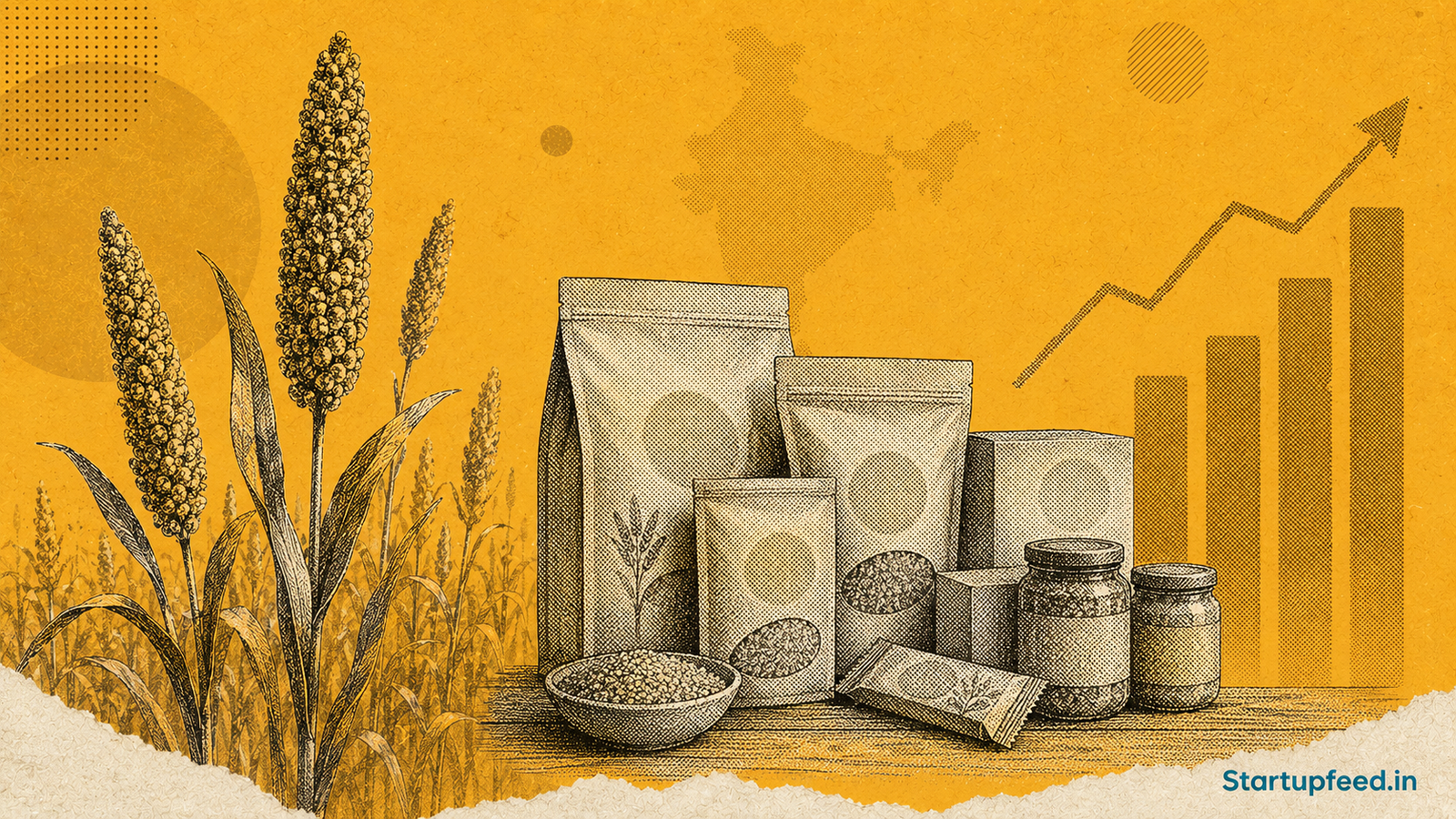
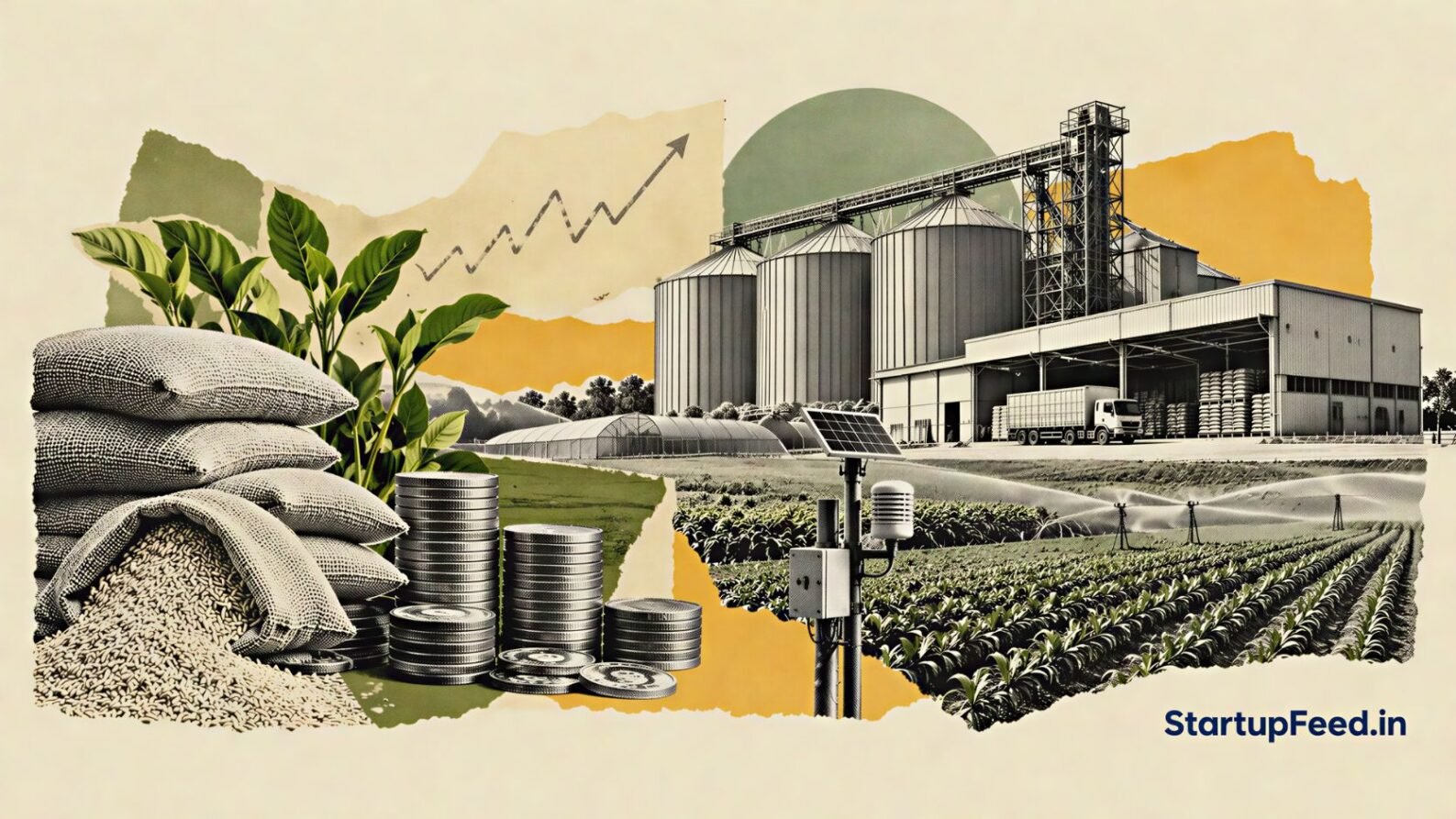
India’s millet production reached 18.59 million tonnes in 2024-25 — a record high — confirming India’s position as the world’s largest producer of millets, accounting for approximately 38.4% of global output. The milestone has unlocked a commercial opportunity that India’s FMCG sector is only beginning to properly pursue. Domestic sales of millet-based branded packaged foods surged from Rs 35 Cr in FY21 to Rs 814 Cr in FY25 — a 23-fold increase in five years — fuelled by a combination of focused PLI scheme incentives, over 500 new SKU launches triggered by the UN’s International Year of Millets in 2023, and a demographic shift toward health-conscious consumption that legacy food brands cannot afford to ignore.
StartupFeed Insight
The Rs 814 Cr millet product sales figure sounds substantial until you place it against India’s Rs 29.5 Lakh Cr packaged food market — millets remain a fraction of total FMCG snack revenue. The real signal is the growth rate: 23x in five years, 500+ new SKUs post-2023, and millet procurement by PLI beneficiaries up from 1,092 MT to 16,130 MT in the same window. That trajectory is what incumbents like ITC, Britannia, and HUL are reading when they overhaul summer portfolios. The challenge for legacy brands entering now is that the millet category’s trust was built by D2C brands — Slurrp Farm, True Elements, Tata Soulfull, Millet Magic.
What Is Driving India Millet Production and FMCG Demand?
| Metric | FY25 Figure | Baseline / Context |
|---|---|---|
| Millet Production (FY25) | 18.59 MT | Record high; +4.43 lakh MT YoY (PIB data) |
| India’s Global Share | 38.4% of world output | World’s largest producer (FAO, 2023) |
| Top Producing States | Rajasthan, Maharashtra, Karnataka | Bajra dominant variety, then jowar, ragi |
| Millet-Based Product Sales | Rs 814 Cr (FY25) | Up from Rs 35 Cr in FY21 — 23x increase |
| PLI Scheme Outlay (PLISMBP) | Rs 793.27 Cr approved | 29 companies (8 large, 21 SME); Rs 800 Cr total outlay |
| Millet Procurement by PLI Companies | 16,130 MT (FY25) | Up from 1,092 MT in FY21 — 15x increase |
| New SKU Launches (post-IYM 2023) | 500+ | Across RTE, RTC, snack, drink, baking formats |
| PMFME Millet Entrepreneurs Supported | 4,366 | Rs 226.40 Cr in loans; 17 incubation centres |
| Millet Exports (FY25) | 89,165 MT ($37 Mn) | Key markets: UAE, Nepal, Saudi Arabia, USA |
| India’s Millet Export Target (APEDA) | Rs 2,000 Cr | Ambitious medium-term target |
Three policy interventions have built the platform that FMCG brands are now commercial beneficiaries of. The National Food Security Mission — Nutri Cereals provided agricultural support for millet cultivation. The PLI Scheme for Millet-Based Products (PLISMBP), with Rs 793.27 Cr deployed to 29 companies, incentivised branded product manufacturing with an eligibility bar of at least 15% millet content by weight and a 10% annual sales growth requirement. The PMFME scheme created 4,366 millet entrepreneurs and 17 processing incubation centres that trained SME-level manufacturers in food-grade millet processing — the upstream supply chain that makes FMCG product launches possible.
The Nutritional Case That Is Closing Consumer Deals
FMCG brands are not just riding a food trend. They are benefiting from an evidence base that health-conscious consumers increasingly cite at purchase. Finger millet contains 11.5g of dietary fibre per 100g — roughly triple the fibre in polished rice. Its glycaemic index ranges from 54 to 68, compared to 70-85 for wheat-based snacks. Pearl millet provides 11.6mg of iron per 100g, positioning it as a functional food for India’s anaemia-affected population. A 2024 meta-analysis in the Journal of Nutritional Science found that consistent millet consumption led to a 12-15% reduction in fasting blood glucose among pre-diabetic individuals over 12 weeks.
About India’s PLI Scheme for Millet-Based Products (PLISMBP)
The Production-Linked Incentive Scheme for Millet-Based Products (PLISMBP) was introduced as part of India’s broader PLI for Food Processing to promote the use of millets in branded Ready-to-Eat (RTE) and Ready-to-Cook (RTC) products. The scheme connects millet farmers with food processors by creating financial incentive for product manufacturers to increase their millet procurement. As of FY25, the scheme has approved Rs 793.27 Cr to 29 companies and has directly supported 4,612 micro food processing units through the PMFME component. Eligible products must contain at least 15% millet by weight, be sold in branded consumer packs, and use only domestically sourced millets.
How Are FMCG Brands Leveraging India’s Millet Production Boom?
The FMCG response to India millet production data is a combination of portfolio acquisition, in-house launches, and supply chain investment.
| Company | Millet Strategy | Product Positioning |
|---|---|---|
| Tata Consumer Products | Tata Soulfull — millets-led breakfast and snack brand | Acquired, scaled; targeting Tier 1 + modern retail |
| ITC | Aashirvaad millet-based atta, multigrain products | Leveraging Aashirvaad distribution at scale |
| Slurrp Farm (Wholsum Foods) | D2C millet snacks, pancake mixes, muesli since 2016 | Clean-label; premium; D2C + FirstCry + Amazon |
| True Elements | Millet-based breakfast cereals, muesli, oats | Health-first; strong e-commerce presence |
| Troo Good | 2 Mn units/day; sourcing from 15,000+ farmers | PMFME-supported; Rs 100 Cr revenue target |
The emerging pattern is clear: D2C-first brands built the category over 2018-2023, and legacy FMCG is entering in 2024-2026 through acquisition, line extension, or brand licensing. Quick commerce has accelerated this dynamic — millet products are now available for 10-minute delivery on Blinkit and Swiggy Instamart, removing the friction of a specialty-store purchase and putting millet snacks next to chips and biscuits in the consumer’s consideration set.CSIR filed 12 millet-processing patents in FY25 alone, suggesting that technological innovation in texture, shelf life, and flavour — historically a weakness of millet products compared to wheat-based snacks — is beginning to catch up with market demand.
What’s Next
India millet production’s structural supply base is now in place. The question for the next three years is whether branded millet products can achieve the kind of household penetration that jowar roti and bajra khichdi already have — but in a convenient, mass-market packaged format. Watch for any FMCG acquisition of a D2C millet brand in FY27, which would be the clearest signal that legacy players have stopped testing the market and started betting on it.Will millet become the next oats — a grain that moved from niche health product to mainstream FMCG category in under a decade?
Frequently Asked Questions
What is India’s millet production record in 2024-25?India millet production reached 18.59 million tonnes in 2024-25 — a record annual high — making India the world’s largest millet producer with approximately 38.4% of global output, according to advance estimates of agricultural production. Leading producing states are Rajasthan, Maharashtra, and Karnataka, with bajra (pearl millet) accounting for the highest volume, followed by jowar, ragi, and small millets. Production grew by approximately 4.43 lakh tonnes compared to the previous year, driven by MSP support for farmers and the expansion of millet cultivation under the National Food Security Mission — Nutri Cereals programme.
What is the PLI Scheme for Millet-Based Products and how has it performed?The Production-Linked Incentive Scheme for Millet-Based Products (PLISMBP) was introduced under the broader PLI for Food Processing to promote branded millet-based RTE and RTC products domestically and for export. The scheme has approved Rs 793.27 Cr to 29 companies and requires product manufacturers to achieve at least 10% annual sales growth, use domestically sourced millets, and include at least 15% millet content by weight. Under the PLI, millet-based product sales by approved beneficiaries surged from Rs 35 Cr in FY21 to Rs 814 Cr in FY25, while millet procurement by these companies rose from 1,092 MT to 16,130 MT in the same period.
Which FMCG brands are leading in India’s millet product market?India’s millet-based branded product category was built primarily by D2C startups. Slurrp Farm (Wholsum Foods), founded by Meghana Narayan and Shauravi Malik, pioneered millet-based baby and toddler foods from 2016. True Elements built a millet-focused breakfast category. Tata Consumer Products acquired Tata Soulfull to enter the segment at scale. ITC has expanded its Aashirvaad range to include millet-based atta and multigrain offerings. Troo Good, supported by the PMFME scheme, produces 2 million millet product units daily from a farmer network of over 15,000. Legacy FMCG brands including HUL and Britannia are evaluating entries into a category that has grown 23 times in five years.
Liked this story? Follow StartupFeed on Google so our reporting reaches you first.