
Kiwi, the fintech that pioneered Credit-on-UPI in India, is navigating its first significant co-founder departure — just eight months after its $24 million Series B round and as it races toward a one-million credit card target.
Quick Take
- Who: Mohit Bedi — Co-Founder and Chief Business Officer (CBO) of Kiwi; one of three founding partners
- When: Steps back from executive role immediately; will remain with Kiwi until July 2026; full exit post-July 2026
- Why: Personal and family commitments — stated reason; voluntary departure
- What He Keeps: Retains significant equity stake in Kiwi — ‘reflecting his confidence in and association with Kiwi’s long-term growth’
- What’s Next for Bedi: Expected to launch a new fintech venture post-July 2026
- Replacement: Sumeet Basrani appointed as new CBO — 15+ years in cards and payments; previously at Cred, OneCard, ICICI Bank, Visa
- Leadership Continuity: Anup Agrawal (CEO) and Siddharth Mehta (CFO & COO) remain; Kiwi says ‘leadership team and strategic priorities remain unchanged’
- Kiwi Today: $43 Mn total funding; 2 lakh+ RuPay credit cards issued; 5 Mn+ merchant transactions/month; 600 cities; bank partners: Vertex Ventures, Nexus, Stellaris, Omidyar
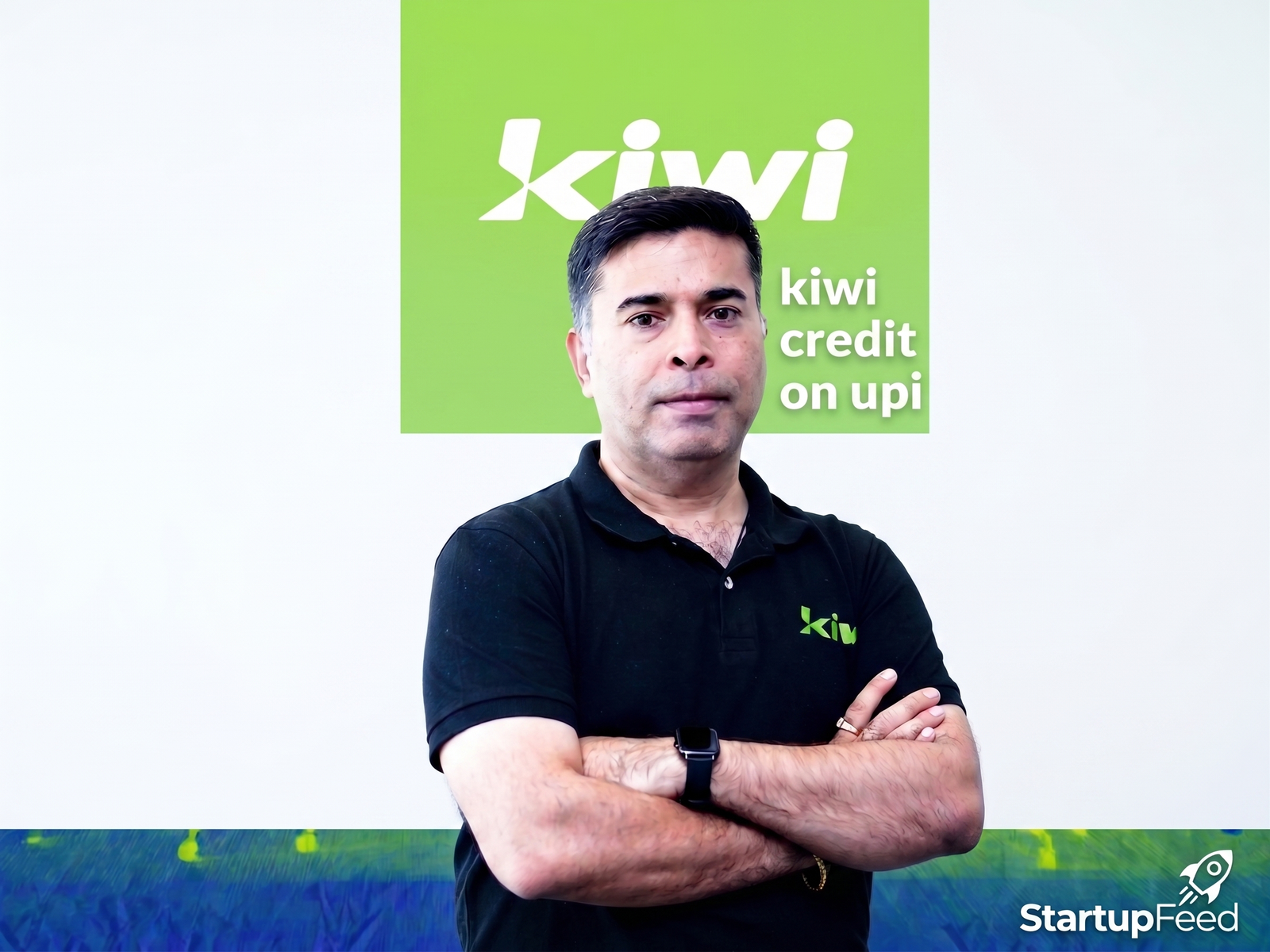
Mohit Bedi, co-founder and Chief Business Officer (CBO) of Kiwi — the Bengaluru-based fintech that pioneered Credit-on-UPI in India — has decided to step back from his executive role citing personal and family commitments. Bedi will continue with the company until July 2026, after which he is expected to fully exit the executive function. He will, however, retain a significant equity stake in Kiwi.
Kiwi said in a statement:
“Mohit Bedi, Co-founder of Kiwi has decided to step back from his executive role due to personal and family commitments. He will continue to retain a significant equity stake in the company, reflecting his confidence in and association with Kiwi’s long-term growth. The leadership team and strategic priorities remain unchanged.”
Bedi is likely to launch a new fintech venture after his exit. Kiwi has proactively managed the transition — appointing Sumeet Basrani as the new CBO approximately three weeks before Bedi’s departure was announced, ensuring continuity in the business development function.
StartupFeed Insight



Context and impact: Bedi’s departure is the first co-founder exit from Kiwi’s three-person founding team. With 16.2% founding stake each at Series A (some dilution post-Series B), each co-founder departure is consequential for governance. The fact that Kiwi pre-appointed Basrani before announcing Bedi’s exit shows mature transition management — a signal that the company anticipated and planned for this change.
The Basrani hire is well-calibrated: Sumeet Basrani’s track record at Cred (built card and payment partnerships with banks), OneCard (early-stage credit card fintech), ICICI Bank, and Visa gives him exactly the institutional relationships Kiwi needs in its next phase — scaling card issuance to 1 million and adding new banking partners. Bedi’s institutional fintech background (Axis Bank, PayU, Standard Chartered, Barclays) is being replaced by someone with deep startup-scale-up experience.
The equity retention signal: Bedi retaining his equity stake is the most important element of the announcement. A founder who exits but keeps equity is signalling that they believe in the company’s upside — not that they are walking away from it. For investors, this removes the overhang risk of a co-founder block sale. For employees, it signals that the founder’s confidence in Kiwi’s trajectory is intact.
The new fintech venture watch: A serial fintech founder with Axis Bank SVP, PayU, Standard Chartered (Credit Cards Head), and Barclays (Cards Head) pedigree, who built a Credit-on-UPI pioneer from scratch — Bedi’s next venture will attract attention. The most likely space: adjacent to Credit-on-UPI (lending infrastructure, BNPL, credit bureau integration) or a play in the MSME credit category that he would have studied closely during his time at Kiwi.
Our prediction: Bedi’s new fintech venture will be announced by Q4 2026 and will likely focus on MSME credit or embedded finance, drawing on his institutional banking relationships at Axis and Standard Chartered. Kiwi, meanwhile, will hit 500,000 credit cards by December 2026 and 1 million by Q3 FY27 — driven by Basrani’s bank partnership playbook from Cred.
Mohit Bedi — The Man Stepping Back
| Parameter | Detail |
| Role at Kiwi | Co-Founder and Chief Business Officer (CBO); responsible for business development, banking partnerships, and commercial strategy |
| Kiwi Tenure | Co-founded in 2022; approximately 4 years of executive tenure |
| Exit Timeline | Steps back immediately from executive function; remains with Kiwi until July 2026 for transition; full exit post-July 2026 |
| Equity | Retains significant equity stake — not exiting as a shareholder, only as an executive |
| Next Move | Expected to launch a new fintech venture |
| Pre-Kiwi: Axis Bank | Senior Vice President; led the acquiring and commercial cards business — deep institutional cards expertise |
| Pre-Kiwi: PayU | Senior Vice President — fintech payments and digital lending background |
| Pre-Kiwi: Standard Chartered | Credit Cards Head — product and P&L ownership for one of India’s top credit card portfolios |
| Pre-Kiwi: Barclays India | Head – Bancassurance to Sales & Alliances, Cards Head — cross-functional banking leadership |
| Background | ~25+ years across banking (Axis, Standard Chartered, Barclays) and fintech (PayU); deep domain expertise in credit cards, acquiring, and payments |
Leadership After Bedi — The New CBO
| Parameter | Detail |
| New CBO | Sumeet Basrani — appointed March 2026, approximately 3 weeks before Bedi’s departure announcement |
| Previous: Cred | Built and scaled Cred’s partnerships across credit cards, payments, and lending with banks and financial institutions — directly relevant to Kiwi’s bank partnership model |
| Previous: OneCard | Early-stage credit card fintech — experience scaling card products at a startup; direct competitive peer to Kiwi |
| Previous: ICICI Bank | Banking background with understanding of how large banks evaluate and structure fintech partnerships |
| Previous: Visa | Network-level understanding of card infrastructure, acquiring economics, and bank-network dynamics |
| Why Basrani Fits | ‘Sumeet understands how banks, networks, and consumer platforms intersect — which is exactly where Kiwi is building’ — Siddharth Mehta, Co-founder, Kiwi |
| His Mandate | Scale distribution and unlock new use cases for credit — specifically card add-ons, EMI enablement on UPI, and expanding banking partnerships |
Kiwi — Company Context at the Time of Bedi’s Exit
| Metric | Value / Status |
| Founded | 2022 by Mohit Bedi, Siddharth Mehta (CFO & COO), Anup Agrawal (CEO) |
| Product | India’s pioneer in Credit-on-UPI; issues virtual RuPay credit cards linked to UPI accounts; licensed UPI third-party app provider (TPAP) |
| Cards Issued | 2 lakh+ (200,000) RuPay credit cards — target: 1 million by 2027 |
| Monthly Transactions | 5 Mn+ merchant transactions per month |
| Cities | 600+ cities across India |
| Banking Partners | YES Bank, AU Small Finance Bank (current); 2 additional partners planned for FY26 |
| Total Funding | $43 Mn across 3 rounds |
| Seed (Dec 2022) | Initial capital; foundation round |
| Series A (Nov 2023) | $13 Mn; led by Omidyar Network India; participation from Nexus Venture Partners and Stellaris Venture Partners |
| Series B (Aug 2025) | $24 Mn; led by Vertex Ventures SEA & India (Kanika Mayar, Partner); Nexus, Stellaris, Omidyar re-invested |
| FY25 Revenue | ₹9.64 Cr (GoKiwi Tech Pvt Ltd entity); 79% CAGR growth |
| Profitability Target | 2 years from Series B (i.e., by Aug 2027) — per CEO Anup Agrawal |
| Market Context | India: 350 Mn+ UPI users vs 35-40 Mn credit card users; credit-on-UPI acceptance network 35x larger than traditional card POS; ~16% of credit card spend now on RuPay/UPI |
The Credit-on-UPI Market — Why Kiwi’s Moment Matters
Bedi’s departure comes at what CEO Anup Agrawal calls an ‘inflection point’ for Credit-on-UPI. The market context makes Kiwi’s leadership transition particularly important to get right:
- 350 Mn+ UPI users vs 35-40 Mn credit card users: India’s UPI network is 8-10x larger than its credit card base. Credit-on-UPI bridges this — allowing the UPI network to become a credit access channel for the 300 Mn+ Indians who use UPI but not credit cards.
- Credit card acceptance via UPI is 35x larger: Traditional credit card acceptance requires POS terminals at merchants. UPI-linked credit cards work on the UPI QR code network — which is 35x larger by merchant count. This is the structural advantage Kiwi is built on.
- 16% of credit card spending now on RuPay/UPI: RBI and NPCI policy has actively pushed Credit-on-UPI since 2022. The adoption curve is now moving from early adopter to early majority — exactly when Kiwi needs strong business leadership.
- Competition is intensifying: Kiwi competes with Slice (now merged with IDFC First Bank), OneCard, Jupiter, Uni, and increasingly with banks launching their own Credit-on-UPI solutions. The CBO role is critical for maintaining banking partnerships and distribution advantages.
What’s Next
Kiwi’s immediate priorities post-Bedi are clear: execute on the 1 million credit card target by 2027; add two new banking partners in FY26; launch the creditline-on-UPI feature (announced at Series B); and deepen the rewards programme to drive retention. Basrani’s appointment from Cred — where he built bank partnerships at scale — positions Kiwi well for the banking relationship expansion.


The broader narrative for Kiwi is unchanged: India’s Credit-on-UPI category is at an early-majority inflection point, and Kiwi has first-mover advantage in brand, technology, and regulatory positioning. Bedi’s departure removes the institutional banking relationships he embodied, but Basrani’s Cred and OneCard background — arguably more startup-native and relevant to Kiwi’s scale phase — mitigates that risk.
As for Bedi — a serial fintech operator who helped build India’s first Credit-on-UPI platform from scratch — watch for what comes next. His institutional banking depth combined with his startup operator experience is a rare combination. His next fintech venture will be one to watch.
Liked this story? Follow StartupFeed on Google so our reporting reaches you first.