
Quick Take
- Mercury raised $200 Mn in a Series D round led by TCV at a $5.2 Bn valuation.
- The fintech hit $650 Mn in annualised revenue and serves over 300,000 business customers globally.
- Mercury awaits final US bank charter approval by 2027, cutting reliance on partner banks Column and Choice Financial.
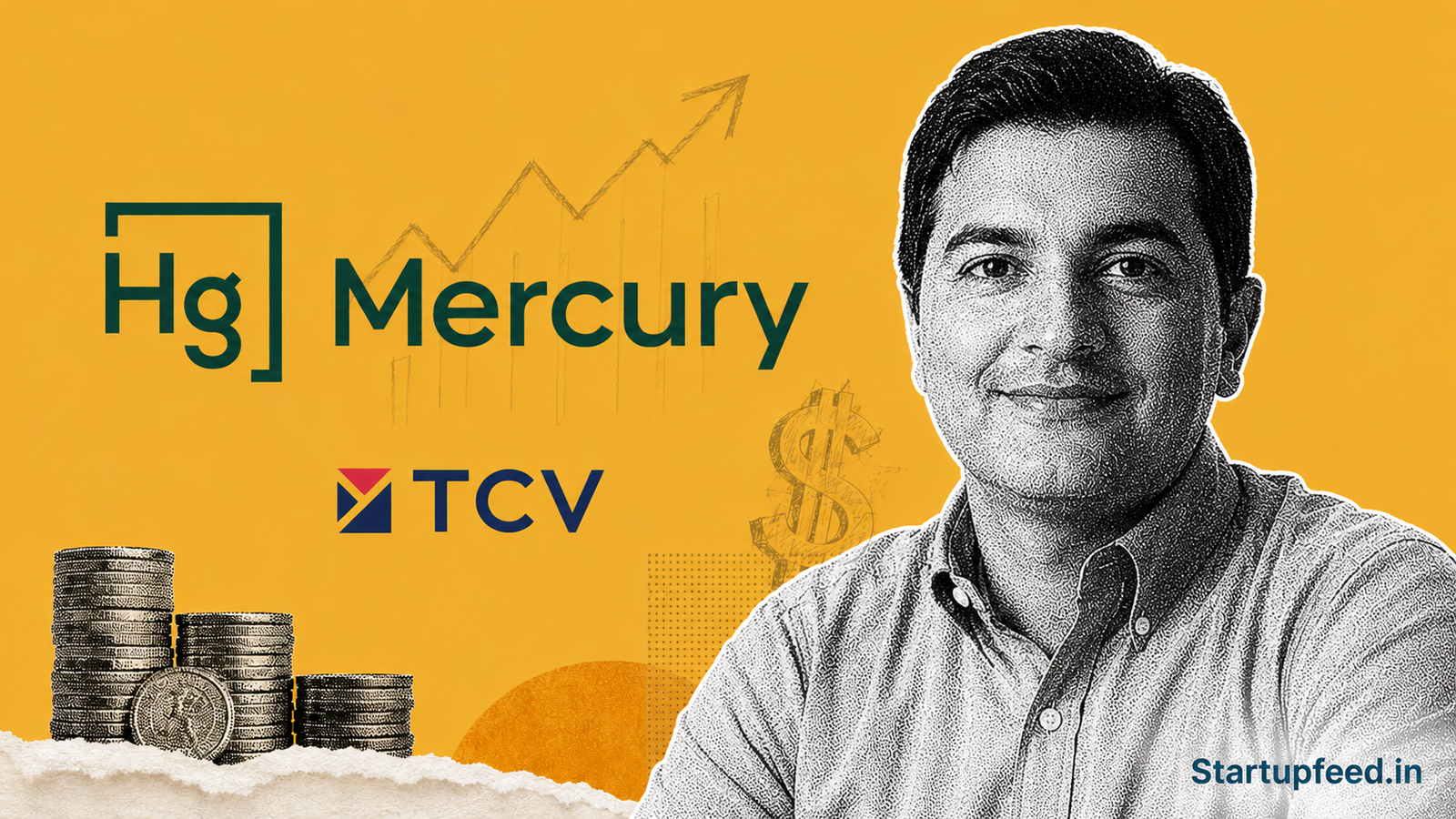
Mercury Series D Funding has closed at $200 Mn (Rs 1,670 Cr), valuing the San Francisco fintech at $5.2 Bn (Rs 43,400 Cr) and led by growth investor TCV (Technology Crossover Ventures).
The round marks a 49% jump from Mercury’s $3.5 Bn valuation just 14 months ago. It comes weeks after the US Office of the Comptroller of the Currency (OCC), the federal banking regulator, gave the company conditional approval for a national bank charter. The fresh capital will support Mercury’s push into AI-powered banking for founders.
html
StartupFeed Insight
The cheque is not the headline. The real signal is four straight years of profitability paired with $650 Mn in annualized revenue. That mix is rare in fintech today. Most peers still burn cash to grow. Mercury did both at the same time. Indian founders building global startups should watch closely. Many already use Mercury to bank their Delaware-registered companies after the Silicon Valley Bank collapse in 2023. Expect Mercury to formalise its bank charter by mid-2027 and ship AI-agent banking features that Indian neobanks like RazorpayX and Open will need to match within 18 months, by StartupFeed Desk.
Inside the Mercury Series D Funding
The round was led by TCV with full participation from every major existing backer. Andreessen Horowitz, Coatue, CRV, Sapphire Ventures, Sequoia Capital, and Spark Capital all rejoined. The mix signals investor confidence in profitable fintech, even as the broader sector cools.
| Metric | Detail | Notes |
|---|---|---|
| Total Raise | $200 Mn (Rs 1,670 Cr) | Primary capital, Series D |
| Lead Investor | TCV (Technology Crossover Ventures) | New lead, growth-stage specialist |
| Other Investors | Sequoia, a16z, Coatue, CRV, Sapphire, Spark | All existing backers rejoined |
| Post-Money Valuation | $5.2 Bn (Rs 43,400 Cr) | Up 49% from $3.5 Bn in March 2025 |
| Previous Round | $300 Mn Series C (March 2025) | Led by Sequoia Capital |
| Cumulative Raised | ~$700 Mn (Rs 5,845 Cr) | Primary plus secondary, since 2017 |
| Announcement Date | May 20, 2026 | Confirmed by company press release |
The most interesting number is not the headline cheque. It is the 2.5x year-over-year jump in new business applications during Q1 2026. That speaks to demand, not just investor appetite.


About Mercury
Mercury is a San Francisco-based fintech founded in 2017 by Immad Akhund, Max Tagher, and Jason Zhang. The company offers business banking to startups and small businesses through partner banks Column and Choice Financial. It serves over 300,000 customers including Supabase, ElevenLabs, Linear, Phantom, and Tempo. Top investors include Sequoia Capital, Andreessen Horowitz, TCV, and Coatue Management.
Why did TCV back Mercury?
TCV led with a thesis on AI-native founders. The firm believes the next wave of company-builders will run their finances through AI agents, not bank dashboards. Mercury fits that thesis. The company already lets businesses interact with their accounts through AI agents, and plans a broader conversational interface by late 2026.
“We believe the next generation of entrepreneurs will be AI-native and will need a banking partner that helps them run their finances and build at the pace AI itself is setting. We see Mercury as that partner.”
Neil Tolaney, General Partner, TCV.
The numbers also help. Mercury hit $650 Mn in annualized revenue by Q3 2025. It is profitable on both GAAP (Generally Accepted Accounting Principles) and EBITDA (Earnings Before Interest, Taxes, Depreciation, and Amortization) basis for four straight years.
How does Mercury compare to competitors?
Mercury’s main US rivals are Brex and Ramp. Capital One acquired Brex for $5.15 Bn in April 2026, folding it into a traditional bank’s stack. Ramp continues to focus on spend management software. Mercury, with its own bank charter on the way, is the only one of the three moving toward becoming a regulated US bank itself.
| Player | HQ | Focus |
|---|---|---|
| Mercury | San Francisco | Business banking, AI agent features, bank charter pending |
| Brex | San Francisco | Corporate cards, now a Capital One subsidiary |
| Ramp | New York | Spend management, expense automation |
In India, the closest parallels are RazorpayX, Open, and Karbon Card. Each serves a similar segment of startup banking, but operates under partner-bank licences. None has its own banking charter. That is the real moat Mercury is building.
What’s Next
Two milestones to watch. First, Mercury’s final US bank charter approval, expected in 2027 after the OCC’s conditional nod in April 2026. Second, the broader AI banking interface set to launch in late 2026. The Mercury Series D Funding gives the company room to chase both at once. Will any Indian neobank pursue a similar charter route by 2028?

Frequently Asked Questions
How much did Mercury raise in its Series D and from whom?
Mercury raised $200 Mn (Rs 1,670 Cr) in its Series D round, led by growth investor TCV. Existing backers Andreessen Horowitz, Coatue, CRV, Sapphire Ventures, Sequoia Capital, and Spark Capital also joined. The round valued Mercury at $5.2 Bn (Rs 43,400 Cr).
What does Mercury do?
Mercury is a US fintech that offers banking services to startups and small businesses through partner banks Column and Choice Financial. It serves over 300,000 companies including Supabase, ElevenLabs, and Linear. Many Indian-origin founders use Mercury for their Delaware-registered global startups.
How will the Mercury Series D Funding be used?
The Mercury Series D Funding will go toward AI-powered banking features for founders, expanded lending products, and preparation for the US national bank charter. The Office of the Comptroller of the Currency (OCC) gave conditional approval in April 2026, with final approval expected by 2027.
Liked this story? Follow StartupFeed on Google so our reporting reaches you first.