
Published: October 24, 2026
StartupFeed Quick Take
- The SIM binding deadline is December 31, 2026, and the rule is expected to apply from January 1, 2027
- Eight apps are named and four are Indian: Arattai, ShareChat, Josh and JioChat
- Around 86% of 353 Indian firms surveyed run one business number on more than one device
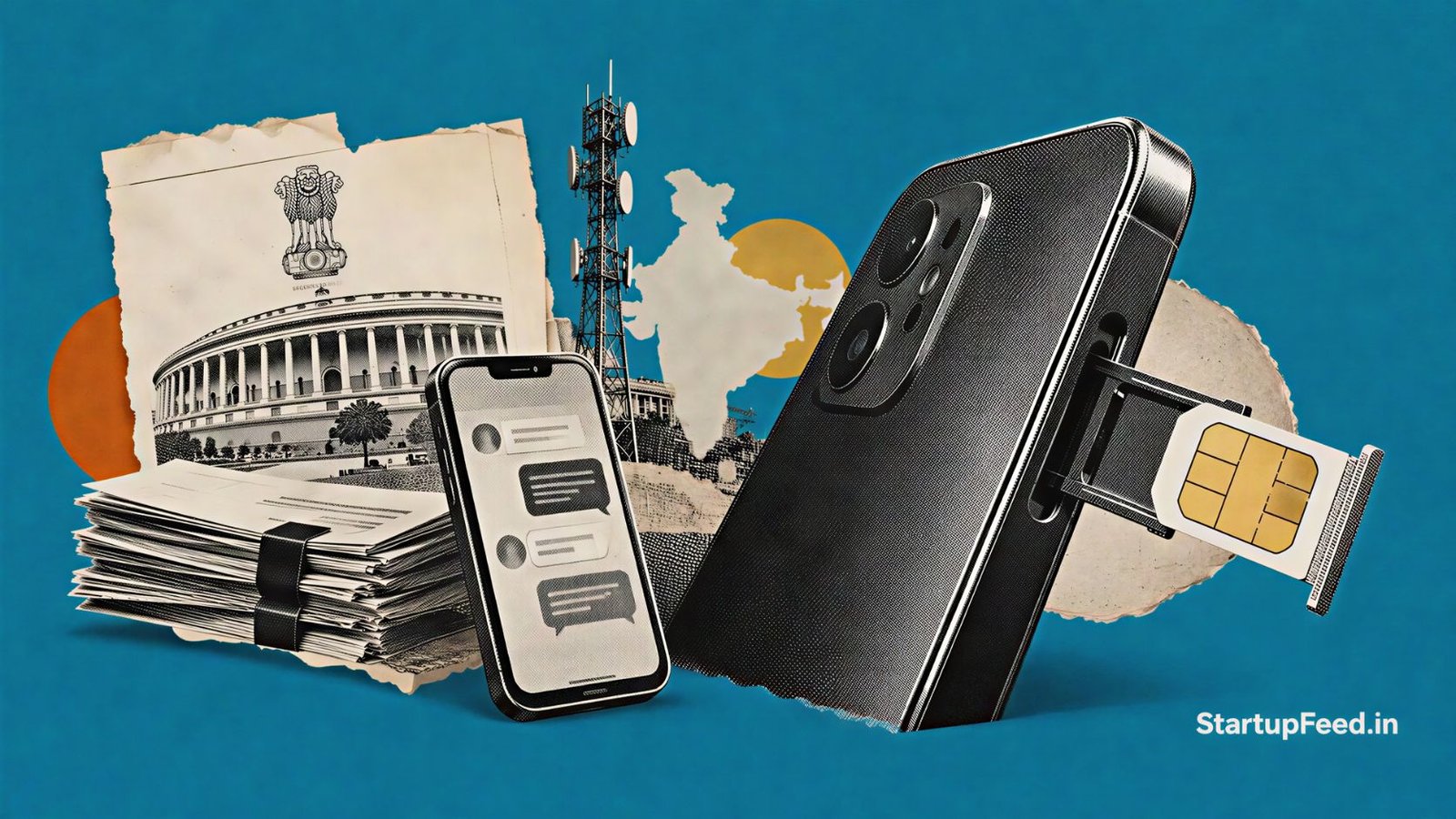
The Department of Telecommunications has set December 31, 2026 as the date by which eight messaging apps must lock accounts to an active SIM.
That leaves 68 days. The original order of November 28, 2025 gave the apps 90 days. That window ran out in February 2026.
The DoT release of December 1, 2025 named the eight: WhatsApp, Telegram, Signal, Snapchat, Arattai, ShareChat, Josh and JioChat. All eight use an Indian mobile number to identify users.
What the SIM Binding Deadline Requires by December 31
Each covered app must stay linked to the active SIM sitting in the same device. Without that SIM, the app must not work at all.



Today an account keeps running after its SIM is pulled out. A phone with no SIM and a Wi-Fi link is enough. The DoT says scammers use exactly that gap.
Roaming is safe. The department has said the rule does not apply when the SIM stays in the handset and the user travels abroad.
The legal base is the Telecom Cyber Security Rules, 2024, as amended. The same order also asked the apps to file a compliance report within 120 days.
Banking and UPI apps already work this way. The DoT release points to them as the model it is copying across to messaging.
The eSIM question is still open. Neither the order nor the government’s later reply says how an eSIM profile meets the test.
| Milestone | Date | What it set |
|---|---|---|
| Order issued | November 28, 2025 | 90 days to implement, 120 days to report |
| Made public | December 1, 2025 | Eight apps named |
| Compliance deadline | December 31, 2026 | Current date, set in April 2026 |
| Rule applies | January 1, 2027 | Expected start |
The Six-Hour Web Logout Rule Is Gone
The six-hour forced logout for WhatsApp Web and similar services no longer applies. The December 2025 order had asked apps to log web users out every six hours and let them reconnect by QR code.
Industry pushed back and the government moved. Pemmasani Chandra Sekhar, Minister of State for Communications, set the new deadline in a written Rajya Sabha reply on April 2, 2026.

He put the new web rule this way:
“[Web sessions] are required to be logged out on the basis of risk-based analysis”
Pemmasani Chandra Sekhar, Minister of State for Communications, Government of India. From a written Rajya Sabha reply, April 2, 2026.
There is a catch for anyone planning around it. No revised written order replacing the six-hour clause has been published since that reply.
Four of the Eight Named Apps Are Indian Companies
Arattai belongs to Zoho, ShareChat to Mohalla Tech, Josh to VerSe Innovation and JioChat to Reliance Jio. So half the named list is Indian.
That matters for cost. Meta and Telegram can spread the engineering across many markets. An Indian app carries the same build for one market alone.
The order puts all eight in a class it calls Telecom Identifier User Entities. That label is what pulls them under telecom rules at all.
Progress is uneven. WhatsApp was testing SIM binding with Indian users by April 2026. Arattai said in March that it planned SIM binding but gave no date.
Signal has not answered the government’s notices. Snapchat has argued the rule misses it because it does not use phone numbers to identify users.
What a Survey of 353 Indian Businesses Found
An Esya Centre report published on October 16, 2026 surveyed 2,033 consumers and 353 small firms. 82% of those firms expect forced logouts to disrupt work.
Around 86% keep one business number on more than one device. Around 92% reach messaging through a laptop, desktop or tablet. 75.6% have two or three people handling customer messages.
79% of the 353 firms employ 10 people or fewer. 52% are in retail. The consumer sample covered 18 cities and left out rural India.
41% of consumers said they would buy a second SIM if the rule came in. 81% of firms said SIM binding would not make messaging safer.
The fraud numbers cut both ways. The DoT release of December 2025 cited cyber fraud losses above Rs 22,800 crore in 2024. Home ministry data puts the 2025 loss at Rs 22,495 crore.
So the rupee loss was flat to slightly lower. Complaints, though, rose 24% to 28.15 lakh in 2025 from 22.68 lakh in 2024.
The order is a traceability fix, not a fraud count. The DoT has not published how many frauds ran on accounts whose SIM had been removed.
What this means for you: If you run customer support or sales on one WhatsApp number across several staff phones and a desktop, this changes your setup. Decide before December 31 whether that number sits in one dedicated handset, and move extra staff to their own business numbers now.
StartupFeed Insight
The national coverage is asking whether WhatsApp will stop working on your phone. The sharper question for a founder is who owns the number. A support desk where four people answer one business number from four devices is the setup this rule breaks, and the Esya figures say around 86% of small firms run exactly that. Watch the Indian four, Arattai, ShareChat, Josh and JioChat, because they carry the same build cost for one market. Prediction: the December 31, 2026 date either slips again or arrives phased, because no revised written direction has appeared more than six months after the April reply.
By Avinash Mishra, Business Correspondent
Have a tip? Write to us at editorial@startupfeed.in.
Liked this story? Follow StartupFeed on Google so our reporting reaches you first.