
Quick Take
- TEJAS is a Startup India programme now running across 132 districts.
- It targets non-metro and underserved regions, not big-city founders.
- Workshops have already run in Nagaland, Jammu and Kashmir, Arunachal Pradesh, Gujarat and Punjab.
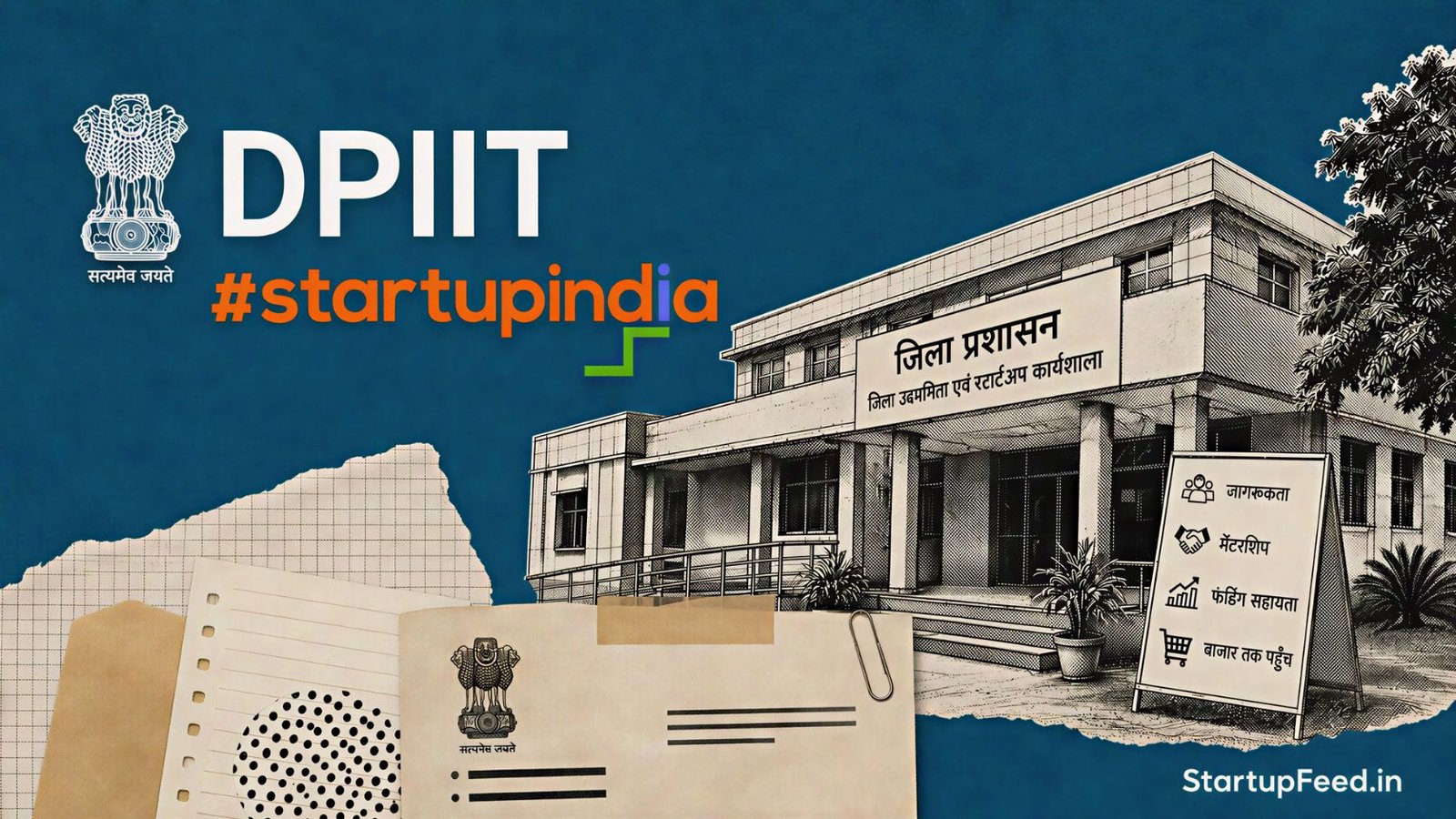
Startup India has taken its founder outreach to small-town India. The programme is called TEJAS, and it is now running across 132 districts. TEJAS stands for Transforming Entrepreneurial Journeys Across State and Districts.
It is run by the Department for Promotion of Industry and Internal Trade, known as DPIIT. The department sits inside the Ministry of Commerce and Industry.
The aim is simple. TEJAS wants to find and back founders in non-metro and underserved regions. It offers them mentorship, access to government schemes, and help reaching a market.
What is TEJAS?
TEJAS is a nationwide Startup India effort to support founders outside the big metros. It reaches students, first-time founders and existing startups in smaller districts. The full name is Transforming Entrepreneurial Journeys Across State and Districts.
The programme runs through district-level workshops. Each one is held with the local district administration and a state partner. DPIIT officials from Startup India lead the sessions.



The sessions cover a fixed set of topics. These include DPIIT startup recognition, funding access, and market linkages. They also cover the One District One Product scheme, known as ODOP.
TEJAS is tied to two national goals. One is Atmanirbhar Bharat. The other is Viksit Bharat@2047, the government’s target for a developed India by 2047.
Which districts and states does TEJAS cover?
TEJAS is being run across 132 districts. Many of these sit in the North East, in Jammu and Kashmir, and in other regions that national media often skips.
Real workshops have already taken place. The table below lists a sample with confirmed dates and turnout.
| District | State or UT | Date |
|---|---|---|
| Kiphire | Nagaland | April 14, 2026 |
| Shamator | Nagaland | April 16, 2026 |
| Baramulla | Jammu and Kashmir | May 21, 2026 |
| Kupwara | Jammu and Kashmir | June 2026 |
| Dibang Valley | Arunachal Pradesh | July 27, 2026 |
Turnout has been strong in places. The Kupwara workshop drew more than 350 people. The Kiphire session saw over 60 students, founders and aspiring entrepreneurs.
What does TEJAS actually offer a founder?
TEJAS offers guidance, not cash. It does not hand out grants by itself. It points founders toward schemes that already exist.
The first thing it explains is DPIIT startup recognition. This tag lets a startup access tax benefits and other central support. Getting it is a common first step for a new founder.



The workshops also cover funding routes and market access. In Kupwara, DPIIT Additional Secretary Ateesh Kumar Singh gave the keynote. In Dahod, Gujarat, officials pushed young people to become job creators, not job seekers.
What this means for you: If you run or mentor a startup in a smaller district, check whether a TEJAS workshop is coming to your area. It is a direct line to DPIIT recognition and scheme access.
Why does TEJAS matter in 2026?
Non-metro India is now the bigger half of the startup map. The government told Parliament that over 50% of recognised startups come from non-metro cities. FY26 alone added more than 55,200 new recognised startups.
TEJAS is the outreach layer on top of that shift. It tries to reach founders before they even register. The 132-district spread is the widest push of its kind so far.
StartupFeed Insight
TEJAS is worth watching, but judge it on outcomes, not workshops. The government has shared its reach: 132 districts, real turnout, named officials. It has not yet shared what comes next. How many attendees got DPIIT recognition? How many raised money? Those numbers will decide if TEJAS built founders or just held events. Expect the first real outcome data by early 2027. Until then, the honest read is this: strong intent, wide reach, results still unproven. Founders in tier-2 and tier-3 districts should treat a TEJAS workshop as a free door into the DPIIT system, and walk through it.
— Harshvardhan Kothari, Technology and Policy Correspondent
Have a tip? Write to us at editorial@startupfeed.in.
Liked this story? Follow StartupFeed on Google so our reporting reaches you first.