
Quick Take
- Mid-sized Indian IT firms are leading the shift to outcome-based pricing as AI adoption grows fast.
- Coforge says outcome-based contracts are now 6 to 7 percent of its global revenue in Q1 FY27.
- Mphasis and LTIMindtree are building AI platforms and deal models tied to results, not headcount.
In This Article
Mid-sized Indian IT firms are leading the move to outcome-based pricing, where revenue is tied to results, not to the number of people on a project, as AI adoption grows across enterprise deals. Coforge said on its Q1 FY27 earnings call (quarter ended June 30, 2026) that outcome-based contracts now make up 6 to 7 percent of its global revenue, per the company. The trend gained fresh weight in July 2026 as several midcap firms tied more deals to AI-led delivery.
The change matters because AI tools now do work that once needed large teams. Clients want to pay for the outcome, such as faster delivery or lower cost, instead of paying for hours worked. This pushes IT firms to prove value, and it rewards firms that adopt AI early. Larger tier-1 firms are moving more slowly as they manage big legacy contracts.
StartupFeed Insight
Outcome-based pricing sounds like a win for clients, and it is, but the real signal here is margin defence. Coforge, Mphasis and LTIMindtree are betting that owning the AI platform lets them keep prices firm even as effort falls, which protects margins that pure discounting would destroy. Watch the tier-1 giants closely: TCS, Infosys and Wipro carry huge time-and-material books, so they cannot switch fast without hurting near-term revenue. StartupFeed expects at least two more large Indian IT firms to report a named outcome-based revenue share on their earnings calls by the end of FY27. By StartupFeed Desk.
What is the outcome-based pricing shift?
Outcome-based pricing is a model where a client pays for a measured result, such as uptime or cost savings, rather than for the hours or headcount used to deliver it. It marks a break from the old time-and-material (T&M) model that has driven Indian IT billing for decades. The shift is being pushed by fast AI adoption, since AI-led work uses fewer people to reach the same result.
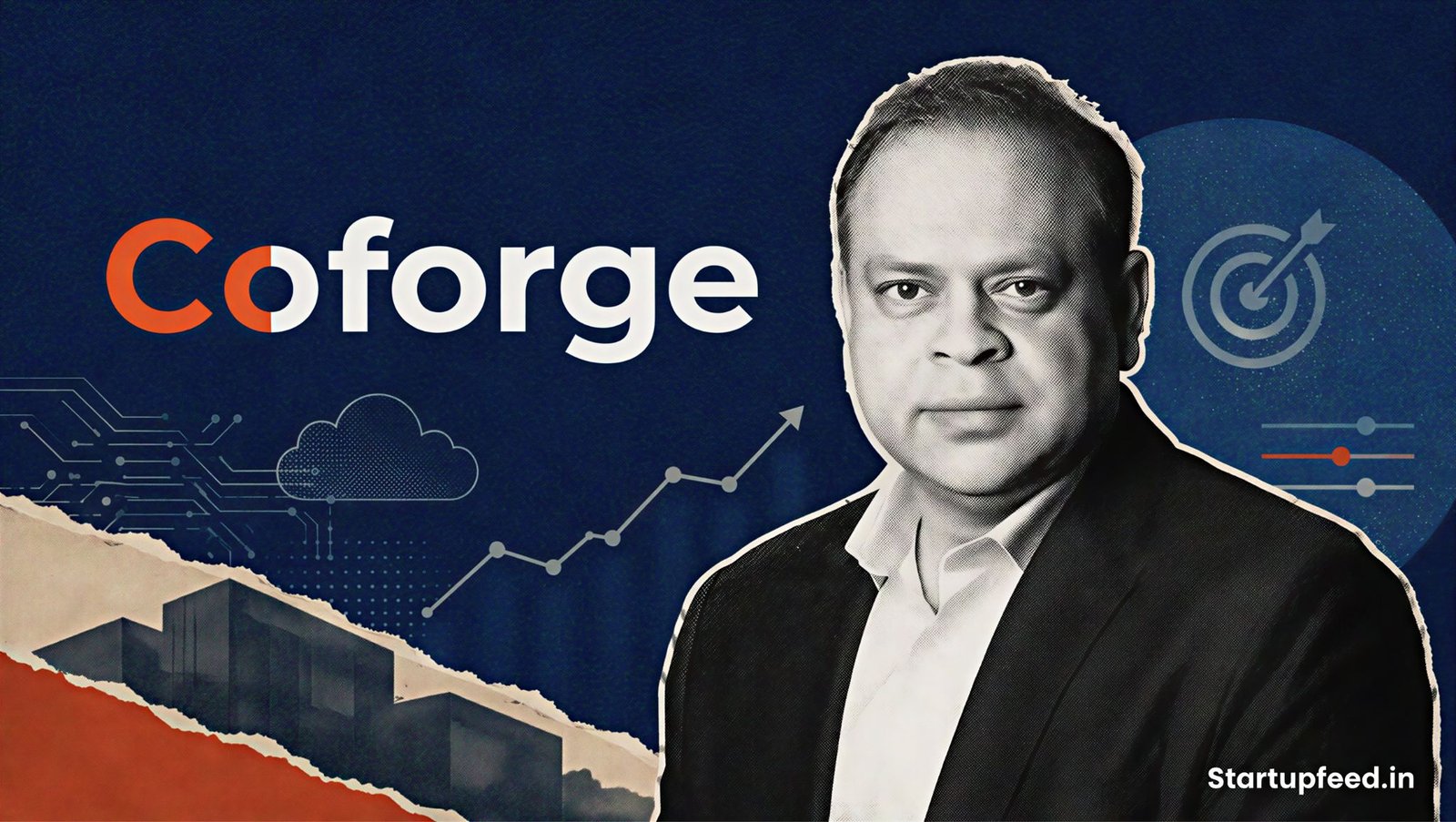
Coforge CEO Sudhir Singh has been vocal on this point. On the company’s Q1 FY27 call, he said outcome-based contracts sit at 6 to 7 percent of global revenue, and that solution-led selling does not need price discounting to grow, per Coforge’s earnings call transcript. Coforge reported that 86 percent of its revenue now comes from AI-led engineering, data and cloud services, using its Nuuron platform and hybrid agent-human pods it calls Mod Squads.
Midcap Numbers: Where Each Firm Stands
Outcome-based pricing is showing up in different ways at each midcap firm, from a named revenue share at Coforge to new AI platforms at Mphasis and LTIMindtree. The table below sets out the key data points, all drawn from company disclosures and Q1 FY27 results. USD figures are converted at the live rate of Rs 95.33 to $1 (August 4, 2026); where a company reported an official INR figure, that figure is used as-is.



| Company | Outcome / AI Signal | Notes |
|---|---|---|
| Coforge | Outcome-based contracts at 6-7% of global revenue | 86% of revenue is AI-led; uses Nuuron platform and Mod Squads (Q1 FY27) |
| Mphasis | Launched Tria, an AI platform running entirely on outcome-based pricing | Avg deal size rose from $52 Mn (Rs 496 Cr) to $74 Mn (Rs 705 Cr), FY25 to FY26 |
| LTIMindtree | Disclosed AI revenue for the first time: about $150 Mn (Rs 1,430 Cr) per quarter | Roughly 12% of total revenue; commercial models now include outcome-based deals (Q1 FY27) |
| Coforge Q1 FY27 revenue | Rs 5,527 Cr / $592.2 Mn, up 49% YoY (INR) | PAT up 110% YoY to Rs 519 Cr; EBITDA margin at 20.3% |
| LTIMindtree Q1 FY27 revenue | Rs 11,608 Cr, up 18% YoY (INR) | Net profit up 17% YoY to Rs 1,469 Cr |
The standout figure is Coforge’s claim that it grows without discounting. Most Indian IT firms have used price cuts to win AI-led work, so a named 6 to 7 percent outcome-based share, held at high margins, is a genuine data point worth tracking.
About the Firms
Coforge, founded in 1992 and based in Noida, is a digital services firm formerly known as NIIT Technologies, led by CEO Sudhir Singh. Mphasis, founded in 1998 and based in Bengaluru, is a Blackstone-backed IT services player led by CEO Nitin Rakesh. LTIMindtree, formed by the 2022 merger of L&T Infotech and Mindtree and based in Mumbai, is a Larsen & Toubro Group company led by CEO Venu Lambu, serving more than 700 clients worldwide.
Why are midcaps leading and tier-1 giants slower?
Midcap IT firms are faster to adopt outcome-based pricing because they carry smaller legacy contract books and can reshape deals around AI more quickly. Mphasis CEO Nitin Rakesh has said clients are becoming more open to outcome-based contracts as AI-led deals grow, since the buyer is often the business head, not the traditional IT sourcing team.
“Almost all firms are experimenting with outcome-based pricing. There are several versions of outcome-based pricing which vary in the added risk that the services firm is taking,” said Peter Bendor-Samuel, founder and executive chairman of Everest Group, as reported by The Economic Times.
The point is that the added risk explains the gap. When a firm ties pay to a result, it takes on the risk of hitting that result. Larger firms with heavy T&M revenue have more to lose in the near term, so they move with more caution.
How do Coforge, Mphasis and LTIMindtree compare?
All three midcaps are chasing outcome-based, AI-led deals, but each is taking a different route. Coforge leads on a named revenue share and its Nuuron platform. Mphasis has bet on a single platform, Tria, built to run fully on outcome-based pricing. LTIMindtree has disclosed its AI revenue run-rate for the first time and is folding outcome-based terms into wider commercial models.
| Firm | AI Platform | Pricing Signal |
|---|---|---|
| Coforge | Nuuron + Mod Squads | 6-7% of revenue outcome-based; no discounting |
| Mphasis | Tria (NeoIP stack) | Tria runs fully on outcome-based pricing |
| LTIMindtree | BlueVerse | Outcome-based among evolving commercial models |
What sets Coforge apart is that it has put a hard number on its outcome-based revenue and paired it with a no-discounting stance, which most rivals have not yet done in public.
What’s Next
The next test comes with the September 2026 quarter results, when investors will look for whether outcome-based revenue shares hold or grow. If AI adoption keeps rising, more firms may name their outcome-based mix, as Coforge has. The bigger question is whether tier-1 giants can shift their large legacy books without hurting near-term revenue. Which model do you think will win: pay for effort, or pay for outcomes?



Frequently Asked Questions
Disclaimer: This article is for informational purposes only and does not constitute investment advice. StartupFeed and its authors are not SEBI-registered investment advisors. The analysis above is based on publicly available information and should not be the sole basis for any investment decision. Please consult a SEBI-registered financial advisor before making investment decisions.
Have a tip? Write to us at editorial@startupfeed.in.
Liked this story? Follow StartupFeed on Google so our reporting reaches you first.