
Quick Take
- Delhi Cabinet cleared a Rs 400 Cr ($46.5 Mn) Start-up and Incubation Policy on July 16, 2026.
- Phase one covers 11 state universities, 13 government-aided colleges, polytechnics and ITIs.
- Startups get milestone-based cash from prototype stage to market validation, plus an annual youth festival.
In This Article
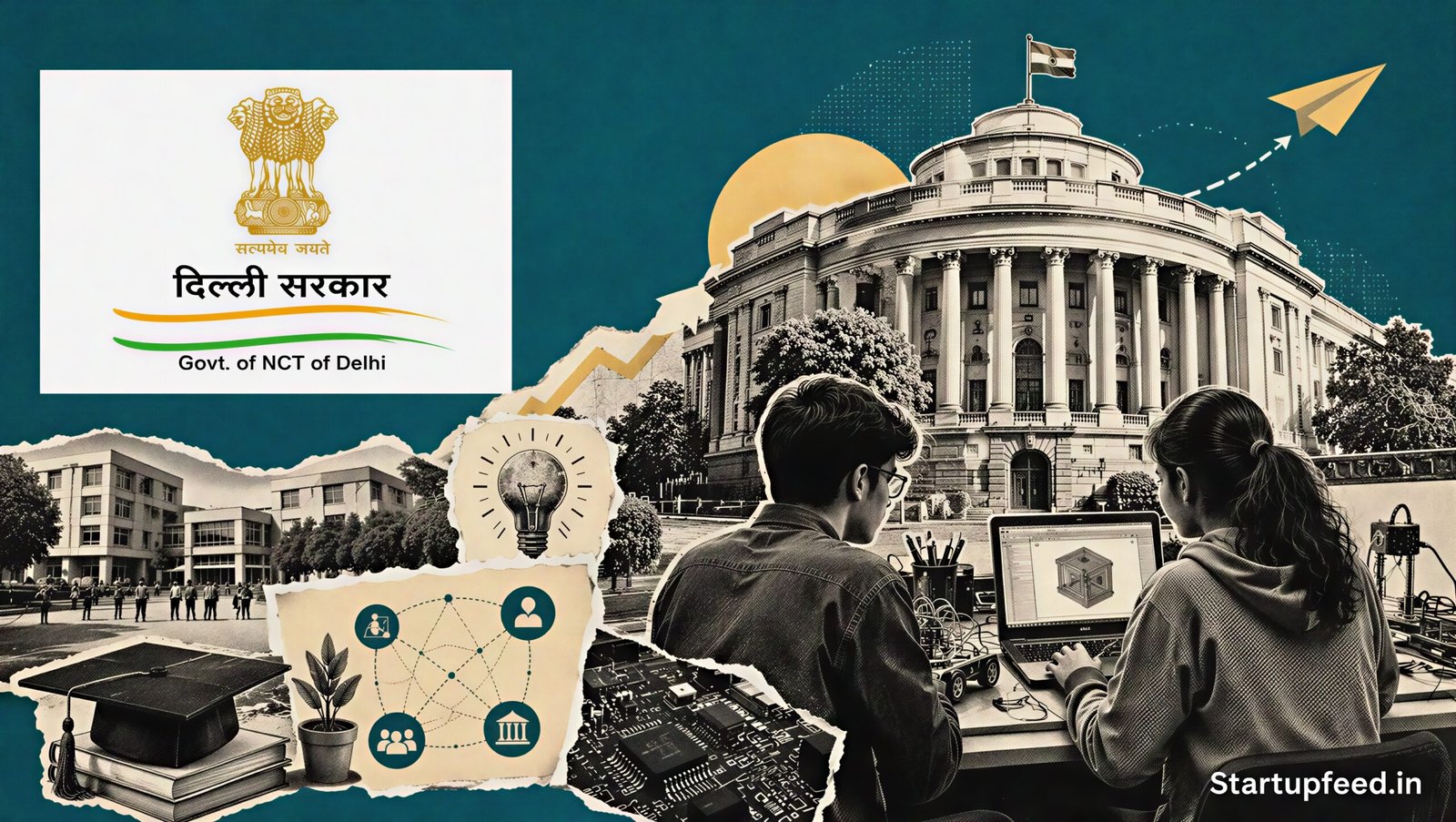
The Delhi Startup Policy, formally the Delhi Start-up and Incubation Policy, won Cabinet approval on July 16, 2026, with more than Rs 400 Cr ($46.5 Mn) committed over five years to build campus incubation centres across the capital.
Chief Minister Rekha Gupta announced the decision, according to the official Akashvani News bulletin on the Cabinet approval. The money targets students, researchers, teachers and alumni rather than established founders. Phase one reaches 24 named institutions plus polytechnics, Industrial Training Institutes (ITIs) and government schools.
StartupFeed Insight
Read the structure, not the headline number. Rs 400 Cr split across 24 institutions and five years works out to roughly Rs 3.3 Cr per institution per year, which funds infrastructure and mentoring, not large cheques. That makes this an incubation-capacity policy, not a venture fund, and it sits apart from the separate Rs 200 Cr Delhi Startup Venture Capital Fund proposed in the 2025 draft. Campus incubation heads and DPIIT-recognised student ventures should watch the State Incubation Policy Monitoring Committee closely, because it controls performance-linked release. StartupFeed expects the first institutional grants to be notified before March 31, 2027. By Soumya Verma.
Delhi Startup Policy Breakdown: The Numbers
The Delhi Startup Policy allocates more than Rs 400 Cr ($46.5 Mn) across a five-year window, structured as institutional grants rather than direct equity investment. Delhi government announcements confirm two distinct funding streams for host institutions, plus a third stream for the startups themselves.
| Metric | Detail | Notes |
|---|---|---|
| Total outlay | Over Rs 400 Cr ($46.5 Mn) | Delhi government announcement |
| Period | Five years | Phased rollout |
| Approval date | July 16, 2026 | Delhi Cabinet decision |
| Phase one institutions | 11 state universities, 13 aided colleges | Plus polytechnics, ITIs, government schools |
| Institution support | One-time setup grant, annual operations grant | Delhi government announcement |
| Oversight body | State Incubation Policy Monitoring Committee | Government, academia, industry, startups |
The most useful detail sits in the third row of support. Startups attached to these incubation centres receive milestone-based assistance covering prototype development, proof of concept, product development and market validation, so cash releases against delivery rather than as a single upfront grant.
About the Delhi Start-up and Incubation Policy
The Delhi Start-up and Incubation Policy is a state-level scheme approved by the Delhi Cabinet in July 2026 and championed by Chief Minister Rekha Gupta. It commits over Rs 400 Cr across five years to fund incubation centres inside government universities, aided colleges, polytechnics and ITIs. Beneficiaries include students, researchers, teachers, alumni and first-time founders. A State Incubation Policy Monitoring Committee governs release of funds.



How will Delhi use the Rs 400 Cr?
Delhi will split the Rs 400 Cr between institutional infrastructure and startup-stage grants. Eligible institutions receive one-time financial assistance to set up or strengthen incubation centres, then annual operational support for mentoring, networking and innovation activities. Startups inside those centres draw milestone-linked cash.
“The initiative is not just about helping people launch start-ups, but about transforming Delhi’s youth from job seekers into job creators,” Rekha Gupta, Chief Minister of Delhi, said while announcing the Cabinet decision.
The framing matters for founders. Money routed through host institutions favours ventures already attached to a campus, which narrows access for independent founders working outside the university system. An annual Delhi Start-up Youth Festival will connect these campus ventures with investors, industry representatives and policymakers. That festival becomes the visible test of whether the pipeline produces fundable companies.
How does Delhi compare with other states?
Delhi enters a crowded field where several states already run larger corpora. Uttar Pradesh cleared a Rs 1,000 Cr fund on July 6, 2026, ten days before the Delhi decision, and Karnataka runs a Rs 518 Cr policy corpus. Delhi’s Rs 400 Cr therefore ranks mid-table on size, though its full concentration on campus incubation is unusual.
| State | Disclosed corpus | Primary focus |
|---|---|---|
| Delhi | Rs 400 Cr | Campus incubation centres |
| Uttar Pradesh | Rs 1,000 Cr | Deep-tech and regional grants |
| Maharashtra | Rs 500 Cr | Maha-Fund seed support |
| Telangana | Rs 250 Cr | T-SEED early-stage capital |
Most state schemes route capital toward seed cheques or venture funds. Delhi has instead put nearly all of its money into building the physical and mentoring layer first, a bet that supply of incubated ventures is the binding constraint in the capital. Comparable incubator support terms across states are published on the government’s Startup India incubator schemes portal.
What’s Next
The Directorate of Training and Technical Education is expected to notify operational guidelines and eligibility rules before institutions can apply. Watch for the first list of approved incubation centres and the per-centre grant ceiling, which the Cabinet announcement did not disclose. The first Annual Delhi Start-up Youth Festival under the new policy will be the earliest public read on quality. Does Delhi need bigger cheques, or better campus infrastructure first?
Frequently Asked Questions
Have a tip? Write to us at editorial@startupfeed.in.



Liked this story? Follow StartupFeed on Google so our reporting reaches you first.