
Quick Take
- ISM 2.0 chip subsidy for silicon fabs drops from 50% to 40% under the new framework.
- MeitY backs a Rs 1.25 Lakh Cr ($12.9 Bn) corpus, up sharply from the Rs 76,000 Cr phase one.
- Centre plans minority equity stakes and royalty deals to draw larger private inflows by 2027.
In This Article
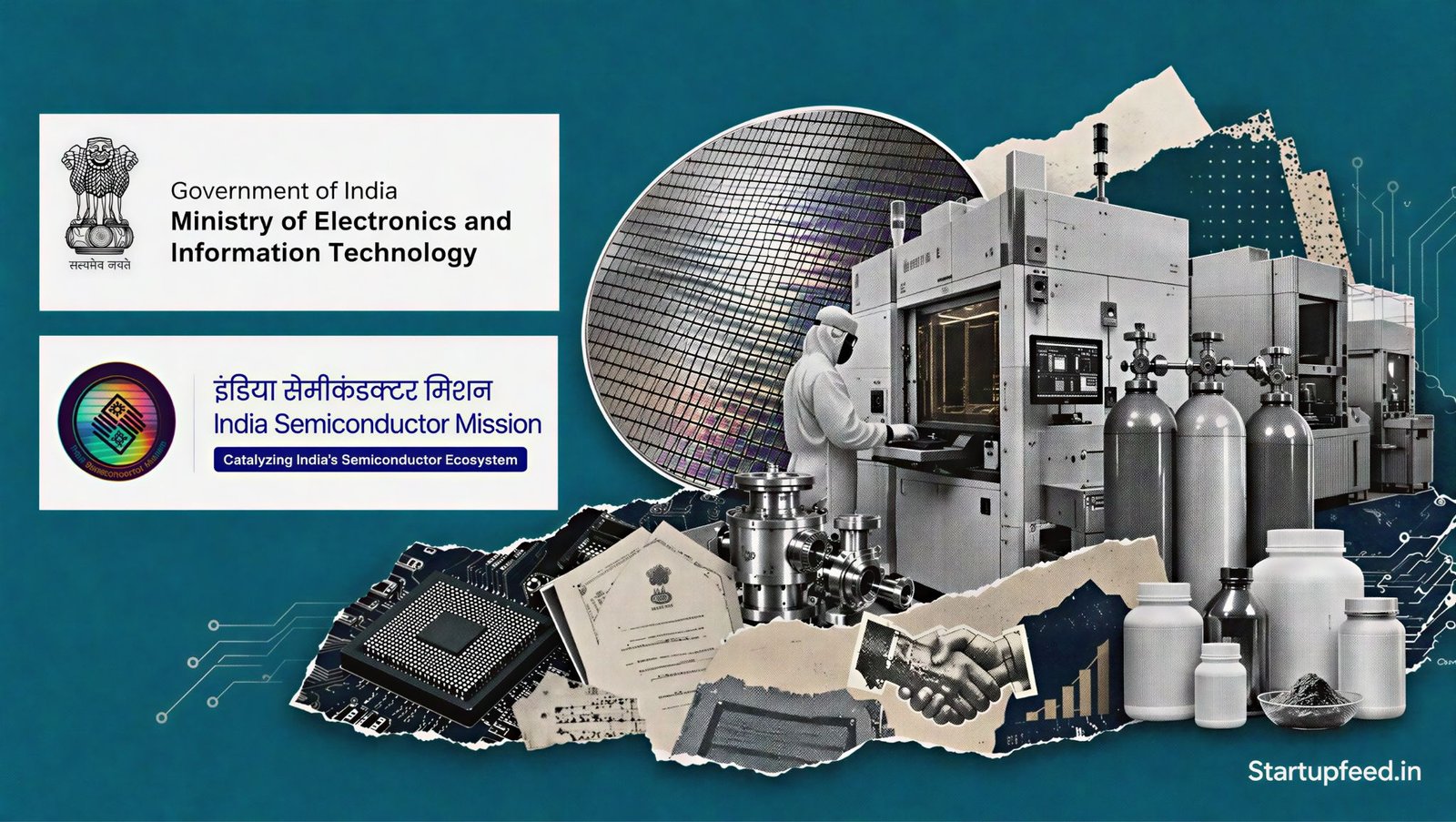
The ISM 2.0 chip subsidy for silicon fabs has been reduced from 50% to 40%, as the Ministry of Electronics and Information Technology (MeitY) shifts to a differentiated incentive model backed by a Rs 1.25 Lakh Cr ($12.9 Bn) corpus, cleared in the Union Budget 2026-27. India Semiconductor Mission (ISM) CEO Amitesh Kumar Sinha confirmed the change in July 2026.
The second phase moves away from a flat 50% cash grant on every project category. It now channels support across the full chip supply chain, from fabrication to equipment, gases, and materials. Sinha, an additional secretary at MeitY, said the mission wants policy stability and deeper ecosystem investment to matter more than a high headline subsidy number.
StartupFeed Insight
The 10-point cut looks like a retreat, but the math tells a different story. By trimming silicon fab support and funding gases, chemicals, and equipment, MeitY is buying supply-chain depth that a flat 50% grant never delivered in phase one. Chip startups and their VC backers should watch the equity clause closest, because a government cheque that avoids board seats de-risks early rounds without diluting founder control. Expect the first ISM 2.0 minority-stake deals and the finalised royalty terms to be announced before the Union Cabinet signs off, likely by the first quarter of 2027. By Avinash.
ISM 2.0 Chip Subsidy Breakdown
The ISM 2.0 chip subsidy replaces a uniform 50% grant with tiered support that varies by project type. According to Business Today, silicon fabs now receive up to 40%, while compound semiconductor and display fabs get up to 35%. The framework rewards advanced technology over conventional lines.
| Category | Incentive (Up To) | Notes |
|---|---|---|
| Silicon fabs | 40% | Cut from 50% in phase one |
| Compound / display fabs | 35% | Advanced packaging matches this tier |
| Advanced packaging | 35% | Higher than conventional lines |
| Conventional packaging | 25% | Lowest fab-linked tier |
| Equipment, chemicals, gases, materials | 30% | New category under ISM 2.0 |
| Total ISM 2.0 corpus | Rs 1.25 Lakh Cr ($12.9 Bn) | Up from Rs 76,000 Cr |
The most telling number is the new 30% support for equipment, chemicals, gases, and materials, per Business Today. Phase one funded no such category, which left fabs exposed to long import lead times and higher logistics costs.
About the India Semiconductor Mission
The India Semiconductor Mission (ISM) is the nodal agency under MeitY, launched in 2021 to build a domestic chip ecosystem. Headed by CEO Amitesh Kumar Sinha, it manages fab, packaging, and design incentives. As of 2026, ISM has approved 12 projects worth about Rs 1.64 Lakh Cr across six states, including fabs by Tata Electronics and Micron. Read the mission overview on the Press Information Bureau portal.


Why did MeitY cut the subsidy?
MeitY cut the headline subsidy to fix supply-chain gaps that a flat 50% grant left unsolved in phase one. Sinha said India is moving from a fab-centric approach to a full-stack ecosystem covering equipment, materials, talent, and R&D. The government believes a stable, predictable policy draws serious capital better than a large one-time cash grant.
“The government will develop a comprehensive semiconductor ecosystem including gases, chemicals and materials, reduce supply chain challenges and make it much easier for companies to operate here,” said Amitesh Sinha, additional secretary at MeitY.
The logic is that chips are never built alone. A fab depends on precision gases, ultra-pure chemicals, and specialised equipment, and phase one funded none of it. By shaving 10 points off silicon fabs and redirecting that money, MeitY aims to shorten lead times and cut the risk of import disruption.
How will equity and royalty work?
Under ISM 2.0, the Centre plans to take minority equity stakes in selected chip design startups while keeping its holding below 50%. Sinha told Business Standard the government wants to instil confidence for venture capital firms, without seeking a board seat or staying invested forever. A royalty mechanism is planned for larger companies.
Startups will first receive seed capital, then larger milestone-linked investments tied to product qualification and commercialisation. Many firms under the earlier Design Linked Incentive (DLI) scheme built strong chip designs but struggled to raise the big cheques needed to reach market. The equity model directly targets that funding gap. Details appear in the ISM CEO interview on Business Standard.
What does this mean for chipmakers?
For existing fab players, the lower ISM 2.0 chip subsidy changes the capital math but not the strategic case, since investment decisions rest on demand, talent, and costs too. Analysts say India’s expanding electronics base and China Plus One tailwinds keep it attractive despite the trimmed grant.
| Phase | Silicon Fab Support | Corpus |
|---|---|---|
| ISM 1.0 | Flat 50% | Rs 76,000 Cr |
| ISM 2.0 | Up to 40%, tiered | Rs 1.25 Lakh Cr ($12.9 Bn) |
What sets ISM 2.0 apart is its full-stack design. Instead of funding only the machines that print chips, it backs the entire value chain from R&D and design to chemicals and assembly, which few rival programmes attempt at this scale.
What’s Next
The revised framework still awaits Union Cabinet approval after clearance by the Finance Ministry’s Expenditure Finance Committee. ISM aims to advance India toward chips at the 2nm to 10nm range over its scheme period, with the first minority-stake deals expected in the coming months. Will a lower subsidy plus policy stability pull in more capital than a flat 50% grant ever did?
Frequently Asked Questions
Have a tip? Write to us at editorial@startupfeed.in.
Liked this story? Follow StartupFeed on Google so our reporting reaches you first.