

Quick Take
- Moonshot AI released Kimi K3 on July 16, 2026, a 2.8 trillion parameter open model.
- It carries a 1 million token context window and activates 16 of 896 experts per token.
- Full weights land by July 27, opening frontier capability to Indian developers at $3 per million tokens.
In This Article
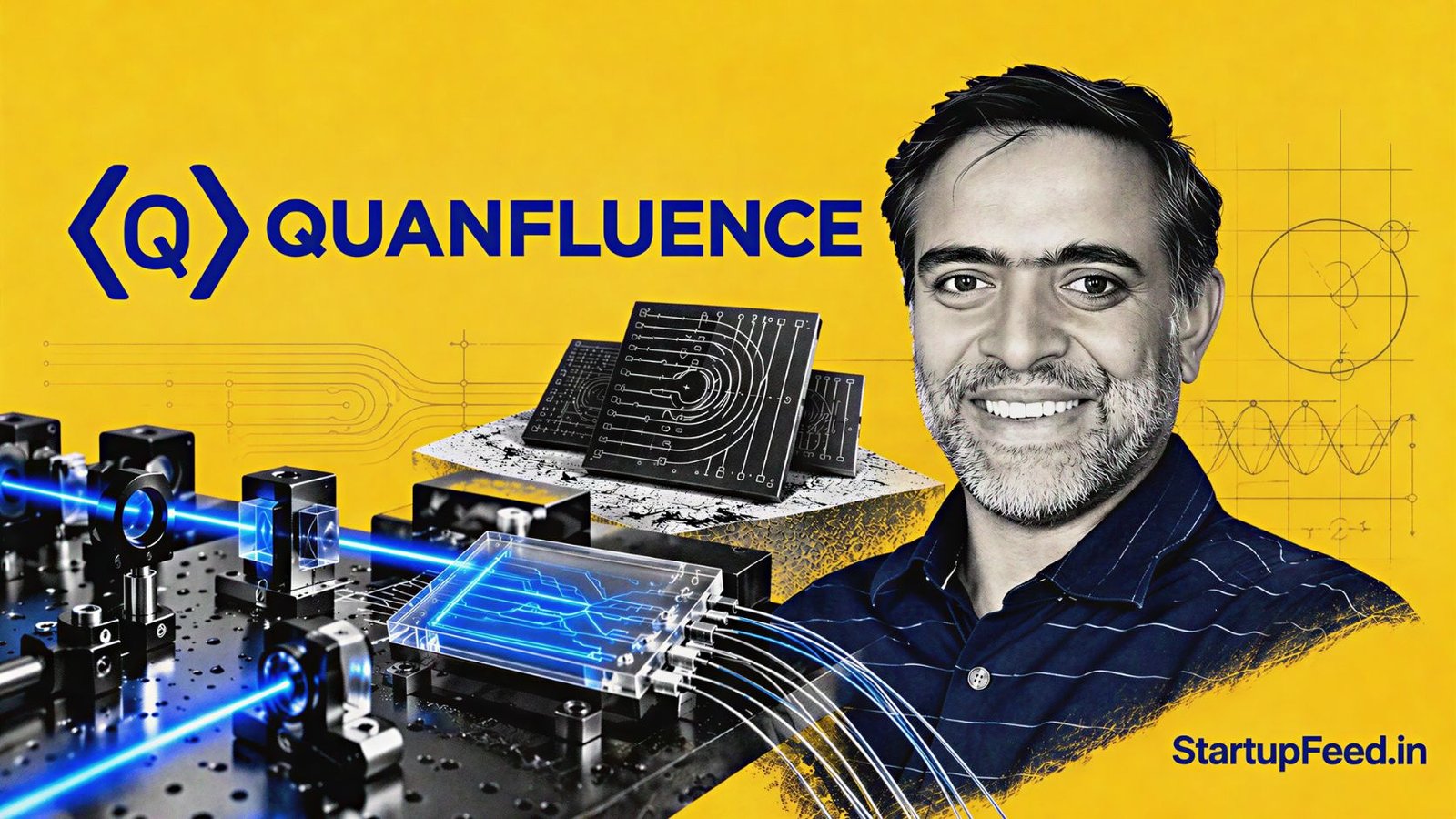
Chinese AI startup Moonshot AI released Kimi K3 on July 16, 2026, a 2.8 trillion parameter open-weight model that the company calls the world’s first open 3T-class system. API pricing is set at $3 per million input tokens and $15 per million output tokens (roughly Rs 290 and Rs 1,450 at the July 18 rate of Rs 96.65 per dollar).
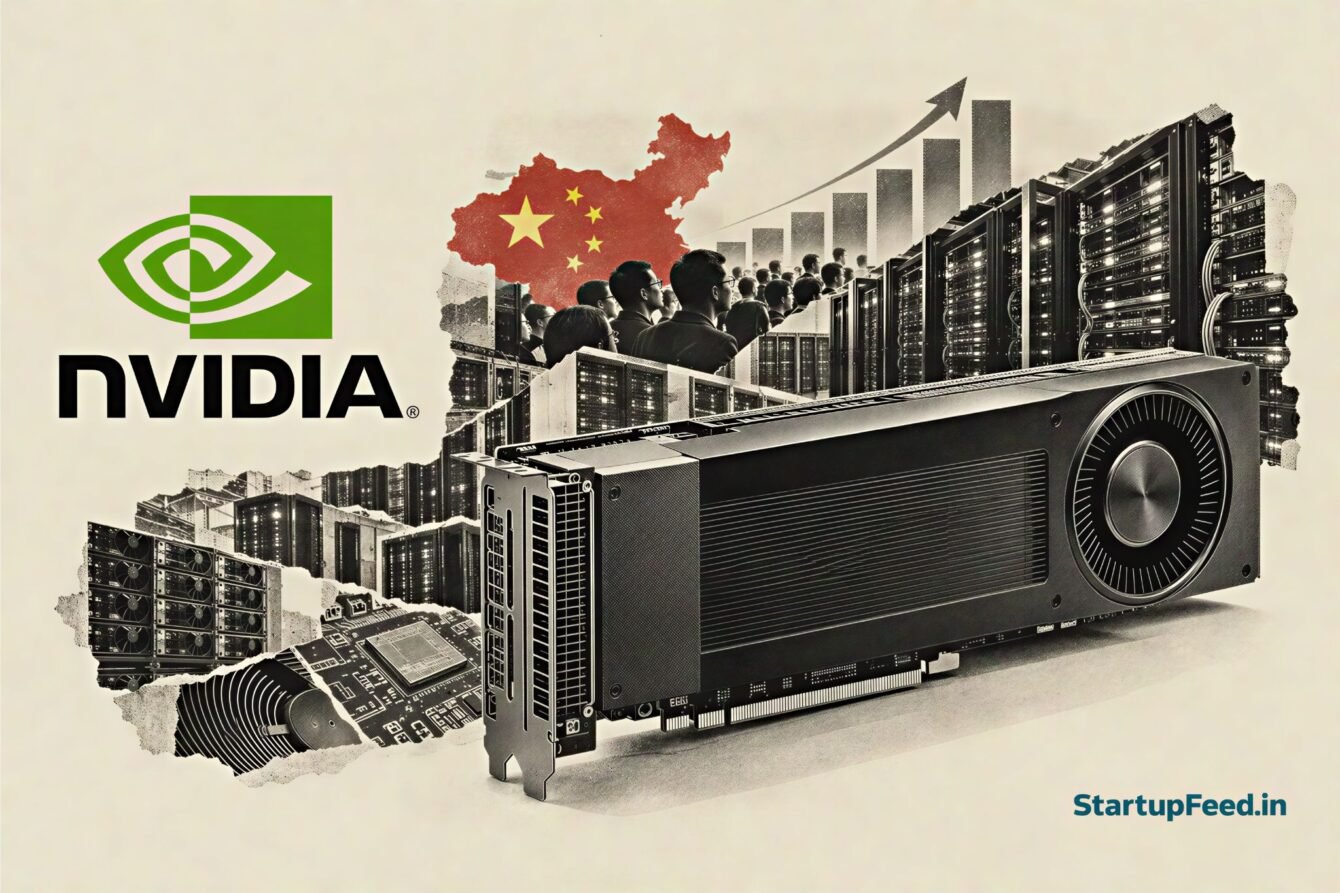
The launch arrives one month after the US Department of Commerce briefly restricted access to Anthropic’s Fable and Mythos models, per Anthropic’s own statement. Moonshot says K3 trails Claude Fable 5 and GPT 5.6 Sol overall, but beat every other model in its evaluation suite. Full weights are due by July 27, 2026, according to the official Kimi K3 technical blog.
StartupFeed Insight
The number that matters is not 2.8 trillion, it is 16 of 896. Moonshot activates under 2% of the model per token, which means serving cost tracks active parameters, not headline size. That is why a Chinese lab under export controls can price at half of Opus 4.8. Indian AI teams and GCC engineering leads should watch the July 27 weight drop closely. StartupFeed expects at least three Indian enterprise AI vendors to publish K3-based deployment benchmarks before the end of September 2026, because a self-hostable frontier model removes the single largest line item in their inference budgets. By Avinash.
Kimi K3 Model Breakdown
Kimi K3 is a sparse Mixture-of-Experts (MoE) model, an architecture where only a small subset of parameters activates for any single request. Moonshot built it on two internal techniques, Kimi Delta Attention (KDA) and Attention Residuals (AttnRes), which the company says improve how information moves across sequence length and model depth. The result, per Moonshot, is roughly 2.5 times better scaling efficiency than Kimi K2.
| Metric | Detail | Notes |
|---|---|---|
| Total parameters | 2.8 trillion | Largest open-weight model to date (Moonshot) |
| Context window | 1 million tokens | Built for long-horizon coding and agents |
| Sparsity | 16 of 896 experts active | About 1.8% of the expert pool per token |
| API pricing | $3 in, $15 out per MTok | Rs 290 and Rs 1,450, cache-hit input at $0.30 |
| Weight release | By July 27, 2026 | Benchmarks unverifiable until then |
| Launch date | July 16, 2026 | Live on Kimi app, Kimi Code, and API |
The sparsity figure is the most interesting line in that table. At 1.8% activation, inference cost tracks active parameters rather than the 2.8 trillion headline, which is how Moonshot serves a 3T-class system at competitive rates.
About Moonshot AI
Moonshot AI builds the Kimi family of large language models and agent products. Yang Zhilin, Zhou Xinyu, and Wu Yuxin founded the Beijing company in March 2023. All three are Tsinghua University alumni. The firm monetises through tiered chatbot subscriptions, an enterprise tier, and API access. Annual Recurring Revenue (ARR) crossed $200 Mn (Rs 1,933 Cr) in April 2026. Backers include Alibaba, Tencent, Meituan, 5Y Capital, and IDG Capital.


What does Kimi K3 mean for the AI race?
Kimi K3 narrows the gap between open-weight Chinese models and closed American frontier systems to a matter of points on several benchmarks. Moonshot published an unusually plain assessment of its own model rather than a victory lap.
While its overall performance still trails the most powerful proprietary models, Claude Fable 5 and GPT 5.6 Sol, Kimi K3 demonstrated frontier-level performance across our evaluation suite, Moonshot AI, Kimi K3 technical blog.
That candour matters because every published K3 number remains a company claim until the weights ship on July 27. Independent testing on Arena, the blind human preference platform, put K3 first in the Frontend Code evaluation at 1,679 points, ahead of Fable 5 at 1,631 and GPT 5.6 Sol at 1,618. The company also reports K3 outperformed Opus 4.8 and both GPT models on GPU kernel optimisation, a task involving squeezing throughput out of AI hardware.
How does Kimi K3 compare with rivals?
Kimi K3 is roughly 75% larger than DeepSeek’s V4 Pro on total parameter count, and it dwarfs the Indian sovereign models by two orders of magnitude.
| Model | Parameters | Open weights |
|---|---|---|
| Kimi K3 (Moonshot) | 2.8 trillion | Yes, by July 27, 2026 |
| DeepSeek V4 Pro | 1.6 trillion | Yes |
| Sarvam 105B (India) | 106 billion | Yes, Apache 2.0 |
Parameter count is not quality, and MoE sparsity makes direct size comparisons misleading. What separates Moonshot is the combination of frontier-tier benchmark placement with a downloadable licence, a pairing no American lab currently offers at this scale.
Why should Indian founders watch this?
A self-hostable 3T-class model changes the economics for Indian AI companies that currently rent frontier capability from US providers. India has committed over Rs 10,000 Cr to the IndiaAI Mission, and Sarvam AI open-sourced its 30B and 105B models under Apache 2.0 in February 2026, trained entirely on IndiaAI Mission compute, per the Sarvam sovereign LLM announcement.
The catch is hardware. Self-hosting Kimi K3 needs multi-node GPU clusters, and Moonshot recommends supernode setups of 64 accelerators or more. Few Indian startups own that. The realistic path for most is API access or fine-tuned smaller derivatives once the weights land. For GCCs and IT services firms with existing data centre footprints, the calculation looks different, and considerably more attractive.
What’s Next
The July 27, 2026 weight release is the real test. Until the community downloads Kimi K3 and reproduces Moonshot’s numbers independently, every benchmark stays a claim. Moonshot is separately in talks for a round valuing it near $30 Bn (Rs 2,89,950 Cr), per Bloomberg reporting from June 2026, while unwinding its offshore structure ahead of a possible Hong Kong listing. Will Indian enterprises trust a Chinese open model with production workloads?


Frequently Asked Questions
Written by Avinash. Have a tip? Write to us at editorial@startupfeed.in.
Liked this story? Follow StartupFeed on Google so our reporting reaches you first.