

Quick Take
- India started its E85 ethanol rollout at 48 public sector fuel outlets on June 5, 2026.
- The network expands to 500 outlets by December 2026 and about 5,000 by 2027.
- India backs flex-fuel and EVs together, splitting from the China and Europe EV-only model.
In This Article
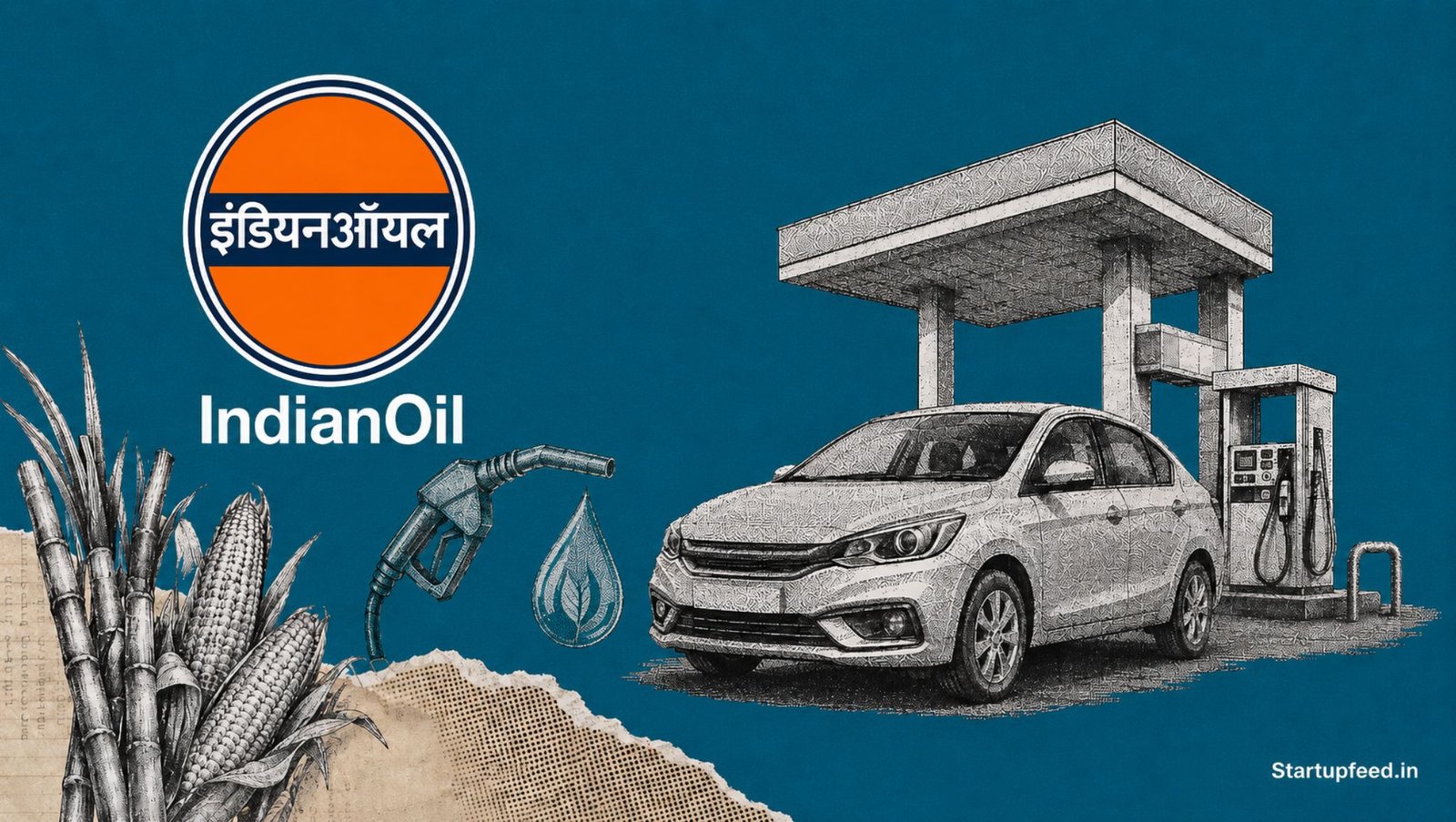
The India E85 ethanol rollout began on June 5, 2026, when Petroleum Minister Hardeep Singh Puri launched E85 fuel at an IndianOil outlet in New Delhi (PIB release). E85 is now sold at 48 public sector retail outlets.
E85 is a high-ethanol blend with 80 to 85 per cent ethanol and 14 to 19 per cent petrol, made for flex-fuel vehicles (FFVs). These vehicles run on any blend from E20 to E100. The launch follows India’s switch to E20 petrol as the default grade from April 1, 2026, and marks the next step in the ethanol roadmap.
StartupFeed Insight
The real signal here is policy hedging, not a fuel launch. India is betting that ethanol can cut crude imports today while EVs scale slowly, since electric cars still hold single-digit share of passenger sales. Watch the auto sector closely: Maruti Suzuki and Hero MotoCorp have shown flex-fuel prototypes, but no carmaker sells an E85 vehicle yet. StartupFeed expects the first commercial flex-fuel models and field trials to begin around December 2026, which makes the 500-outlet target a demand test, not a supply guarantee. The chicken-and-egg gap between fuel and cars is the risk to track. By StartupFeed Desk.
India E85 Ethanol Rollout: Key Numbers
The India E85 ethanol rollout is a phased plan to make high-ethanol fuel available nationwide for flex-fuel vehicles. The government will scale outlets steadily over 18 months, according to the Ministry of Petroleum and Natural Gas.
| Metric | Detail | Notes |
|---|---|---|
| Launch date | June 5, 2026 | World Environment Day, New Delhi (PIB) |
| Outlets at launch | 48 | Public sector oil marketing companies |
| By December 2026 | 500 outlets | Phase two of the plan (PIB) |
| By December 2027 | About 5,000 outlets | Across major cities (PIB) |
| Price gap | Rs 20 per litre lower | Versus conventional petrol (PIB) |
| Emissions cut | Around 61 per cent | Lifecycle GHG vs petrol (PIB) |
The most striking figure is price: E85 costs nearly Rs 20 per litre less than petrol, the government said. That pricing gap is the main pull for cost-focused Indian buyers.
About India’s Ethanol Programme
India’s Ethanol Blended Petrol programme, run by the Ministry of Petroleum and Natural Gas, mixes ethanol into petrol to cut crude imports. Blending rose from 1.53 per cent in 2014 to 20 per cent in 2026, five years ahead of target, the PIB said. Ethanol comes from sugarcane, maize, and damaged food grains. The push has saved over Rs 1.84 lakh crore in foreign exchange.



Why is India splitting from the EV-only model?
India is splitting from the China and Europe model by backing flex-fuel and electric vehicles together, instead of an electric-only future. The government wants to decarbonise road transport while extending the life of the internal combustion engine (ICE).
The logic is energy security. EVs depend on imported batteries and critical minerals, while ethanol is made at home by farmers. Minister Hardeep Singh Puri framed this directly at the launch.
“Every litre of ethanol replaces imported fossil fuel and every drop of E85 carries with it the spirit of Atmanirbhar Bharat,” Puri said, according to the PIB.
The legal base is now forming too. The Ministry of Road Transport and Highways proposed draft amendments to the Central Motor Vehicles Rules (CMVR) to recognise E85 and E100 as automotive fuels.
What does this mean for buyers and automakers?
For buyers and automakers, the India E85 ethanol rollout brings both savings and real caution. Automakers are moving slowly because no carmaker sells a commercial E85 flex-fuel vehicle in India yet, and field trials are expected only around December 2026.
Consumers worry about mileage and fuel availability, since higher ethanol can lower fuel efficiency. Experts add a warning. They say flex fuel should support, not replace, India’s broader clean mobility plan, and that the ecosystem is still thin at 48 outlets. Carmakers like Maruti Suzuki, which showed a flex-fuel WagonR, and Hero MotoCorp, which demonstrated ethanol-ready bikes, have made early moves but not full launches. Building cars, fuel supply, and pumps at the same time remains the core challenge.
How does India compare with Brazil and China?
India’s flex-fuel path draws on Brazil, where over 80 per cent of light vehicles already run on flex-fuel technology, the PIB noted. China and Europe, by contrast, have pushed cleaner mobility mainly through a shift to electric vehicles.
| Market | Main clean-mobility route |
|---|---|
| India | Flex-fuel plus EVs, coexistence model |
| China | Mainly electric vehicle transition |
| Brazil | Long-running flex-fuel ecosystem |
What makes India different is the deliberate two-track bet: it keeps ICE alive through ethanol while still backing EVs, rather than choosing one road.


What’s Next
The next milestone is December 2026, when the outlet network should hit 500 stations and field trials for higher-ethanol vehicles are expected to begin. Watch for the first commercial flex-fuel cars and clearer E85 pricing rules then. If carmakers stay slow, demand could lag the fuel supply. Will Indian buyers trust a fuel before the right cars arrive?
Frequently Asked Questions
Last updated: June 28, 2026 at 10:30 IST
Written by Avinash. Published: June 28, 2026. Updated: June 28, 2026. Have a tip? Write to us at editorial@startupfeed.in.
Liked this story? Follow StartupFeed on Google so our reporting reaches you first.