Quick Take
- Loans against gold jewellery surged 93.8% YoY to Rs 5.36 lakh crore in June 2026, RBI data shows.
- Bank credit to industry grew 19.2% YoY, nearly three times the 6.3% growth a year earlier.
- Non-food bank credit rose 18.3% to Rs 217.96 lakh crore, with services and retail loans powering the pickup.
In This Article
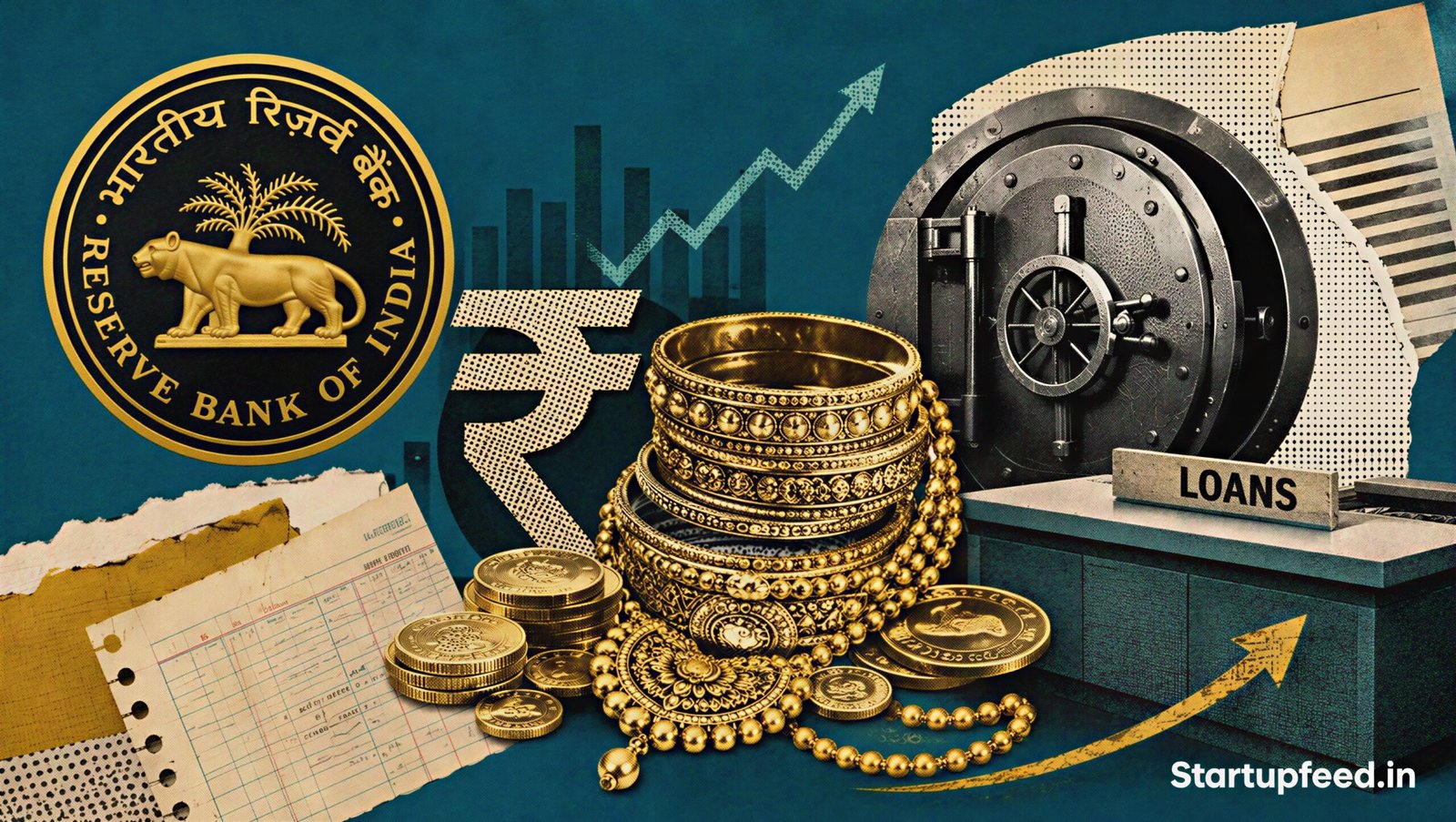
Gold loans surge topped every retail lending category in June 2026, rising 93.8% year-on-year (YoY) to Rs 5.36 lakh crore, according to Reserve Bank of India (RBI) data on the sectoral deployment of bank credit.
The RBI released the figures on July 31, 2026, drawn from 41 select scheduled commercial banks that account for about 95% of total non-food credit. The data covers the fortnight ended June 30, 2026, and marks the first quarter of the 2026-27 financial year (Q1 FY27). Bank credit to industry grew 19.2% YoY in the same period.
StartupFeed Insight
The gold loan number looks dramatic, but the real signal sits underneath it. A 93.8% jump on a Rs 5.36 lakh crore base is driven as much by higher gold prices as by new borrowers, since the same pledged jewellery now backs a larger loan. Fintech lenders and gold loan NBFCs (Non-Banking Financial Companies) should watch RBI closely, because triple-digit growth in a single collateral class invites tighter loan-to-value scrutiny. StartupFeed expects the RBI to issue fresh guidance on gold loan valuation and monitoring before the end of FY27, which would slow reported growth even if demand stays strong. By Avinash.
Q1 Bank Credit Snapshot
Non-food bank credit grew 18.3% YoY as of June 30, 2026, compared with 9.3% in the same fortnight a year earlier, RBI data showed. Outstanding non-food credit stood at Rs 217.96 lakh crore. The broad pickup spanned industry, services, agriculture, and retail loans, which points to demand across the whole economy rather than one sector.
| Segment | June 2026 Outstanding | YoY Growth |
|---|---|---|
| Non-food bank credit | Rs 217.96 lakh crore | +18.3% |
| Industry | Rs 47.72 lakh crore | +19.2% |
| Services | Rs 61.53 lakh crore | +21.4% |
| Agriculture | Rs 26.94 lakh crore | +16.8% |
| Retail (personal) loans | Rs 71.14 lakh crore | +15.8% |
| Gold jewellery loans | Rs 5.36 lakh crore | +93.8% |
The headline story is the spread of growth. Every major sector grew faster than it did a year ago, which is rare and shows how sharply lending has recovered across Indian banks. Full figures are available in the RBI’s sectoral deployment press releases.
Why did gold loans surge so fast?
Gold loans surge in the RBI data reflects two forces working together: rising gold prices and stronger demand for quick, secured credit. Loans against gold jewellery are the most liquid and secure form of household collateral, so banks lend against them freely. When gold prices climb, the same jewellery supports a bigger loan, which lifts the outstanding figure even without a large rise in the number of borrowers.



Gold loan growth has moved from a niche category into a meaningful driver of retail credit, reshaping how banks and NBFCs build their loan books, industry analysts tracking the RBI data noted.
For readers new to the term: a gold loan is a secured loan where a borrower pledges gold jewellery or coins and gets cash against its value. Because the collateral is easy to value and sell, banks treat it as low risk, which is why this segment can grow so quickly when prices rise.
How strong was industrial and services credit?
Industrial and services credit both accelerated sharply in June 2026. Bank credit to industry grew 19.2% YoY to Rs 47.72 lakh crore, nearly three times the 6.3% recorded a year earlier. Within industry, credit to medium enterprises rose 30.3%, micro and small enterprises grew 23%, and large industries increased 16.6%, according to RBI data. Petroleum, coal products and nuclear fuels lending jumped 48.5%, while engineering credit rose 37.6%.
| Services Sub-Segment | June 2026 Outstanding | YoY Growth |
|---|---|---|
| NBFCs | Rs 21.10 lakh crore | +32.2% |
| Commercial real estate | Rs 6.67 lakh crore | +22.1% |
| Trade | Rs 13.87 lakh crore | +18.6% |
Services sector credit grew 21.4% YoY to Rs 61.53 lakh crore, led by lending to NBFCs, commercial real estate, and trade. The strong flow of bank credit to NBFCs matters because these firms then on-lend to smaller borrowers, extending the reach of formal credit.
What does the credit boom mean?
The Q1 credit boom means Indian banks are lending more confidently across sectors after a slow spell last year. Retail loan growth stood at 15.8% YoY, with outstanding credit at Rs 71.14 lakh crore. Vehicle loans grew 17.3% to Rs 7.54 lakh crore, and housing loans rose 11% to Rs 34.04 lakh crore. Credit card outstanding, however, grew just 1.9% YoY to Rs 2.98 lakh crore, a sharp slowdown from 7.2% a year earlier.
The mix tells a clear story. Secured lending, led by gold and vehicle loans, is racing ahead, while unsecured credit card growth has cooled. This shift suggests both banks and households are leaning toward safer, collateral-backed borrowing in the current environment.
What’s Next
Watch the September 2026 RBI sectoral data for whether gold loans keep growing at a triple-digit pace or start to cool as prices stabilise. Any move by the RBI on gold loan rules would be the key trigger to track through FY27. Will secured lending keep outrunning unsecured credit through the rest of the year?
Frequently Asked Questions
Disclaimer: This article is for informational purposes only and does not constitute investment advice. StartupFeed and its authors are not SEBI-registered investment advisors. The analysis above is based on publicly available information and should not be the sole basis for any investment decision. Please consult a SEBI-registered financial advisor before making investment decisions.


Have a tip? Write to us at editorial@startupfeed.in.
Liked this story? Follow StartupFeed on Google so our reporting reaches you first.