


Quick Take
- Pre-IPO placements are rebounding in 2026, with three firms raising funds before their July listings.
- SBI Funds Management, in a $1.2 Bn (Rs 11,448 Cr) IPO, leads a heavy second-half pipeline.
- These rounds help companies set valuations and lock institutional investors weeks before the public issue opens.
In This Article
Pre-IPO placements are making a comeback after a subdued start to 2026, as companies tap strong institutional demand to lock valuations before their public issues. In July alone, three companies have raised funds ahead of their initial public offerings, per primedatabase.com.
The revival comes as at least four more firms, including SBI Funds Management, plan such share sales for institutions in the weeks ahead. A pre-IPO placement lets a company sell shares to institutional investors before the main issue opens. This helps the firm lock in valuations and broaden its investor base ahead of listing.
StartupFeed Insight
The placement data tells a quiet story about confidence. Companies do private rounds first because they signal demand and anchor the price band before retail money arrives. Watch the ratio of placement value to issue value: in strong quarters it climbs, in weak ones it dries up. Q1 2026 saw just Rs 297 Cr of placements against Rs 3,080 Cr of issues, a thin cushion. We expect placement activity to rise sharply through the September 30 SEBI launch deadline, as issuers rush to price deals while institutional appetite holds. If SBI Funds lists well, the pipeline behind it opens fast. By Avinash.
Pre-IPO Placements: The 2026 Numbers
Pre-IPO placements are private share sales to institutional investors made shortly before a company’s public issue. Data from primedatabase.com shows the route cooling sharply in early 2026 before its recent pickup.
In Q1 2026, 18 issues raised Rs 3,080 Cr, but only one pre-IPO placement worth Rs 297 Cr took place, according to primedatabase.com. Q2 2026 was even quieter, with nine issues raising Rs 165 Cr and a single placement of Rs 23 Cr. That is a steep drop from Q3 2025, when six placements pulled in Rs 541 Cr.
What Do the Placement Trends Show?
The placement route tracks the health of the wider primary market, rising in strong quarters and shrinking in weak ones. The table below maps issues against pre-IPO placements across recent quarters, per primedatabase.com.


| Quarter | Issues (Nos) | Issue Amount | Placements (Nos) | Placement Amount |
|---|---|---|---|---|
| Q3 2025 | 50 | Rs 3,170 Cr | 6 | Rs 541 Cr |
| Q4 2025 | 29 | Rs 2,211 Cr | 2 | Rs 200 Cr |
| Q1 2026 | 18 | Rs 3,080 Cr | 1 | Rs 297 Cr |
| Q2 2026 | 9 | Rs 165 Cr | 1 | Rs 23 Cr |
| Q3 2026 (so far) | 1 | Data awaited | Data awaited | Data awaited |
The sharpest signal is the collapse in Q2 2026: total quarterly primary transactions fell to Rs 565 Cr, per primedatabase.com. The recent July placements mark the first clear turn upward after that trough.
About the Data Source
primedatabase.com is run by PRIME Database Group, a Delhi-based capital markets data provider founded in 1989 by Prithvi Haldea. It tracks India’s primary market across IPOs, QIPs, and pre-IPO placements. The group’s data is widely cited by regulators, issuers, and market analysts on public issue trends and pipeline size.
Why Are Companies Choosing This Route?
Companies use pre-IPO placements to set a valuation and secure anchor institutional backing before the public issue opens. The method has become a standard bridge between private capital and public markets in India.
“Pre-IPO placements are becoming an important bridge between private capital and public markets in India,” said Kailash Soni, head of India equity capital markets at Goldman Sachs.
The appeal is practical. A placement gives institutions early entry at a negotiated price, often below the eventual issue band, per cleartax.in. For the company, it locks committed capital and shows retail investors that large funds already believe in the story. Under SEBI rules, such placements cannot exceed 20% of the fresh issue size and must be disclosed in the offer document.
How Big Is the SBI Funds Pipeline?
SBI Funds Management, India’s largest mutual fund house, anchors the second-half pipeline with a $1.2 Bn (Rs 11,448 Cr) IPO expected to open the week of July 13, 2026. The offer is an entirely Offer for Sale (OFS) by promoters State Bank of India and Amundi.
The issue is drawing strong demand from top sovereign funds, including Abu Dhabi Investment Authority (ADIA) and Singapore’s GIC, per Business Standard sources. One source said institutional commitments run near five times the reserved portion. The fund house manages Rs 12.5 trillion in assets as of end-March 2026 and is valued at around $12.3 billion.
| Metric | Detail |
|---|---|
| Expected IPO size | $1.2 Bn (Rs 11,448 Cr) |
| Structure | 100% Offer for Sale (OFS) |
| Promoters selling | SBI (61.76%) and Amundi (36.26%), combined ~10% stake |
| Expected valuation | ~$12.3 Bn (Rs 1,17,342 Cr) |
| Assets managed | Rs 12.5 trillion (as of end-March 2026) |
| Expected open | Week of July 13, 2026 |
Behind SBI Funds sit more large names. A $1.2 Bn issue from Manipal Health Enterprises and a $471 Mn (Rs 4,494 Cr) issue from Indo-MIM are lined up this month, per Business Standard sources.



What Does This Mean for the Primary Market?
The placement revival signals that institutional risk appetite is returning after a weak first half hurt by oil-price shocks and market volatility. According to PRIME Database, 251 companies are waiting to raise Rs 4.93 trillion ($51.7 billion) from the market.
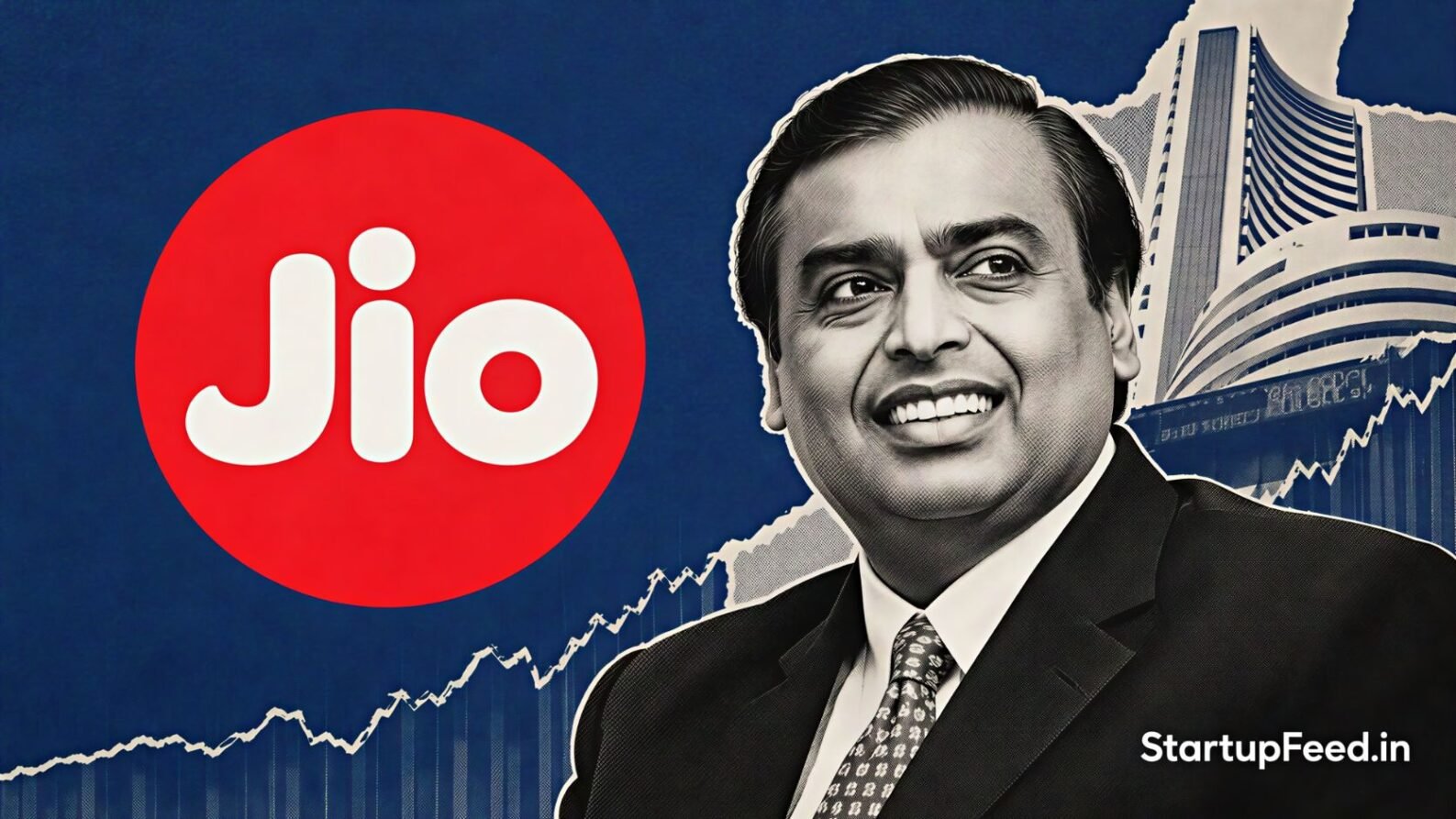
How this comparison stacks up matters for smaller issuers. Large IPOs will do the heavy lifting: bankers expect three to four big deals to raise $8 billion to $9 billion of the year’s total, per Business Standard. Reliance Jio and the National Stock Exchange, with estimated sizes of $3.8 billion and $3.3 billion, are expected later in 2026. A September 30 SEBI deadline for approved issuers may compress launches into July and August. What sets this window apart is the September deadline, which turns a slow pipeline into a rush.
What’s Next
The near-term marker is SBI Funds Management’s listing on the BSE and NSE, expected around July 21, 2026. A strong debut could unlock the queue of mega-issues behind it, per market sources. The September 30 SEBI launch deadline will test whether issuers can price deals fast enough while demand holds. Will a busy July finally break the primary market’s long slow patch?
Frequently Asked Questions
Disclaimer: This article is for informational purposes only and does not constitute investment advice. StartupFeed and its authors are not SEBI-registered investment advisors. The analysis above is based on publicly available information and should not be the sole basis for any investment decision. Please consult a SEBI-registered financial advisor before making investment decisions.
Written by Avinash. Have a tip? Write to us at editorial@startupfeed.in.
Liked this story? Follow StartupFeed on Google so our reporting reaches you first.