
Quick Take
- Y Combinator is the best seed investor of 2026, with 97 seed bets reaching $100 Mn revenue.
- SV Angel (69), 500 Global (37), and Sequoia (34) follow in the Dealroom Power Law table.
- The data shows seed returns stay concentrated, with 88.7% of investors never backing one winner.
In This Article
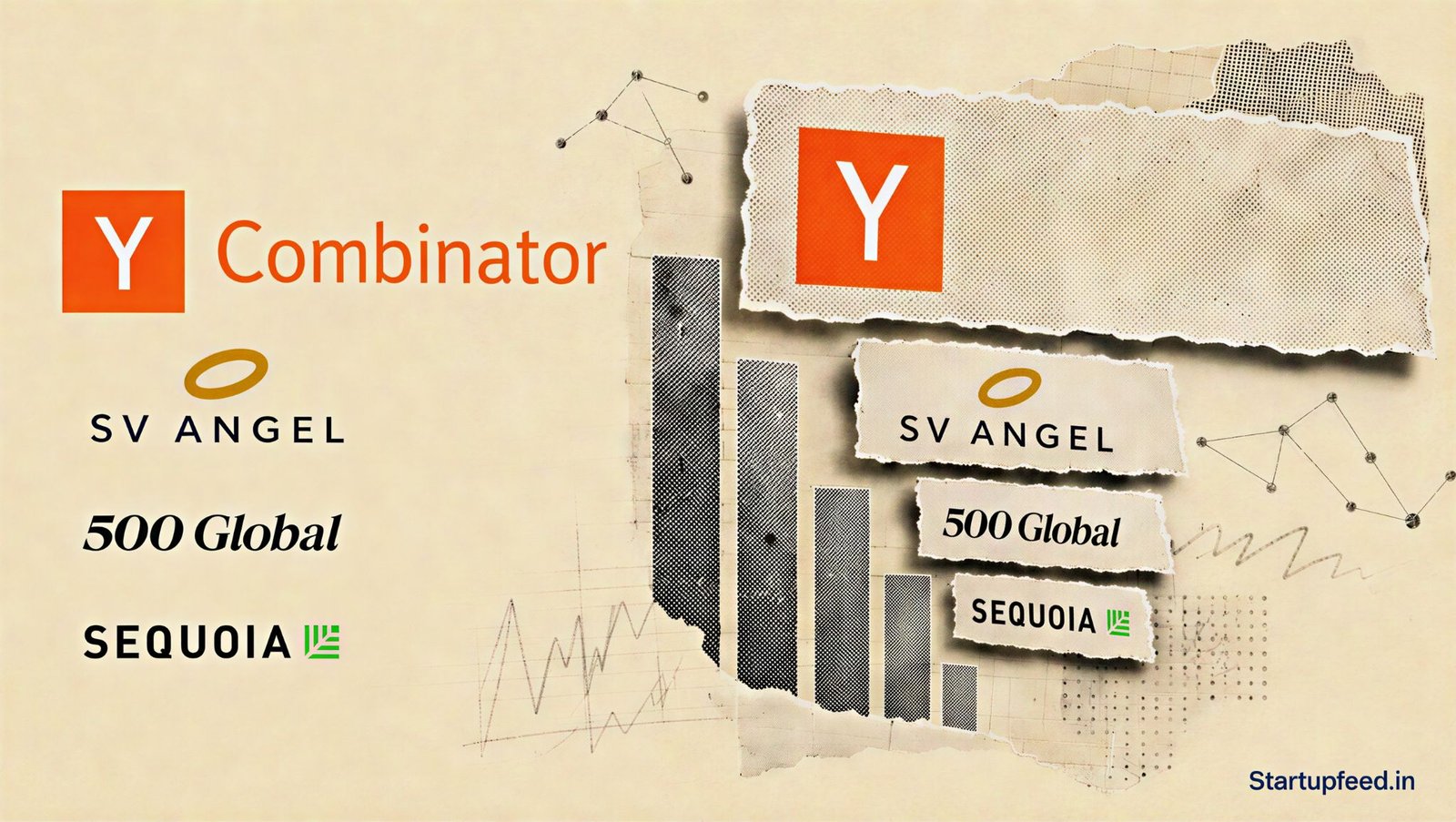
Y Combinator is the best seed investor of 2026, with 97 of its seed-stage bets growing into companies that crossed $100 Mn (Rs 830 Cr) in revenue, according to Dealroom’s latest league table.
The ranking measures investors by how many seed bets reached that revenue milestone, not by deal count or fund size. The data comes from the 8th annual Dealroom Power Law Investor Ranking, a fully quantitative table. Y Combinator leads by a wide margin, ahead of SV Angel, 500 Global, and Sequoia.
StartupFeed Insight
The headline at StartupFeed.in is not the order, but the gap. Y Combinator’s 97 winners sit far above the field, and the curve falls sharply after the top three. This is the venture power law in one table: a tiny group captures most seed-stage wins, while thousands of firms produce none. For Indian founders and new fund managers, the takeaway is sharp. Backing even one $100 Mn winner from seed is rare. We expect at least one India-focused seed backer, likely Peak XV Surge, to enter Dealroom’s global top 50 by the 2028 edition as more Indian bets scale. By StartupFeed Desk.
Best Seed Investor 2026: The Full Ranking
The best seed investor ranking counts seed bets that later reached $100 Mn in annual revenue. Y Combinator leads with 97 such outcomes, per Dealroom. The table below shows the top firms by this measure.
| Rank | Investor | Seed Bets Reaching $100 Mn Revenue |
|---|---|---|
| 1 | Y Combinator | 97 |
| 2 | SV Angel | 69 |
| 3 | 500 Global | 37 |
| 4 | Sequoia | 34 |
The steep fall after Y Combinator is the real story. Its 97 winners are higher than ranks two and three combined, which underlines how concentrated seed success is, per Dealroom.
About Dealroom
Dealroom is a market intelligence firm founded in 2013, headquartered in Amsterdam, Netherlands. It tracks startups, funding rounds, and investors using public filings, company data, and investor submissions. Its annual Power Law Investor Ranking scores firms on seed bets that reach unicorn status or $100 Mn (Rs 830 Cr) revenue. The platform is widely cited by founders, funds, and policymakers worldwide.


How is the best seed investor ranked?
The best seed investor ranking is built by tagging the earliest round each investor joined in a winning company, then weighting earlier entries more. A seed entry into a company that hits $100 Mn revenue earns 100 points. Later-stage entries earn far less, rewarding early conviction.
Dealroom blends two outcome types. Revenue milestones prove product-market fit, while unicorn valuations signal market promise. According to Dealroom, two-thirds of all points come from revenue outcomes, and the remaining third from valuation-based outcomes.
Tables update nightly, but Dealroom freezes scores once a year for each official edition. This keeps the rankings comparable across years, the firm says.
Why do so few firms win at seed stage?
Seed-stage returns follow a power law, meaning a tiny share of bets drives almost all the value. Dealroom reports that 88.7% of venture investors have never backed a seed bet that reached $100 Mn in revenue. That maths explains why the best seed investor list is so short.
Only about 1.5% of venture-backed startups ever cross $100 Mn (Rs 830 Cr) in revenue, per Dealroom. Backing even one from seed is statistically rare. Just 28 investors, the top 0.14%, have produced 11 or more such winners, the firm reported.
This concentration compounds. Each Y Combinator win sharpens its network, deal flow, and founder access, making the next winner more likely and widening its lead.
What does this mean for Indian founders?
For Indian founders, the best seed investor ranking is a map of who picks winners early at global scale. No India-headquartered fund features in this list, which reflects how young India’s unicorn cycle still is. The signal here is access, not exclusion.


Y Combinator’s standard $500K (Rs 4.2 Cr) seed deal has been open to Indian founders remotely since 2021, per Crunchbase. Local players are scaling fast too. Peak XV Surge offers up to $3 Mn (Rs 25 Cr) per startup, the largest single accelerator cheque focused on India, and has backed names like Khatabook and Classplus.
| Seed Backer | Typical Cheque | India Reach |
|---|---|---|
| Y Combinator | $500K (Rs 4.2 Cr) | Open to Indian founders remotely |
| Peak XV Surge | Up to $3 Mn (Rs 25 Cr) | India and Southeast Asia focus |
| Blume Ventures | $500K to $3 Mn | India seed specialist, 5 unicorns |
What sets the global leaders apart is the volume of early bets at scale. Indian funds compete on local depth and sector focus, a different but rising edge.
What’s Next
Dealroom refreshes its data nightly, so the next official edition arrives in 2027. The key thing to watch is whether any India-based seed backer cracks the global table as the country’s 131 unicorns mature. With AI-native startups driving a quarter of new unicorns, seed picks made in 2026 will reshape these rankings fast. Which Indian seed fund do you think breaks into the global list first?
Frequently Asked Questions
Last updated: June 25, 2026 at 15:10 IST
Written by Avinash. Published: June 25, 2026. Updated: June 25, 2026. Have a tip? Write to us at editorial@startupfeed.in.
Liked this story? Follow StartupFeed on Google so our reporting reaches you first.