Quick Take
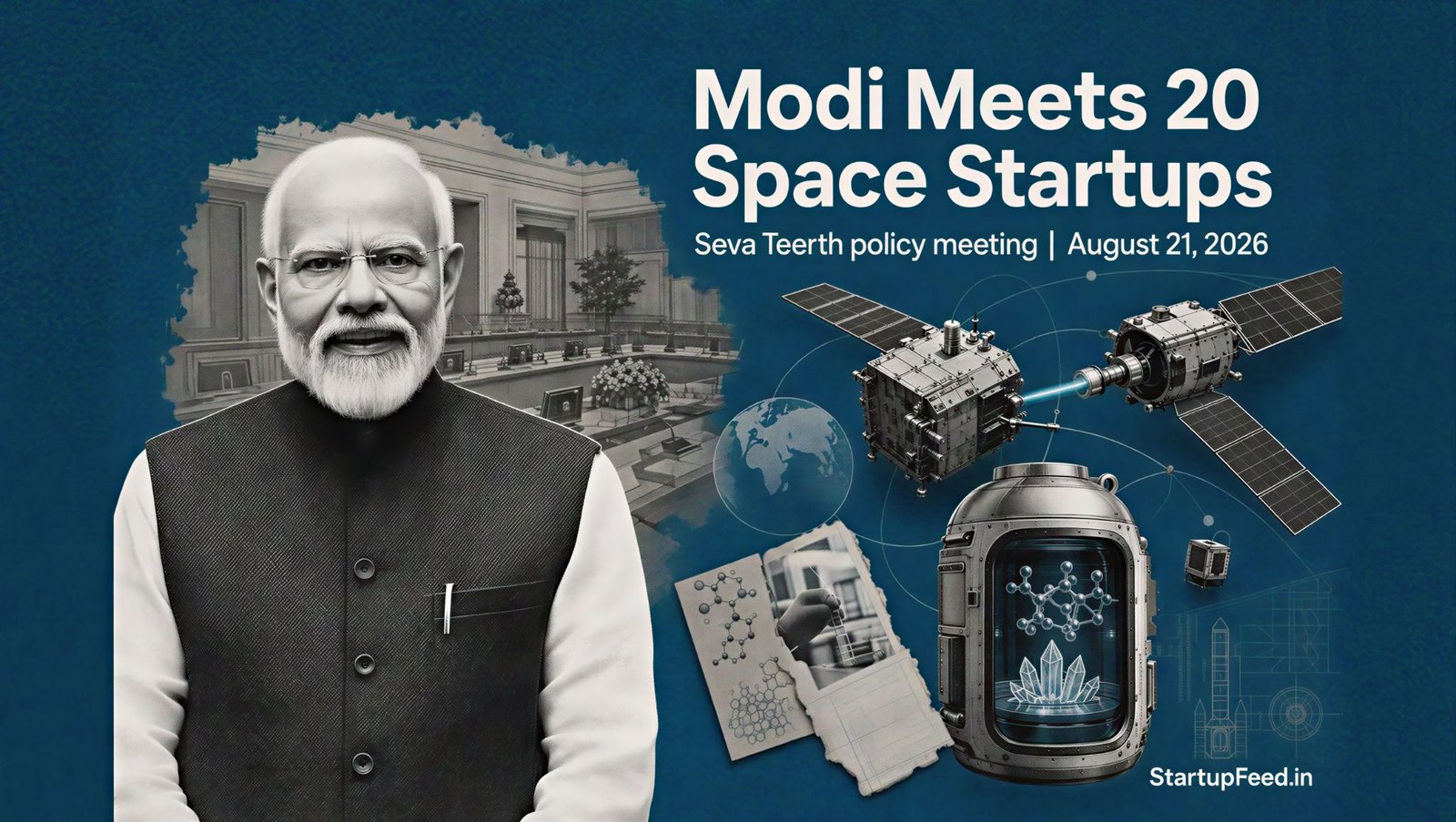
- PM Narendra Modi met founders and CEOs of 20 space startups at Seva Teerth on August 21, 2026.
- The group spans rockets, satellites, in-orbit refuelling and space pharmaceuticals.
- India now has more than 200 space startups, up from fewer than 50 five years ago.
Prime Minister Narendra Modi met the founders and chief executives of 20 Indian space startups on Friday, August 21, 2026. The meeting was held at Seva Teerth, his office complex in New Delhi.
The group covers almost every layer of the space business. That includes rockets, satellites, propulsion, space-debris removal and AI-based weather data. Two ideas stood out. One startup wants to refuel satellites in orbit. Another wants to make medicines in space.
National Security Advisor Ajit Doval attended the meeting. So did Pawan Goenka, who chairs the space regulator IN-SPACe. That is the Indian National Space Promotion and Authorisation Centre.
Modi congratulated the founders for taking the lead. The confidence shown by private firms had strengthened the case for opening the sector, he said. India opened space to private companies in 2020.
Which startups met Modi?
Twenty startups sent founders or CEOs to the meeting. The list was shared in an official government statement and reported by Business Standard.
They range from rocket builders like Skyroot Aerospace and Agnikul Cosmos to Earth-imaging firms like Pixxel and GalaxEye. The table below groups all 20 by what they do.
| Startup | Main focus |
|---|---|
| Skyroot Aerospace | Launch vehicles |
| Agnikul Cosmos | Launch vehicles |
| Astrobase | Rocket engines |
| Bellatrix Aerospace | Propulsion |
| Manastu Space | Green propulsion |
| Pixxel | Earth-imaging satellites |
| Dhruva Space | Satellites |
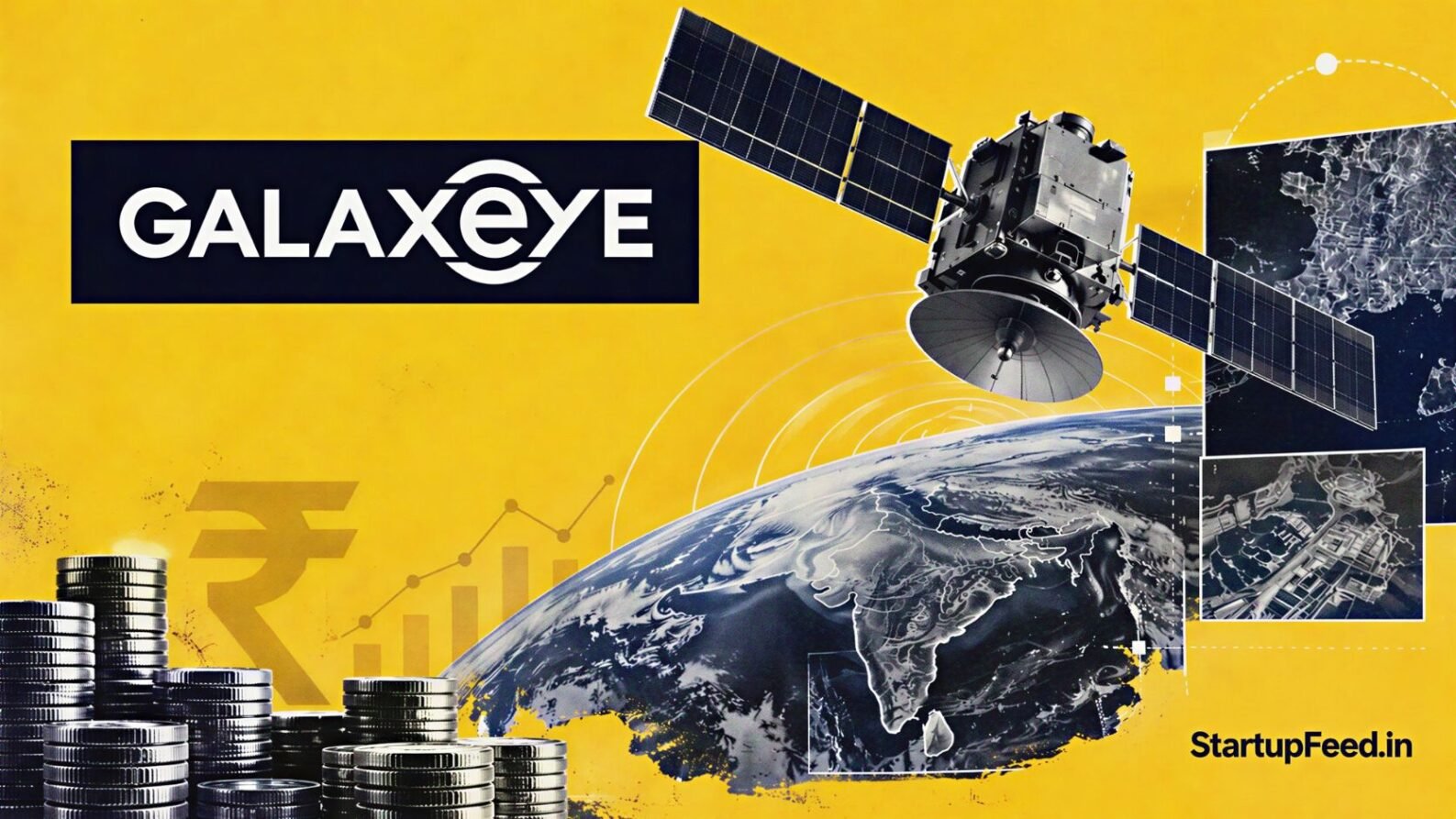
| GalaxEye | Satellite imaging |
| PierSight | Ocean surveillance satellites |
| Digantara | Space situational awareness |
| SatSure | Satellite data analytics |
| Suhora Technologies | Satellite data analytics |
| SkyServe (HySpace) | Satellite edge computing |
| TakeMe2Space | Orbital lab platform |
| VyomIC | Space avionics |
| Cosmoserve Space | Space services |
| OrbitAID Aerospace | In-orbit refuelling |
| Serendipity Space | Space pharmaceuticals |
| Vassar Labs | Geospatial AI |
| mistEO | Weather and climate AI |
What are fuel depots in space?
OrbitAID Aerospace wants to build fuel stations for satellites in orbit. A satellite dies when it runs out of propellant. OrbitAID wants to refill it instead, and extend its working life.
The company was founded in 2021 in Chennai and Bengaluru. Its core product is a docking and refuelling port called SIDRP. That stands for Standard Interface Docking and Refueling Port.
OrbitAID has raised about $2 million so far, per startup tracker officechai. It has worked with ISRO on facilities and technical guidance. Its first satellite was lost in a launch mishap in January 2026.
Can you make medicines in space?
Serendipity Space wants to make drug ingredients in orbit. In microgravity, some drug crystals grow purer than they can on Earth. Gravity creates tiny defects that weaken protein-based medicines.
The startup was founded in 2024 in Bhubaneswar. In March 2026 it flew a crystallisation module named Alchemy to the edge of space on a balloon. It recovered the module intact, according to officechai.
This idea is not unique to India. US firm Varda Space Industries has already made drug ingredients in orbit and returned them to Earth. Serendipity is India’s early entrant in the same field.
How big is India’s space sector?
India now has more than 200 space startups. Five years ago there were fewer than 50. Modi shared those figures in a Mann Ki Baat broadcast this year.
The money is growing too. IN-SPACe wants the space economy to reach about $44 billion by 2033. It stood near $8 billion a few years ago.
The government has also set up a Rs 1,000 crore venture fund for space, run through IN-SPACe. It plans to invest over five years. Cheques will run from Rs 10 crore to Rs 60 crore per company.
Modi asked the founders to look beyond orbit. Space firms could help farmers, dairy owners and weather planning, he said. He also urged them to work with Atal Tinkering Labs in schools.
What this means for you: If you build in deep-tech, the fuel and pharma threads show investors will now back very long-horizon space bets, not just satellites and launch.
StartupFeed Insight
The headline acts wrote themselves: petrol pumps in orbit, medicines from space. Strip the drama and the signal is real. India’s space list has moved past launch and imaging into servicing and manufacturing, the harder second wave. OrbitAID and Serendipity are pre-revenue and years from scale, so treat them as bets, not businesses. The number that matters is the Rs 1,000 crore state fund, sized at Rs 10 to 60 crore a cheque. That is seed money, not scale money. Watch for the first large private round into an Indian in-space servicing firm. If one lands before mid-2027, the second wave is real.
— Avinash Mishra, Business Correspondent
Frequently Asked Questions
Have a tip? Write to us at editorial@startupfeed.in.
Liked this story? Follow StartupFeed on Google so our reporting reaches you first.