


Quick Take
- WhatsApp is testing an age check in India, asking select users to add their date of birth.
- The step follows the DPDP Act, which needs parental consent before processing data of anyone under 18.
- The prompt is optional for now, with the main DPDP rules taking force on May 13, 2027.
In This Article
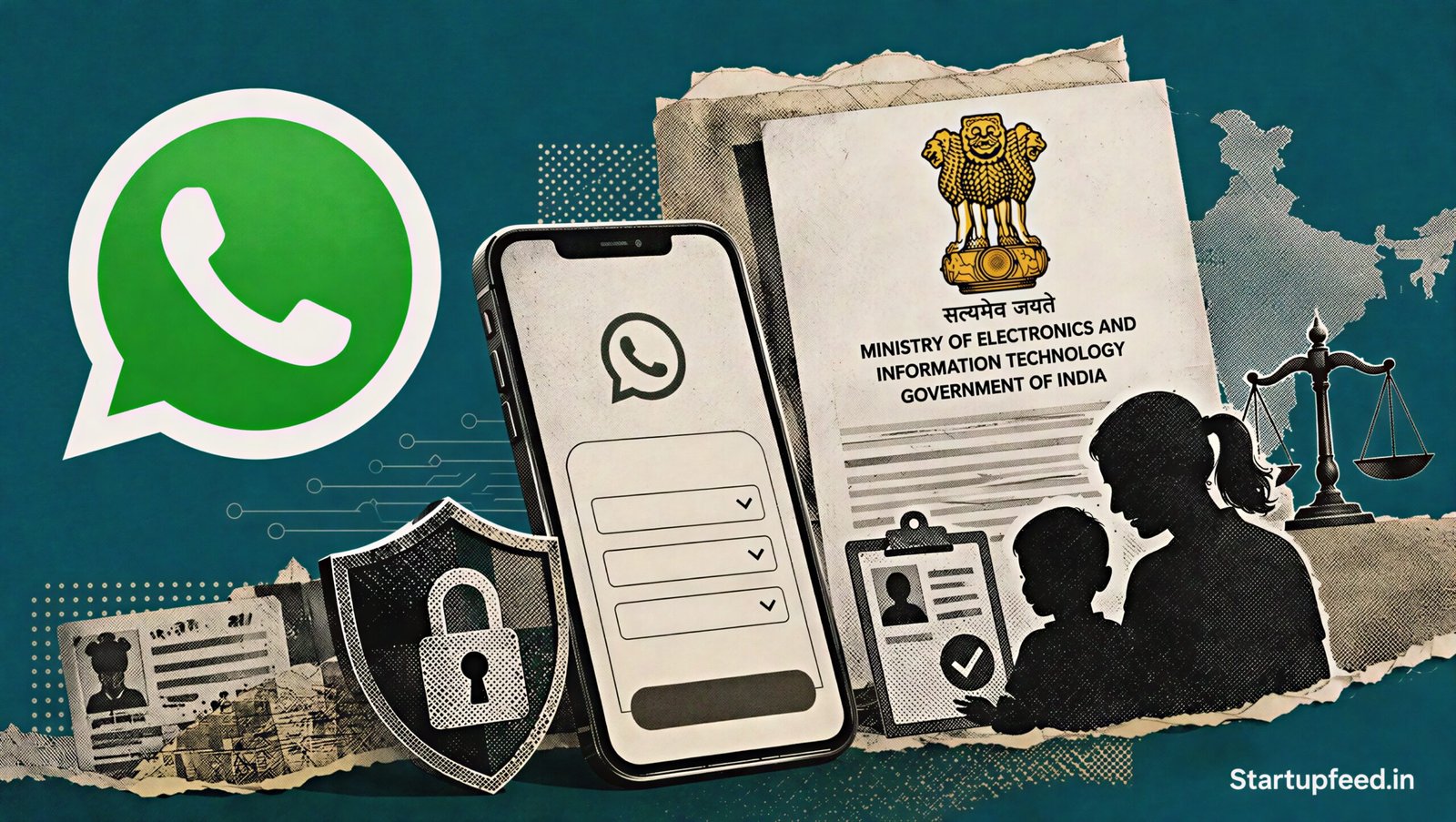
WhatsApp age check India testing has begun, with the Meta-owned app asking some users to add their date of birth to confirm their age. The optional prompt appeared for select users around August 1, 2026.
WhatsApp says the move prepares it for India’s Digital Personal Data Protection Act (DPDP Act), which requires verifiable parental consent before processing the data of anyone under 18. A WhatsApp spokesperson confirmed that Meta is testing privacy-protective ways for people to confirm their age. The notice has not gone to every user yet.
StartupFeed Insight
A simple date-of-birth prompt is not the same as verifiable parental consent, and that gap is the real story. The DPDP Rules ask platforms to confirm both a child’s age and a parent’s identity, likely through DigiLocker or a similar government-linked source. Founders building consumer apps for India should watch this closely, because every service touching users under 18 will face the same test. Expect WhatsApp to move from a self-declared age prompt to a stronger, identity-linked flow well before the May 13, 2027 deadline, with other large platforms following within the same window. By Harshvardhan Jain.
What Is the WhatsApp Age Check India Trial?
The WhatsApp age check India trial is a limited test that asks certain users to enter their date of birth inside the app. WhatsApp has confirmed the prompt is part of its early preparation for Indian data rules, not a live legal requirement today.
The request appeared for a small set of users, and a screenshot shared on X on August 1, 2026 said the change was linked to upcoming Indian government rules. Users who see the prompt do not have to enter their birth date right now to keep using the app, which shows the feature is still in a testing phase. WhatsApp states that age information helps it comply with legal requirements and offer age-appropriate experiences, such as controlling access to certain Meta AI features.
Why Is WhatsApp Doing This Now?
WhatsApp is acting now because of the DPDP Act, 2023, India’s main data protection law. The Act defines a child as anyone under 18 and requires companies to obtain verifiable consent from a parent or guardian before processing a child’s personal data.



The rules that operationalise this, the Digital Personal Data Protection Rules, 2025, were notified by the Ministry of Electronics and Information Technology (MeitY) on November 13, 2025. Under these rules, a platform must confirm both the age of the user and the identity of the parent giving consent. The full obligations for children’s data are scheduled to take force on May 13, 2027, which gives WhatsApp several months to build and refine a working system.
“Meta is testing privacy-protective ways for people to confirm their age,” a WhatsApp spokesperson said, confirming the trial to independent journalists.
The current prompt is a step taken ahead of a legal duty, not a response to one already in force. You can read the full law text on the official MeitY Digital Personal Data Protection Act page.
Key Facts: Prompt, Law, and Timeline
The WhatsApp age check India rollout sits inside a clear legal and time-based framework. The table below breaks down the main facts confirmed so far.
| Detail | Fact | Notes |
|---|---|---|
| What is happening | Age (date of birth) prompt | Shown to select users, optional for now |
| Who is doing it | WhatsApp (Meta) | India is Meta’s largest market by users |
| Governing law | DPDP Act, 2023 | Child defined as under 18 |
| Rules notified | November 13, 2025 | DPDP Rules, 2025, notified by MeitY |
| Key deadline | May 13, 2027 | Children’s data obligations take force |
| Max penalty | Rs 250 Cr | For major data breaches under the Act |
The most important line here is the gap between a self-declared age prompt and the stronger, verifiable consent the law will eventually demand.
About WhatsApp and Meta
WhatsApp is a messaging app owned by Meta Platforms, founded in 2009 by Brian Acton and Jan Koum and acquired by Facebook (now Meta) in 2014. It runs on end-to-end encryption and is India’s most-used messaging service, with more than 700 million monthly users in the country. India is Meta’s single largest market by users across WhatsApp, Facebook, and Instagram.
What Does This Mean for Users?
For most users, the WhatsApp age check India prompt changes little today, since it is optional and still in testing. The bigger shift comes as the DPDP deadline nears and age confirmation likely becomes a standard step for every account.
Experts have cautioned users not to read the prompt as proof that age verification is already mandatory in India. Neither WhatsApp nor the government has confirmed a live mandate at this stage. What is clear is the direction of travel: India is moving toward stronger online safety rules for children, in line with steps taken in countries like Australia and the United Kingdom. Adults may eventually need to prove they are not minors, a step that raises fresh questions about identity and privacy.



What’s Next
Watch for WhatsApp to widen the test to more users over the coming months and to move from a simple date-of-birth entry toward an identity-linked consent flow before May 13, 2027. Other large platforms serving Indian users are likely to announce similar checks in the same period. Will a self-declared birth date be enough, or will DigiLocker-style verification become the norm for every app?
Frequently Asked Questions
Have a tip? Write to us at editorial@startupfeed.in.
Liked this story? Follow StartupFeed on Google so our reporting reaches you first.