Quick Take
- 26 grassroots innovators were honoured at Rashtrapati Bhavan on July 31, 2026, by President Droupadi Murmu.
- Union Minister Dr Jitendra Singh said India has crossed 2.4 lakh startups, now the world’s third-largest ecosystem.
- The winners span 16 states and 23 districts, aged 24 to 66, and include 11 women innovators.
In This Article
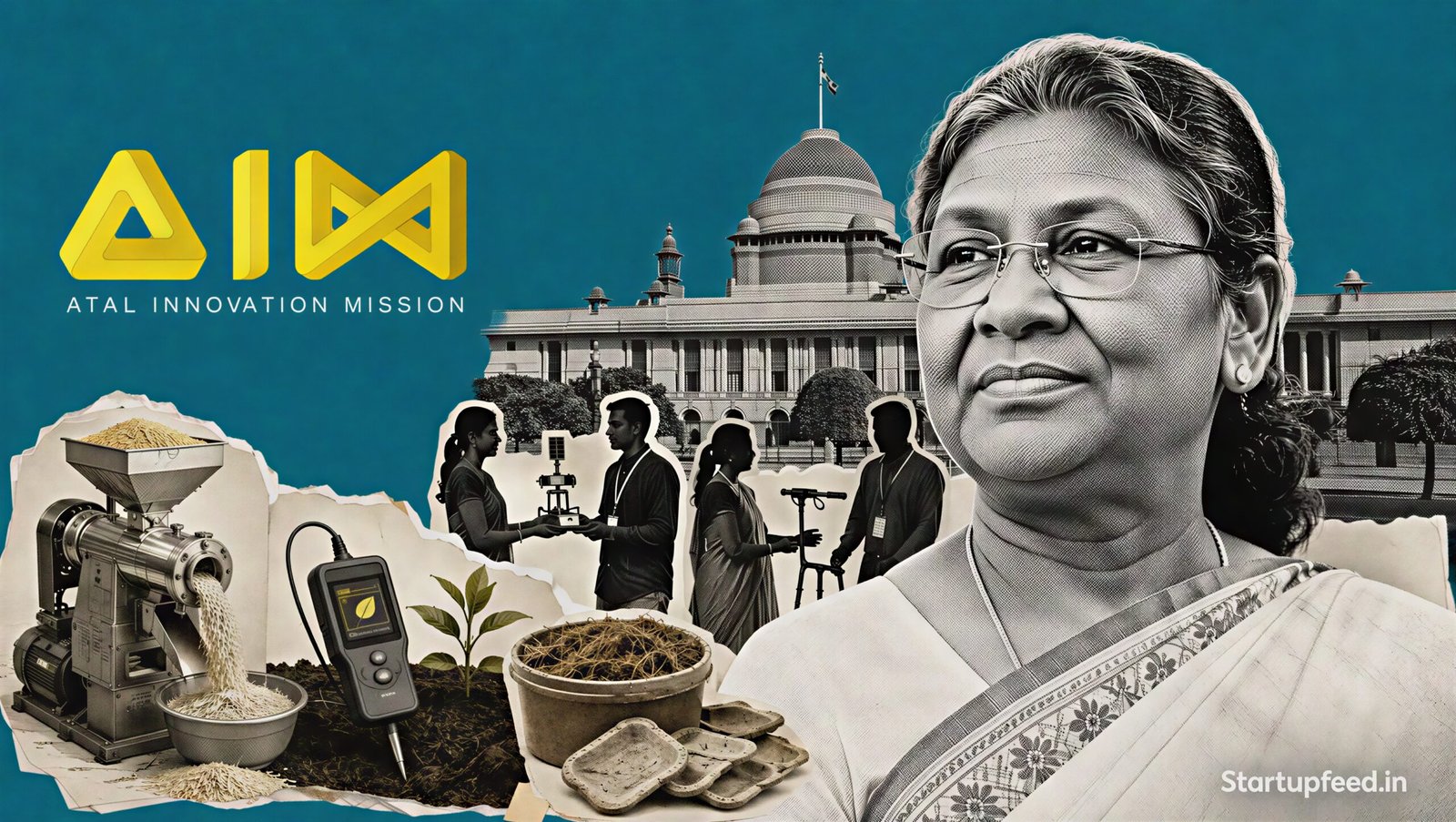
India honoured 26 grassroots innovators at the Rashtrapati Bhavan Cultural Centre in New Delhi on July 31, 2026, where President Droupadi Murmu recognised solutions built for farms, homes, and rural livelihoods.
The Grassroots Innovator Recognition Ceremony 2026 was addressed by Union Minister of State (Independent Charge) for Science and Technology, Dr Jitendra Singh. He said India’s next wave of growth will come from villages, small towns, and community innovators, not only from laboratories and large cities, as detailed in the official Ministry of Science and Technology communication on grassroots innovation.
StartupFeed Insight
The real signal in this ceremony is the shift from recognition to translation. India has 2.4 lakh startups, but grassroots innovators rarely reach that count because they stall after the applause. The government’s answer is to wire the Atal Innovation Mission into DST’s NIDHI network, giving village inventors access to incubators, IP support, and testing. Founders and incubator managers in tier-2 and tier-3 regions should track the Atal Community Innovation Centre expansion closely. Expect the government to announce the next batch of ACIC approvals, moving past the current 25 operational centres, before March 2027. By Harshvardhan Jain.
Who Are The Grassroots Innovators Honoured?
The 26 grassroots innovators recognised in 2026 came from 16 states and 23 districts across India, according to the Ministry of Science and Technology. They range in age from 24 to 66 years and include 11 women innovators. Their work covers agriculture, healthcare, clean energy, assistive technology, water management, circular economy, and sustainable livelihoods.
| Metric | Detail | Notes |
|---|---|---|
| Innovators honoured | 26 | Recognition Ceremony 2026 (PIB) |
| States represented | 16 states, 23 districts | Nationwide spread (PIB) |
| Women innovators | 11 of 26 | Ages 24 to 66 (PIB) |
| Host | President Droupadi Murmu | Rashtrapati Bhavan, July 31 (PIB) |
The ceremony was held in the presence of President Droupadi Murmu. It was also attended by Principal Scientific Adviser Prof. Ajay Sood, NITI Aayog CEO Nidhi Chhibber, and senior officials, scientists, and incubator partners.
About the Atal Innovation Mission
The Atal Innovation Mission (AIM) is the Government of India’s flagship programme to promote innovation and entrepreneurship, run under NITI Aayog. It supports innovators from rural, tribal, hilly, coastal, aspirational, and remote regions. Through Atal Community Innovation Centres and tinkering labs, AIM extends science and technology access beyond premier institutions and metro cities to underserved communities nationwide.


What Did Jitendra Singh Announce?
Dr Jitendra Singh called for a seamless pathway to turn grassroots innovations into nationally scalable enterprises. He said innovation must move beyond recognition to scientific validation, technology translation, incubation, and market adoption. He described grassroots innovation as the true strength of India’s innovation ecosystem.
Recognition should mark the beginning, not the destination, of an innovator’s journey, Dr Jitendra Singh said.
The Minister said the real success of India’s innovation movement will be measured by problems solved for farmers, women, artisans, and ordinary citizens. He noted that India has now crossed 2.4 lakh startups, making it the world’s third-largest startup ecosystem.
How Does India Support Grassroots Innovators?
India supports grassroots innovators through Atal Community Innovation Centres (ACICs), which bridge community knowledge and the formal innovation system. These centres provide mentoring, incubation, technical guidance, market linkages, and capacity building for innovators from underserved regions. Dr Jitendra Singh said 25 ACICs are already operational, while another 25 are under development.
The existing centres have supported more than 2,500 grassroots innovators, per the Ministry of Science and Technology. The Minister called for stronger integration between AIM and the Department of Science and Technology’s National Initiative for Developing and Harnessing Innovations (NIDHI). Such convergence would open access to Technology Business Incubators, IP support, product testing, certification, and manufacturing partnerships.
Which Innovations Were Recognised?
The innovations honoured at the 2026 ceremony reflect a wide range of practical, community-driven solutions. They include compact mini rice mills that let small farmers process produce at source and tractor-operated machines that reclaim uncultivable land. Other winners built technologies that convert agricultural residue into high-value bio-products.
| Innovation Area | Example Recognised |
|---|---|
| Agriculture | Mini rice mills, land-reclamation machines |
| Farm technology | AI-enabled soil diagnostic services |
| Sustainability | Biodegradable plastic alternatives from farm waste |
| Assistive tech | Affordable devices for persons with disabilities |
Dr Jitendra Singh cited the Mitticool refrigerator as a proven example of scale. That clay-based innovation grew into the basis of a Bureau of Indian Standards specification. What sets this year’s cohort apart is the government’s stated plan to give every winner continued support through incubation, certification, and real-world pilots.
What’s Next
The government now aims to link each recognised innovator to specialised incubation, IP facilitation, testing, and pilot deployments. With 25 more Atal Community Innovation Centres under development, the next test is how many grassroots innovators convert recognition into registered enterprises. Will India’s next wave of scalable startups emerge from its villages and small towns?


Frequently Asked Questions
Have a tip? Write to us at editorial@startupfeed.in.
Liked this story? Follow StartupFeed on Google so our reporting reaches you first.