
Quick Take
- DRDO will now share its software source code with licensee firms, letting startups build and maintain defence software.
- Nine tech-transfer licences went to 13 manufacturing partners at VIMARSH 2026 on September 15, 2026.
- Over 2,300 technology transfers have reached more than 1,100 industries so far, with about 50 missiles opened to industry.
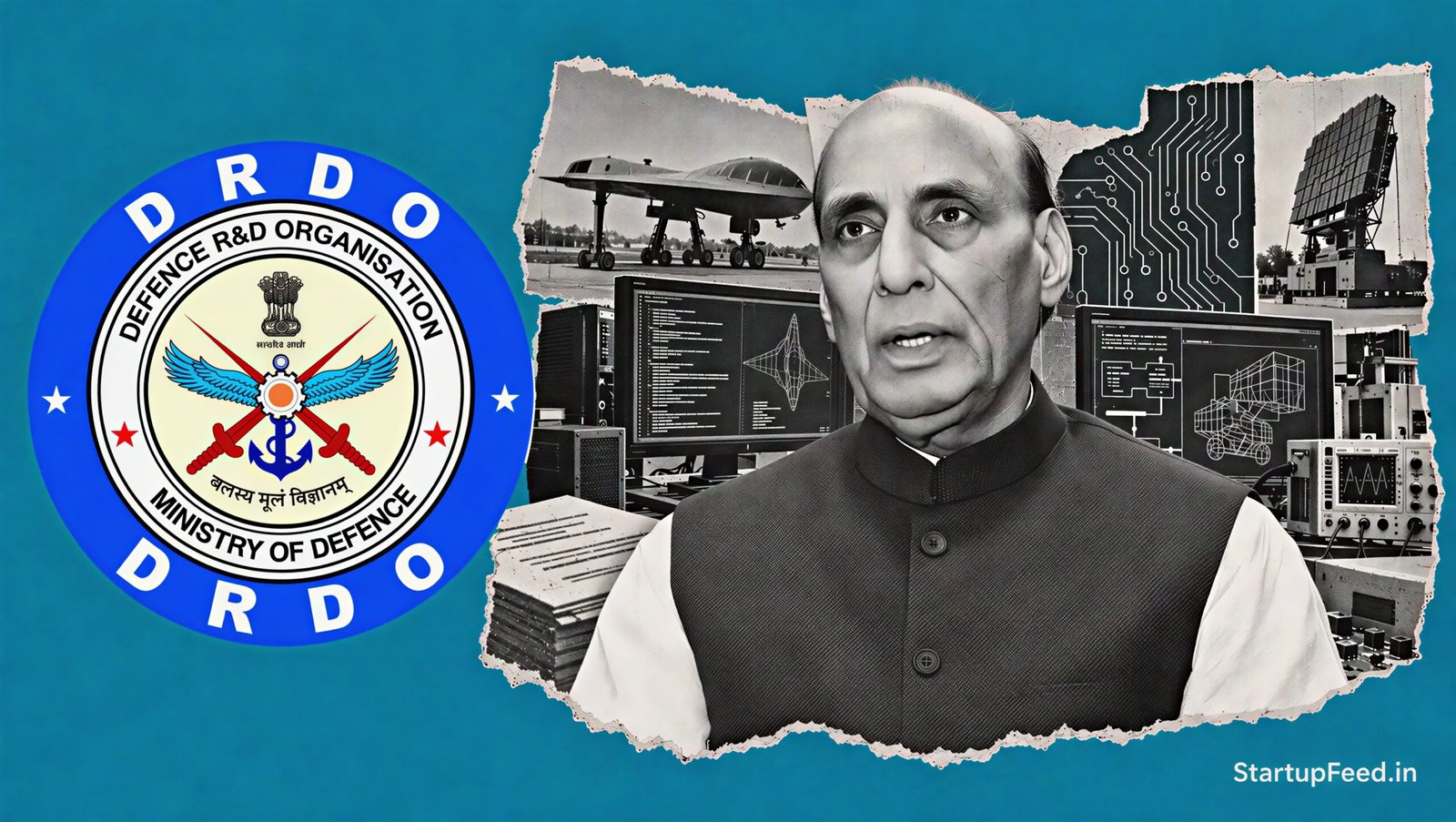
Nine defence technologies moved from lab to factory floor on September 15, 2026. Defence Minister Rajnath Singh handed over the licensing deals at VIMARSH 2026, a DRDO-industry meet in New Delhi.
The bigger news for founders sat in the fine print. Rajnath Singh launched a framework that lets startups and small firms build defence software on DRDO source code. He also opened DRDO testing labs to smaller players and promised direct funding.
The Defence Research and Development Organisation, or DRDO, held the event under the theme “Varta se Vikas”. More than 250 industry leaders, officials and scientists attended.
What did DRDO hand over to industry?
Nine Licensing Agreements for Transfer of Technology went to 13 manufacturing partners. Each deal lets a company make an advanced defence system commercially. The transfers cover state-of-the-art systems built inside DRDO labs.
DRDO signed two more agreements at the meet. It exchanged MoUs with the Society of Indian Defence Manufacturers and Laghu Udyog Bharati. Both bodies bring small and grassroots manufacturers into the fold.



The organisation also signed a contract with the Quality Council of India. The deal covers SAMAR version 2.0, a system that rates the manufacturing maturity of defence firms. SAMAR stands for System for Advanced Manufacturing Assessment and Rating.
Why does the source code framework matter?
The source code framework is the part startups will watch. Until now, licensee firms got the hardware design but not the software. This standardised, secure framework changes that.
It shares DRDO-developed source code so partners can update systems themselves. That helps them fix obsolescence without going back to the lab each time. The move supports software-defined defence, where capability lives in code, not just hardware.
Rajnath Singh said DRDO-industry ties must go past production. He wants collaboration across research, design, testing, certification and manufacturing. The aim is to make India a global hub for defence manufacturing.
How big is DRDO’s transfer record?
The scale of past transfers shows how far this has come. Over 2,300 Technology Transfers have gone to more than 1,100 industries so far. DRDO has also opened technologies for about 50 missiles to industry.
That last figure came from Defence Secretary and DRDO Chairman Rajesh Kumar Singh. He said the expansion of technology transfer set up parallel production lines. Those lines directly help MSMEs, he said.
Where can startups and MSMEs move fast?
Rajnath Singh listed the reforms of recent years. They include Positive Indigenisation Lists, Make in India, iDEX and ADITI. The government also decided to give 25% of the defence R&D budget to the private sector.



He pointed to specific sectors where small firms can move fast. Drone technology, AI and cyber security topped the list. Grants already flow to startups through the Technology Development Fund.
The new policy push targets four things. It backs industry-led R&D, funds and mentors startups and MSMEs, links academia with industry, and pushes futuristic technologies. Those include AI, quantum computing, hypersonics and directed energy.
Rajnath Singh framed the stakes in plain terms. A nation with its own technology can shape its own future, he said. “Companies that invest in new and emerging technologies today will become the leaders of tomorrow,” he added.
StartupFeed Insight
The source code framework is the line that matters, not the nine licences. Hardware transfer has run for years, with 2,300 deals already done. Software access is new, and it is where a small team can actually compete, because updating code needs brains, not a factory. Watch the drone, AI and cyber security firms in iDEX first, since those are the sectors Rajnath Singh named and the ones where code is the whole product. The real test is timeline. If the first source-code sharing agreement is signed and public before March 2027, the framework is working. If it stays a policy slide with no named licensee by then, it is not.
— Harshvardhan Kothari, Technology and Policy Correspondent
What this means for you: If you run a deep-tech or defence software startup, check your iDEX and Technology Development Fund eligibility now, because the funding and lab-access door just opened wider.
Have a tip? Write to us at editorial@startupfeed.in.
Liked this story? Follow StartupFeed on Google so our reporting reaches you first.