
Quick Take
- Global nuclear startup funding topped $4.5 Bn (Rs 42,943 Cr) across 81 companies in 2026, per PitchBook.
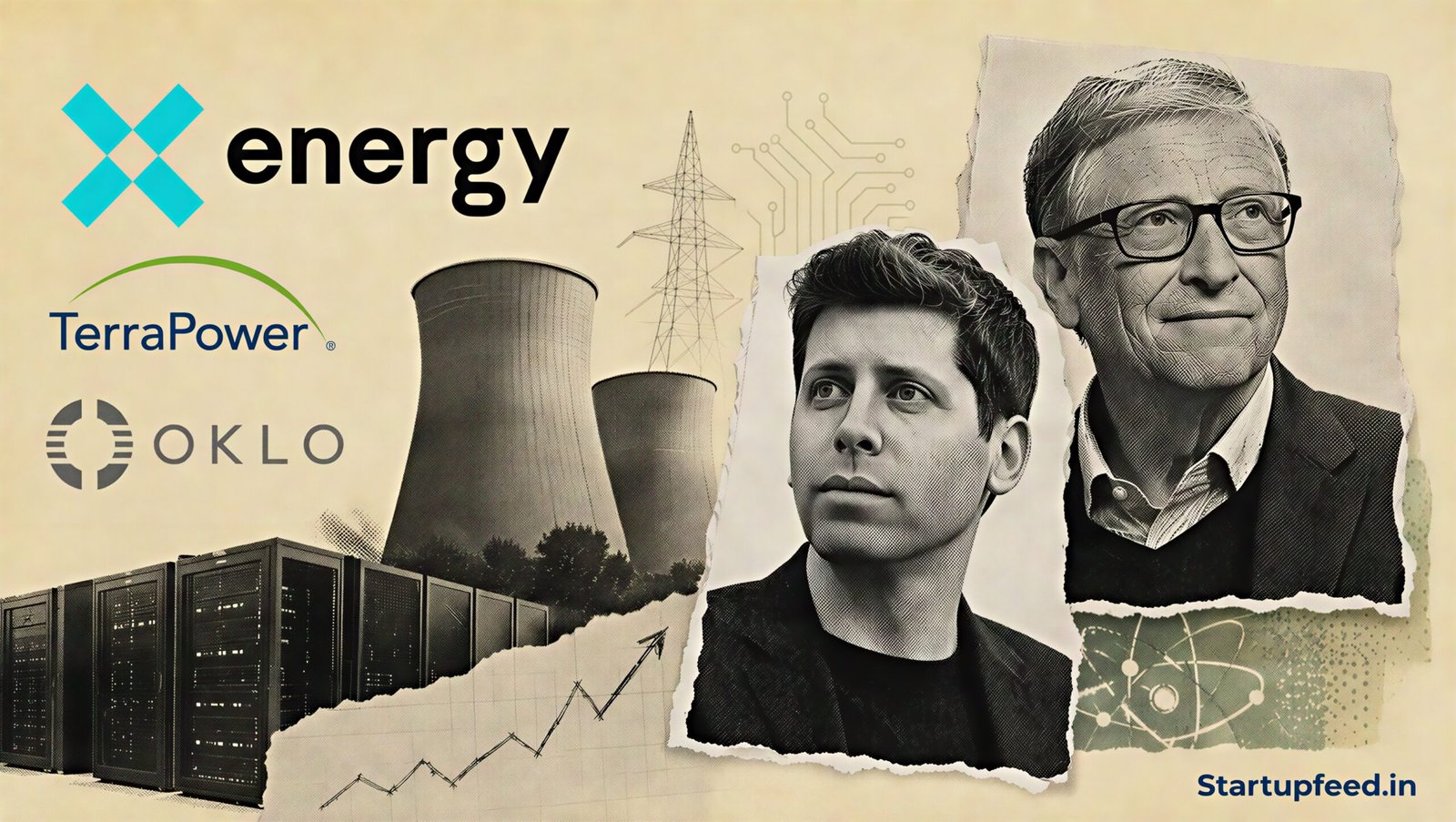
- AI data center power demand is the driver, with backers like Sam Altman and Bill Gates leading fusion bets.
- India runs a parallel play, targeting five Bharat Small Reactors by 2033 to power its own AI clusters.
In This Article
Nuclear startup funding reached $4.5 Bn (Rs 42,943 Cr) across 81 companies globally in 2026, driven by surging AI data center power demand, according to PitchBook data reported by Axios. The figure is on pace to beat the 2025 record.
The money is flowing into both nuclear fission and fusion firms as hyperscalers hunt for round-the-clock, zero-emission electricity. Most of the 2026 funding surge is going to U.S. companies, with tech leaders including OpenAI’s Sam Altman and Bill Gates among the biggest backers. The trend also carries direct signals for India’s own nuclear ambitions.
StartupFeed Insight
The real story is not the headline dollar figure, it is who is writing the cheques. When chip and cloud giants like NVIDIA and Amazon join cap tables, they are not chasing returns, they are securing supply. That changes nuclear from a slow utility play into an AI infrastructure race. Watch India closely here: the same demand pressure that lifted U.S. startups is building around Reliance and Adani data center plans. StartupFeed expects at least one Indian private nuclear or SMR partnership announcement tied to a hyperscaler by mid-2027, as policy reforms open a 60-year state monopoly. By Harshvardhan Jain.
Nuclear Startup Funding: The 2026 Numbers
Nuclear startup funding in 2026 has crossed $4.5 Bn (Rs 42,943 Cr) across 81 companies worldwide, per PitchBook data reported by Axios. This covers both fission and fusion firms, with the bulk landing in the United States.
| Metric | Detail | Notes |
|---|---|---|
| Total 2026 Funding | $4.5 Bn (Rs 42,943 Cr) | Across fission and fusion, per PitchBook |
| Companies Funded | 81 startups | Global count, majority U.S.-based |
| 2025 Record | $6.2 Bn (Rs 59,166 Cr), 93 firms | 2026 on pace to beat it |
| Median Valuation (2025) | $106 Mn (Rs 1,012 Cr) | Up from $36.9 Mn a year earlier, per PitchBook |
| Key Backers | Sam Altman, Bill Gates, NVIDIA, Amazon | Tech capital, not just energy funds |
| Recent Round | Antares, $370 Mn Series C | California microreactor firm, July 2026 |
The most striking shift is the valuation jump. PitchBook reported that the median pre-money valuation for nuclear fission startups nearly tripled in a single year. All USD-to-INR conversions here use a rate of 1 USD = Rs 95.43, the live spot rate on August 1, 2026.
About the Nuclear Startup Sector
The advanced nuclear startup sector builds small modular reactors (SMRs) and fusion systems, smaller and faster to deploy than conventional plants. Leading U.S. names include X-energy, TerraPower (co-founded by Bill Gates in 2006), and Oklo (chaired by Sam Altman). These firms target AI data centers as anchor customers, backed by investors such as DCVC, Founders Fund, Amazon, and NVIDIA’s venture arm. None has begun commercial electricity production yet.


Why is Big Tech backing nuclear power?
Big Tech is backing nuclear power because AI data centers need massive, constant, zero-emission electricity that solar and wind alone cannot guarantee. The deals give startups both funding and paying customers.
Goldman Sachs Research forecast in May 2026 that U.S. data center power demand would more than double to 66 gigawatts in 2027, up from 31 gigawatts in 2025.
That gap explains the rush. Amazon’s Climate Pledge Fund backed X-energy, one of the sector’s most funded firms. NVIDIA’s venture arm joined TerraPower‘s $650 Mn (Rs 6,203 Cr) round. Oklo, meanwhile, agreed with Meta to develop a 1.2 GW campus in Ohio. For these giants, a stake in a reactor firm is really a claim on future power supply.
What does this mean for India?
For India, the U.S. nuclear funding boom is a preview of a demand crunch already forming at home. India’s data center capacity is expected to rise from under 2 GW in 2025 to 8 to 15 GW by 2030, per industry estimates.
The government is responding through its Nuclear Energy Mission, targeting 100 GW of nuclear capacity by 2047, and a Rs 20,000 Cr budget allocation to deploy five Bharat Small Reactors by 2033. New policy reforms aim to end a decades-long state monopoly and allow private players in. With Reliance planning a Rs 1.6 Lakh Cr AI cluster in Visakhapatnam, the same power-supply logic driving U.S. startups is now landing on Indian soil.
How do the top nuclear startups compare?
The leading nuclear startups differ mainly by reactor technology and their anchor tech partner. Each is racing toward first commercial power, but none has reached it yet.
| Startup | Key Backer / Partner | Recent Funding / Deal |
|---|---|---|
| X-energy | Amazon Climate Pledge Fund | $1 Bn (Rs 9,543 Cr) IPO, April 2026 |
| TerraPower | Bill Gates, NVIDIA venture arm | $650 Mn (Rs 6,203 Cr) round |
| Oklo | Sam Altman, Meta | 1.2 GW Ohio campus deal, NYSE-listed |
What sets this cohort apart from older utilities is the customer. Instead of selling to the grid first, these startups are signing power deals directly with hyperscalers, which de-risks their path to revenue.
What’s Next
The near-term test is criticality, the point where a reactor sustains a controlled chain reaction. The U.S. Department of Energy set a target of July 4, 2026, for several startups to hit that milestone. If they succeed, expect a fresh funding wave and faster hyperscaler deals into 2027. The bigger question: will India’s private nuclear reforms move fast enough to catch the same capital?

Frequently Asked Questions
Disclaimer: This article is for informational purposes only and does not constitute investment advice. StartupFeed and its authors are not SEBI-registered investment advisors. The analysis above is based on publicly available information and should not be the sole basis for any investment decision. Please consult a SEBI-registered financial advisor before making investment decisions.
Have a tip? Write to us at editorial@startupfeed.in.
Liked this story? Follow StartupFeed on Google so our reporting reaches you first.