Quick Take
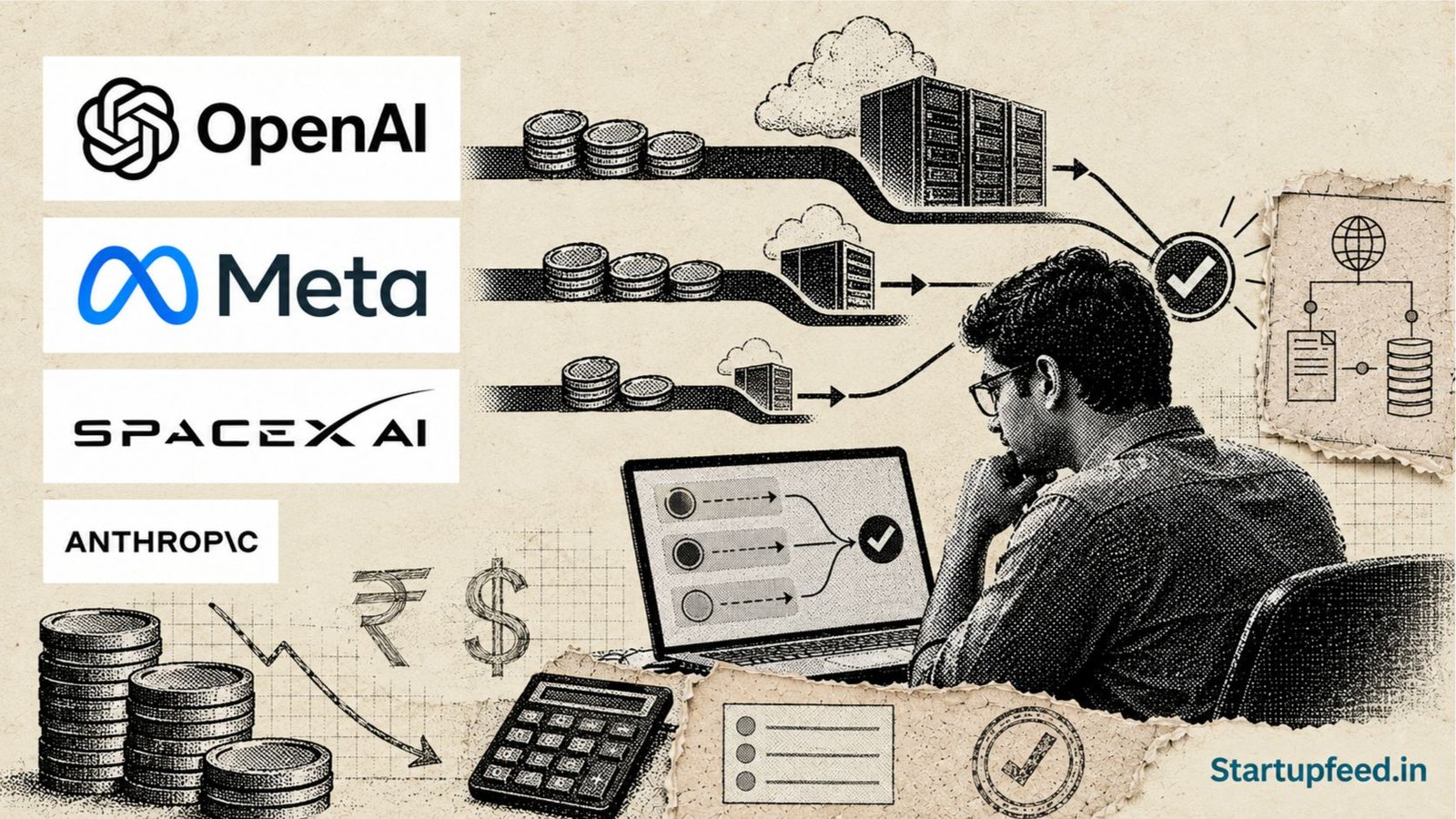
- OpenAI, Meta and SpaceXAI released new models in one week, all pitched on cost
- Meta charges $1.25 per Mn input tokens, its first paid developer tier ever
- Enterprise buyers now judge AI on cost per finished task, not benchmark scores
In This Article
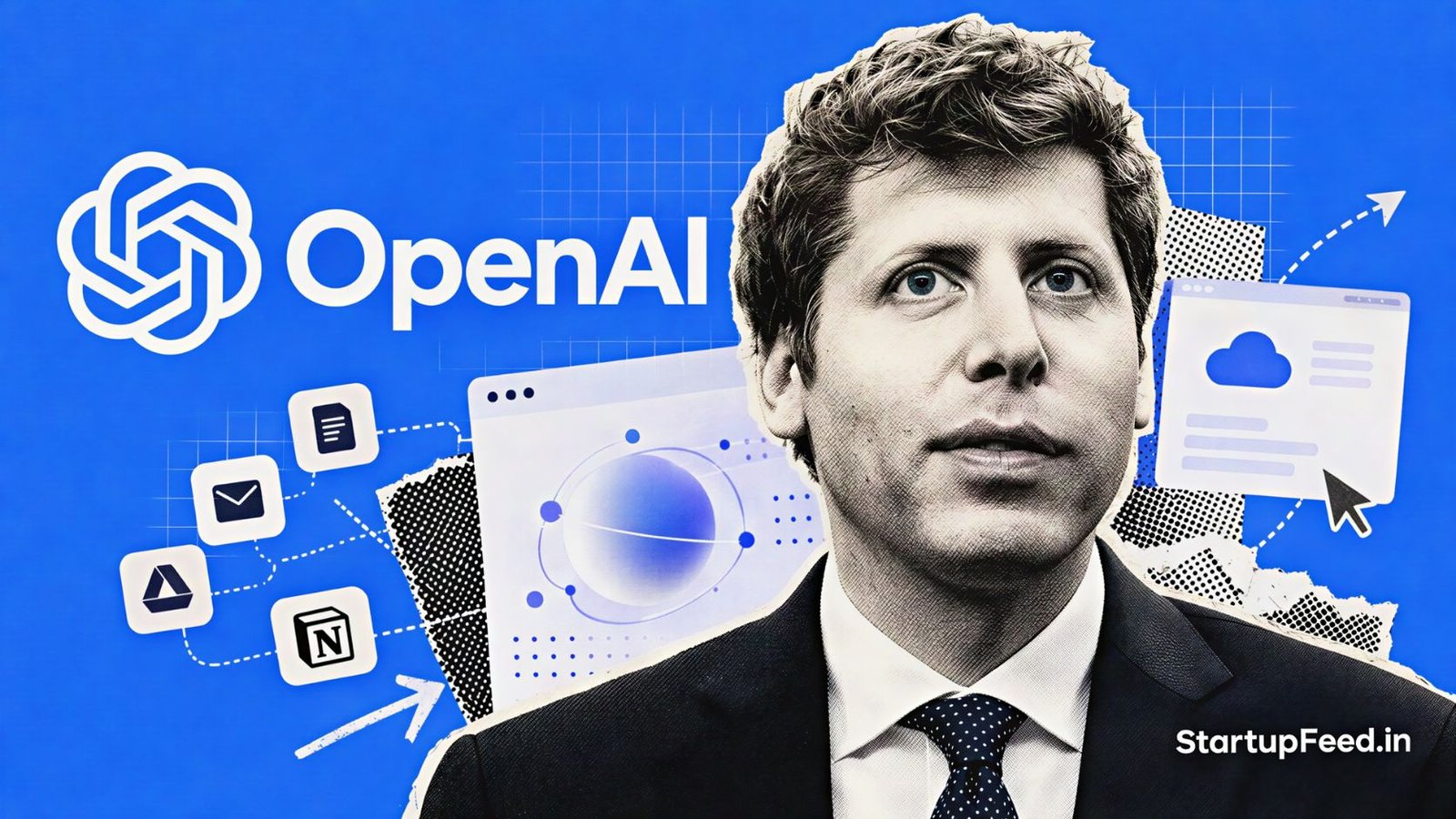
Three artificial intelligence labs released rival models between July 8 and July 9, 2026, and all three sold them on price. Cost-efficient AI models are now the battleground, as OpenAI, Meta Platforms and SpaceXAI each pitched cheaper tokens over raw capability.
The shift matters because businesses have started to question their AI bills. Every coding agent and research assistant burns tokens, the units of text a model reads and writes. Monthly invoices have climbed so fast that some firms now treat AI spend like a second cloud budget, and finance teams are pushing back.
StartupFeed Insight
The real signal is not the sticker price, it is what the labs chose to advertise. OpenAI held its flagship rate flat and marketed token efficiency instead. Meta, which spent years giving models away, started charging. That tells you where margin pressure sits. Watch the middle tier, not the top: Terra at $2.50, Grok 4.5 at $2, Muse Spark 1.1 at $1.25. StartupFeed expects at least one major lab to publish outcome-based pricing (charge per completed task, not per token) before December 2026, because per-token billing punishes the vendor that solves a problem in one attempt. Indian SaaS founders should audit their model routing this quarter. By Soumya Verma.
What do the new cost-efficient AI models cost?
The three launches carry published per-token rates that sit well below flagship pricing from a year ago. OpenAI released the GPT-5.6 family on July 9, 2026, in three tiers named Sol, Terra and Luna. Meta shipped Muse Spark 1.1 the same day. SpaceXAI launched Grok 4.5 one day earlier, on July 8.
| Model | Input (per 1 Mn tokens) | Output (per 1 Mn tokens) | Notes |
|---|---|---|---|
| GPT-5.6 Sol | $5.00 (Rs 477) | $30.00 (Rs 2,862) | Flagship, matches old GPT-5.5 rate |
| GPT-5.6 Terra | $2.50 (Rs 239) | $15.00 (Rs 1,431) | Balanced tier for everyday work |
| GPT-5.6 Luna | $1.00 (Rs 95) | $6.00 (Rs 572) | Lowest OpenAI frontier-family tier |
| Grok 4.5 | $2.00 (Rs 191) | $6.00 (Rs 572) | Single tier, trained with Cursor |
| Muse Spark 1.1 | $1.25 (Rs 119) | $4.25 (Rs 405) | Meta’s first paid model, $20 free credits |
| Claude Opus 4.8 | $5.00 (Rs 477) | $25.00 (Rs 2,385) | Incumbent benchmark for comparison |
Rupee figures use the USD-INR rate of Rs 95.4 as on July 10, 2026. The single cheapest output rate belongs to Meta at $4.25, which undercuts every rival in the table. OpenAI’s own published API pricing documentation confirms the three-tier Sol, Terra and Luna rate card.
About the AI cost race
The 2026 AI pricing war involves four main labs. OpenAI, founded 2015 and headquartered in San Francisco, sells the GPT family. Meta Superintelligence Labs, run by chief AI officer Alexandr Wang since 2025, ships the Muse series. SpaceXAI, the AI arm of SpaceX after its February 2026 xAI merger, builds Grok. Anthropic, the current enterprise leader in coding tools, sells Claude.

Why did all three labs cut prices at once?
Enterprise buyers started refusing to pay. That is the short answer, and it explains the timing of all three launches in a single week.
The industry spent the past year in a phase developers nicknamed “tokenmaxxing,” where the practice was to throw as many tokens at a problem as possible. That has now reversed. Finance departments were hit with AI bills they never budgeted for, according to CNBC reporting on enterprise spend, and CFOs lacked tools to control them. Some firms have moved traffic wholesale to cheaper open-weight alternatives.
Gil Luria, an equity analyst at D.A. Davidson who covers technology companies, told CNBC that large enterprise customers may start limiting what he called out-of-control token spend. Analysts have also flagged that current growth rates at the top labs are the fastest they will ever be, a simple matter of arithmetic on a large base.
The goal is to really have attractive pricing that scales with immense consumption usage, said Alexandr Wang, chief AI officer at Meta, describing the Muse Spark 1.1 rate card to CNBC.
Meta’s move is the most structural. The company built its reputation on open-weight Llama models that developers ran for free. Muse Spark 1.1 is closed, hosted, and metered per token, which means Meta now competes on the same commercial terms as OpenAI and Anthropic. Meta’s official Muse Spark 1.1 announcement confirms the Meta Model API entered public preview on July 9, 2026.
How do the rival models compare?
Cheaper tokens do not automatically mean cheaper work. The metric that matters is cost per completed task, and on that measure the three challengers land differently.
SpaceXAI makes the sharpest efficiency claim. The company says Grok 4.5 has twice the token efficiency of leading rival models at the same tasks and is served at 80 tokens per second. Elon Musk described it as an Opus-class model that is faster, more token-efficient and lower cost. On benchmarks, the picture is mixed. Grok 4.5 leads the SWE Marathon resolution rate at 29.0%, ahead of Claude Opus 4.8 at 26.0%. It trails on SWE Bench Pro, scoring 64.7% against 69.2% for Opus 4.8 and 80.4% for Claude Fable 5, according to SpaceXAI’s own published figures.
OpenAI took a different route: it held flagship pricing flat and sold efficiency instead. CEO Sam Altman told CNBC that Sol is 54% more token-efficient on agentic coding tasks. OpenAI’s GPT-5.6 preview announcement also notes Terra delivers competitive performance to GPT-5.5 at half the price, and that cached reads keep a 90% discount.

Meta leads on tool use rather than raw coding. The company reported the top score of 88.1 on the MCP Atlas benchmark for scaled tool use and 54.7 on JobBench for professional tool use, along with 62.1 on Humanity’s Last Exam. Meta selected the benchmark set and ran the harness itself, so treat these as vendor-reported figures until independent evaluations land. What separates each lab is positioning: OpenAI sells performance per dollar, SpaceXAI sells tokens per task, and Meta sells the lowest sticker price with orchestration depth.
What this means for Indian founders
Indian enterprises are entering a heavy AI investment cycle, which makes the token price drop land at a useful moment. IT spending in India is projected to grow 6% to 8% in 2026, ahead of the 4% to 6% expected globally, according to the Bain & Company India Enterprise Technology Report 2026. Roughly 40% to 45% of change-related technology spend is going to AI and data transformation.
The gap is in execution, not enthusiasm. Around 90% of business leaders told Bain their data foundations are not yet strong enough to support enterprise-wide AI at scale, and 72% of CIOs (Chief Information Officers) named legacy technology debt as the top barrier. Cheaper tokens do not fix a weak data layer.
For founders, the practical lever is model routing: sending simple queries to a cheap tier and escalating only hard ones. Glean CEO Arvind Jain estimated that roughly 95% of enterprise AI usage still runs on frontier models, which means most teams are overpaying by default. A team that routes classification to Luna at $1 per Mn input tokens instead of Sol at $5 per Mn is cutting that line item by 80% before touching anything else.
What’s Next
Expect independent benchmark results on all three models within the next four to six weeks, and expect them to matter more than launch-day charts. SpaceXAI has committed to monthly model releases through the rest of 2026, so the pricing floor may drop again before Diwali. The open question for Indian teams is whether cheaper frontier tokens beat routing to open-weight models entirely. Where does your team’s AI spend sit today?
Frequently Asked Questions
Have a tip? Write to us at editorial@startupfeed.in.
Liked this story? Follow StartupFeed on Google so our reporting reaches you first.