
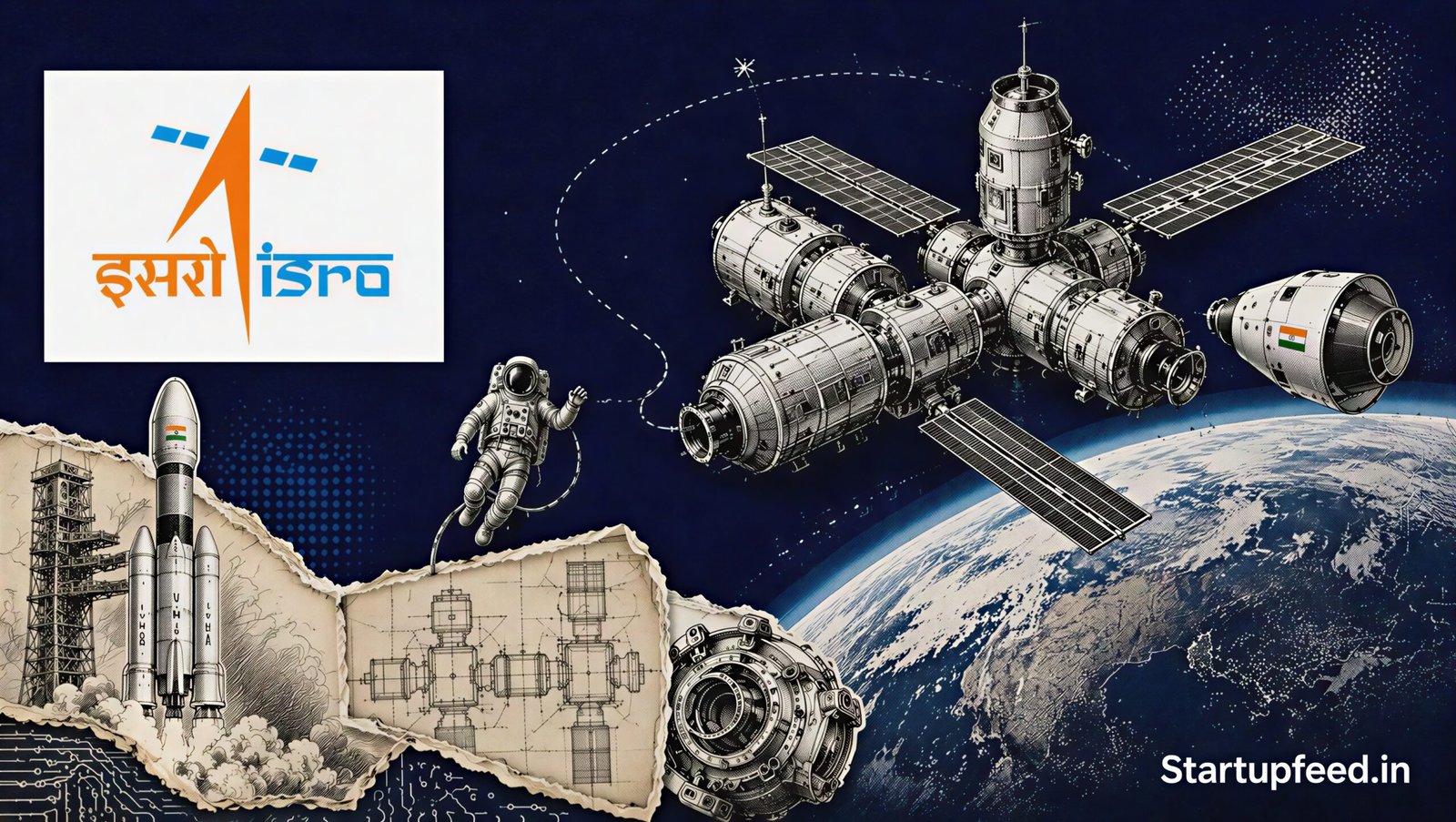
Quick Take
- PM Modi confirmed in Melbourne on July 9, 2026 that India is building its own space station.
- Cabinet cleared Rs 20,193 Cr ($211.4 Mn extra) for Gaganyaan, covering the first BAS module.
- First module launches by 2028, full five-module station operational by 2035, per ISRO.
In This Article
Prime Minister Narendra Modi confirmed on July 9, 2026 in Melbourne that the India Space Station programme is moving ahead, backed by a Cabinet-approved Rs 20,193 Cr ($211.4 Mn) Gaganyaan budget targeting full operations by 2035.
Speaking to roughly 30,000 people at the Melbourne Meets Modi event, the Prime Minister said the country did not stop at Chandrayaan’s south pole landing. He framed the orbital laboratory as the next rung in a ladder that runs from Gaganyaan to a crewed lunar mission by 2040. The station carries the official name Bharatiya Antariksh Station, or BAS.
StartupFeed Insight
The number that matters here is not Rs 20,193 Cr. It is Rs 1,763 Cr, the cost of the first module alone, and the fact that ISRO has opened its structural fabrication to private Indian industry through an Expression of Interest. That single procurement decision converts a national prestige project into an addressable market. StartupFeed expects at least three Indian private space firms to win BAS-linked hardware or subsystem contracts before December 2027, with Skyroot, Agnikul and Ananth Technologies the most likely names on that list. Founders in propulsion, life support and thermal systems should be reading the VSSC tender pages weekly, not annually. By Soumya Verma.
India Space Station Programme Breakdown
The Bharatiya Antariksh Station is a five-module orbital laboratory that will weigh about 52 tonnes and orbit roughly 400 km above Earth. The Union Cabinet approved development of the first module, BAS-1, on September 18, 2024, by widening the scope of the Gaganyaan programme. Astronauts will be able to stay aboard for three to six months once the station is complete.
| Metric | Detail | Notes |
|---|---|---|
| Total Programme Funding | Rs 20,193 Cr ($2.11 Bn) | Revised Gaganyaan budget, Cabinet approval |
| Additional Funding Approved | Rs 11,170 Cr ($1.17 Bn) | Net top-up over the 2018 allocation |
| First Module (BAS-1) Cost | Rs 1,763 Cr ($184.6 Mn) | Covers development and launch, 2025 to 2028 |
| First Module Launch | By 2028 | Launch vehicle: LVM3 |
| Full Station Operational | By 2035 | Five modules, Next Generation Launch Vehicle |
| Programme Missions | 8 missions by December 2028 | Includes four BAS technology validation flights |
The most striking figure is the module cost. At Rs 1,763 Cr, BAS-1 costs less than what several Indian unicorns burned in a single financial year. India is attempting orbital infrastructure at startup economics, and the Prime Minister’s Office announcement on BAS makes the phased funding logic explicit.
About the Bharatiya Antariksh Station
The Bharatiya Antariksh Station is India’s planned modular space station, designed and operated by the Indian Space Research Organisation (ISRO), founded in 1969 and headquartered in Bengaluru. Announced formally in 2019 and approved in 2024, BAS will carry five modules including a core, science, lab and Common Berthing Mechanism unit. It supports three to four astronauts nominally, six for short stays.



What does this mean for Indian space startups?
The India Space Station programme has moved from a government-only project to a public-private build. ISRO’s Vikram Sarabhai Space Centre issued an Expression of Interest inviting Indian industry to fabricate structural components of the first module. Commercial players were invited from January 2026 onward.
India is not satisfied with only this achievement. Because India believes, Grow More, Achieve More. India is also moving towards the goal of building its own space station, PM Narendra Modi said in Melbourne.
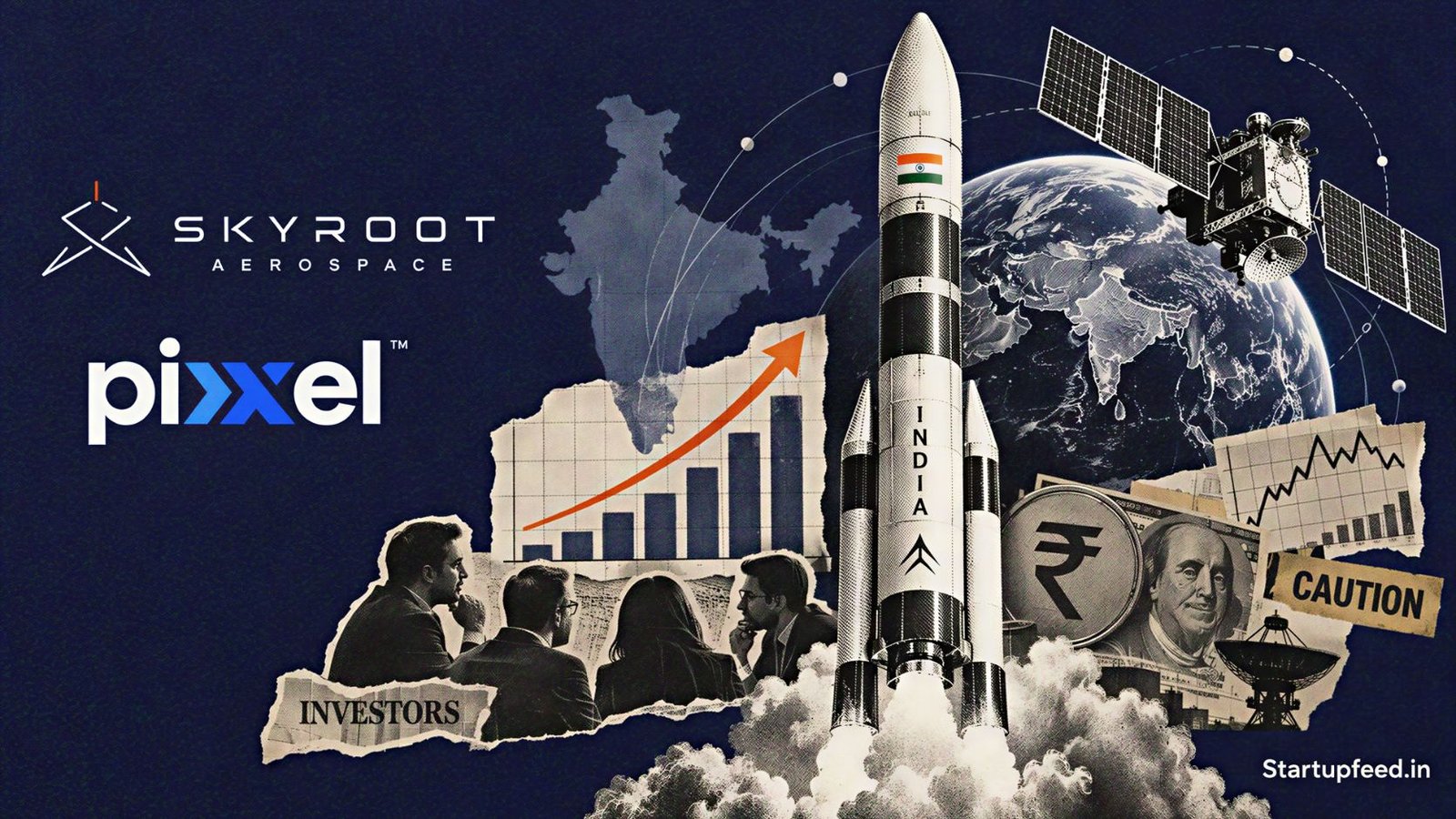
The Prime Minister also noted that India now has more than 2 lakh registered startups, with over 4,000 new ventures registering every month. Hundreds of these operate in defence and space, sectors that were shut to private participation until recently. He pointed to a private Indian firm preparing its first orbital rocket launch, a reference to Skyroot Aerospace and its Vikram-1 test flight, which carries a launch window between July 12 and August 4, 2026 from Satish Dhawan Space Centre.
How does BAS compare to other space stations?
BAS is a mid-sized station by global standards, deliberately so. It sits between China’s Tiangong and the far larger International Space Station in mass and crew capacity, which keeps the cost curve manageable.
| Station | Approx. Mass | Nominal Crew |
|---|---|---|
| Bharatiya Antariksh Station (planned) | 52 tonnes | 3 to 4 |
| Tiangong (China) | Around 100 tonnes | 3 |
| International Space Station | Around 420 tonnes | 7 |
What separates BAS is its docking design. ISRO has aligned BAS-01 subsystems with international docking standards, so crew and cargo craft from partner agencies can berth there. That makes the India Space Station a candidate hub for multinational missions rather than a closed national asset. ISRO’s official Gaganyaan programme page lists rendezvous and docking as a core technology being built for exactly this purpose.
What’s Next
The near-term milestone is the first crewed Gaganyaan flight, which must fly before BAS-1 can follow. ISRO has completed over 8,000 ground tests, with flight software simulations and environmental tests still in progress as of early 2026. Watch the VSSC industry tenders through late 2026, they will reveal which private firms make the cut. Which Indian space startup do you think lands the first BAS hardware contract?
Frequently Asked Questions
Have a tip? Write to us at editorial@startupfeed.in.

Liked this story? Follow StartupFeed on Google so our reporting reaches you first.