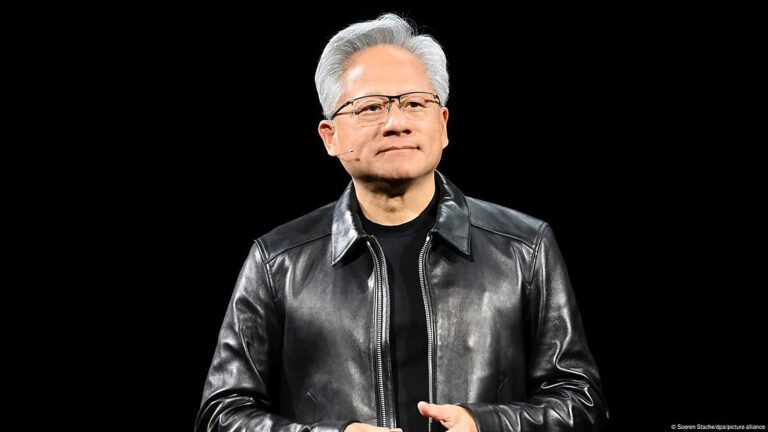
Jensen Huang Reinstated as Nvidia CEO: Shares Jump 31%, Exposing One-Man Risk
Jensen Huang reinstated as Nvidia CEO 11 days after he quit. Shares jumped 31% in a day, showing how much the AI chip giant depends on one man.

By Dr. Mayank Raj, Editor-in-Chief
5 min read
Quick Take
- Jensen Huang reinstated: Nvidia’s board brought back its co-founder as CEO in a unanimous vote, 11 days after he resigned.
- Nvidia shares closed 31.48% higher on 23 November, their best day since 2003, adding about $952 billion in value.
- The swing shows how much Nvidia depends on one person, and why every founder needs a written succession plan.
In this story4 sections
With Jensen Huang reinstated as Nvidia’s President and CEO, the chipmaker’s shares jumped 31.48% on 23 November, CNN reported. It was their best day since 2003. Nvidia’s board voted unanimously to bring back its co-founder just 11 days after he resigned, Inc42 reported.
Huang quit on 12 November after admitting to extramarital affairs, including one with a woman the US government suspects of being a Chinese spy, TechCrunch reported. The board said it was satisfied with his candor and his ability to lead. After input from senior levels of the US government, the board is confident his return poses no national security risk, Nvidia said.
Colette Kress, who served as interim Nvidia CEO, continues as CFO. Harvey C. Jones stays as board chair, the company said.
Jensen Huang Reinstated: How Nvidia Got Here in 11 Days
| Date (2026) | What happened |
|---|---|
| 8 November | Huang tells staff in an email that he was unfaithful to his wife (Newsweek). |
| 12 November | Huang resigns. CFO Colette Kress becomes interim CEO and Harvey C. Jones is named the first-ever board chair (Nvidia). Shares fall as much as 14% (Statista). |
| 17 November | Jones says the board does not intend to bring Huang back (SCMP). Nvidia says it has hired search firm Heidrick & Struggles to find a new CEO (YourStory). |
| 22 November | The board votes to reinstate Huang as President, CEO and director (Nvidia filing). |
| 23 November | Nvidia announces his return (Nvidia). Shares close 31.48% higher (CNN). |
The board changed its mind six days after it ruled out his return. On 17 November, Huang wrote on X that he would be honoured to return if the board decided it was best for the company, SCMP reported. Hours later, on the earnings call, Jones said the board did not intend to bring him back. The board then held a series of discussions and meetings with Huang before it voted.
Also read
President Donald Trump said he spoke to Huang before the board’s decision and that he was represented at the board meeting, Open magazine reported. Nvidia has confirmed only that it received input from senior US officials. It has not said what they told the board.
Why Nvidia Shares Jumped 31% on One Man’s Return
Nvidia’s shares rose as much as 36.6% during the day before closing 31.48% higher. That added $952 billion to its market value in one day, CNN reported. It was the stock’s third-best day on record, according to CNN.
The jump came after a hard fall. Shares fell as much as 14% on 12 November, the day he resigned, Statista noted. The week after his resignation was Nvidia’s worst since 2008, Benzinga reported.
Other AI stocks rebounded with Nvidia, CNBC reported. Investors had feared that Nvidia would slow its deals under an interim CEO. Nvidia has pledged $170 billion of its credit to help AI companies and neoclouds, which rent out GPU computing power, raise money. His return eased those fears, Fortune reported.
What the Swing Says About Nvidia’s One-Man Risk
Key person risk is the danger that a company loses value when one leader leaves. Nvidia has shown it in public, in two directions, within 11 days.
When the scandal broke, analyst Dan Ives of Yorkville Ives estimated that Nvidia could lose as much as 30% of its value without Huang, CBS News reported. The stock’s 31% jump on his return was almost the same size. Shiva Rajgopal, a Columbia Business School professor who studies corporate governance, told CBS News: “It exposes how dependent the company is on this one person.”
Huang has long dismissed the usual approach to succession planning, Fortune reported. A Georgetown University professor told Fortune that the board made a mistake by not having a clear succession plan shared with the market. Analysts cited by NPR said Huang had a blind spot for succession and had not set out a clear plan in public.
Also read
That gap showed in how the board acted. It hired a search firm to find a new CEO, and six days later it brought back the leader who had resigned. The episode has put Nvidia succession planning under a bright spotlight.
What Happens Next for Nvidia and Indian Startups
Huang’s return does not end the questions. The board’s independent investigation into reports that he was the target of a foreign intelligence effort will run to its end, and Huang has said he will cooperate. A board committee of independent directors oversees national security and trade compliance risks. Nvidia is also hiring a Chief Compliance Officer who will report to a board committee, Nvidia said.
The 23 November announcement made no change to Nvidia’s partnerships with Reliance, on AI infrastructure and Indian language models, or with Tata, on computing platforms, Open magazine noted.
Indian companies have big plans built on Nvidia chips, Inc42 reported. Yotta plans to deploy more than 20,000 Blackwell Ultra GPUs. AM Intelligence has ordered 29,000 Rubin GPUs, and L&T’s Vyoma is building a 10,000 GPU AI factory. Nvidia also says its free Inception programme supports more than 4,000 Indian AI startups. StartupFeed reported how Huang’s exit had put Nvidia’s India push in the hands of Colette Kress.
StartupFeed Insight
Nvidia lost and then won back hundreds of billions of dollars in value on news about one person. Most Indian startups are far smaller, but the risk works the same way. If a company stalls when its founder is away, investors will price that in. Three simple steps help. Write down who takes charge if the founder is out, even for a few weeks. Spread key relationships with investors, big customers and government buyers across two or three leaders. And agree with your board on how a crisis will be handled before one starts.
By Dr. Mayank Raj, Editor-in-Chief
Have a tip? Write to us at editorial@startupfeed.in.