MoEngage Data Breach: A Checklist for Indian Founders in 2026
A compromised vendor exposed MoEngage client data in late October. If your app uses MoEngage, here is what to check and tell users now.

By Soumya Verma, Correspondent
9 min read
Last updated: 23 November 2026
Quick Take
- A compromised vendor account let an attacker into part of MoEngage’s cloud in late October 2026. Fewer than 1% of its accounts were hit.
- MoEngage serves 1,350+ enterprises. WazirX and ZebPay have told users their data was exposed.
- If your app sends messages through MoEngage, work through the eight checks below today.
In this story7 sections
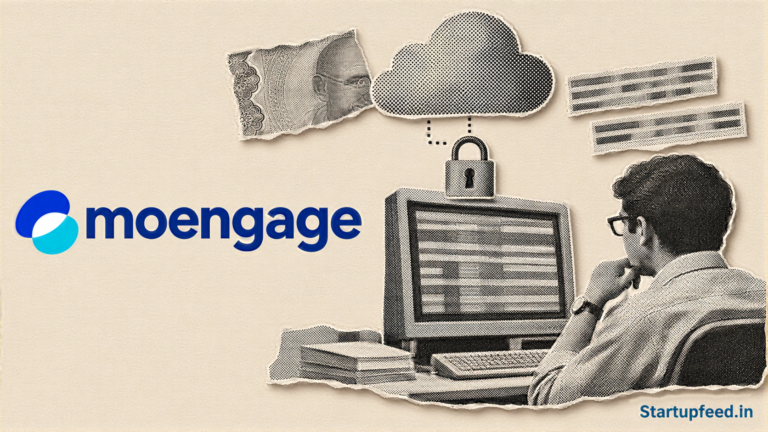
A data breach at MoEngage, the Bengaluru customer engagement platform, has put the user data of its Indian clients at risk. The company confirmed on November 21, 2026 that an attacker reached part of its cloud using a vendor’s stolen login. If your startup runs push, email or SMS through MoEngage, the moengage data breach is now your problem too.
MoEngage says fewer than 1% of its customer accounts were affected. That sounds small. But MoEngage serves more than 1,350 enterprises in 75 countries, so 1% still covers real brands and millions of their users.
Two have already spoken. Crypto exchanges WazirX and ZebPay told their users that contact details and account activity were exposed. Both said funds were safe. More brands may follow.
This guide is the checklist. What happened, what to check, what to tell your users, and how to report it in India. Work through it in order.
Also read
What Happened in the MoEngage Data Breach
An attacker used a third-party vendor’s stolen login to reach a limited part of MoEngage’s cloud in late October 2026. That is the core of the incident, as MoEngage described it in its November statement.
MoEngage says it found and contained the breach in late October. It then brought in outside security experts to check the damage, fixed the hole, and told each affected client directly. The company says its own service never went down.
The timeline matters for your own records. The access happened in late October. Clients began telling users in the third week of November. ZebPay sent its notice on November 21, 2026. One ZebPay email traced the cause to stolen credentials at a service provider on November 20.
MoEngage was founded in 2014 by Raviteja Dodda and Yashwanth Kumar. It sits between your app and your users, sending push, email, SMS and WhatsApp. Big names like Flipkart, Ola and bigbasket use it. That reach is why one vendor breach touches so many apps at once.
MoEngage put the scale of the hit plainly in its statement.
“Fewer than 1% of our customer accounts were affected, and we have notified each of them directly.”
MoEngage, company statement. From its public statement, November 2026.
What Data Was Exposed
MoEngage has not published a full list of fields across all clients. What we know comes from the clients that have spoken, and from the kind of data MoEngage holds for them.
ZebPay’s customer notice is the clearest account so far. It said the exposed data covered basic identifiers, contact details, online and device data, and recent account activity. ZebPay said its own wallets, databases and trading systems were untouched, and that funds were safe.
Also read
A platform like MoEngage stores the data a brand feeds it to group and message users. That can include email addresses, phone numbers, device details, app settings and in-app event data. Not every field was taken in every case, but this is the pool an attacker could reach.
Here is the risk, in plain terms. No passwords and no money were taken. But a scammer now holding your user’s email, phone and recent activity can write a message that looks real. That is the phishing risk every affected brand named.
| Data type | Likely exposed | Risk it creates |
|---|---|---|
| Email and phone | Yes, per ZebPay | Targeted phishing and spam |
| Device and app data | Yes, per ZebPay | Believable fake messages |
| Recent account activity | Yes, per ZebPay | Scams that cite real transactions |
| Passwords and OTPs | No reported exposure | Logins not directly at risk |
| Funds and wallets | No, per WazirX and ZebPay | Money reported safe |
The Eight-Point Founder Checklist
If your app uses MoEngage, do these eight things now. They move from finding out to fixing to reporting.
- 1. Confirm whether you were hit. MoEngage says it told each affected client directly. Search your inbox and your account manager’s emails for a notice. If you find nothing, ask MoEngage in writing and keep the reply.
- 2. List what you send to MoEngage. Pull up your integration. Note every field you push: email, phone, device ID, user events. You cannot judge the risk until you know what data left your app.
- 3. Rotate your MoEngage keys. Reset your API keys and access tokens for the platform. Remove any old or unused logins. The breach started with a stolen credential, so assume yours could be next.
- 4. Turn on two-factor login. Make two-factor login a must for every team member on the MoEngage dashboard. One weak password is how this class of breach spreads.
- 5. Check your vendor contract. Read the data clause in your MoEngage agreement. Note who must report a breach, by when, and who pays if users are harmed. Save a copy today.
- 6. Warn your users. If your user data was exposed, tell them before a scammer does. The next section has the exact message to send.
- 7. Report it to the authorities. India’s rules give you a tight window. The reporting section below has the steps.
- 8. Write down the timeline. Record when you learned of the breach, what you did, and when. You will need this for regulators and for users.
Do not wait for a second brand to go public before you start. The data is already out. Speed is the only thing in your control now.
What to Tell Your Users
Your users will hear about this breach. Better they hear it from you. A short, honest notice does more for trust than silence. ZebPay’s own notice to users is a clean model to copy.
Tell them three things. What happened, what was exposed, and what they should watch for. Then give them clear rules for spotting a scam. Keep it plain. Do not bury the warning in legal text.
These are the user rules every affected brand is pushing. Pass them on word for word.
- Treat any message that cites your real details as suspicious. A scammer may now have them.
- Never share a password, OTP, two-factor code or wallet seed phrase. No real staff member asks for these.
- Do not install any remote-access app because a caller told you to.
- Do not move money or crypto on a caller’s instruction.
- Check any contact through the official app’s help section, not a link in a message.
One more step protects you. Send the notice from your verified channels only: your in-app inbox, your checked email domain, your official handles. If you send a breach warning from a new address with a link, you teach users to trust exactly the thing you are warning against.
How to Report a Breach in India
India has a hard rule on breach reporting, and the clock is short. Under CERT-In’s 2022 directions, an organisation must report a cyber incident within six hours of noticing it. That window applies the moment you learn your user data was exposed.
Report the incident to CERT-In, the national computer emergency team, through its incident form or email. Give the facts you have: what happened, what data was involved, and when you found out. You can update the report as you learn more.
If your users face fraud, point them to the National Cyber Crime Helpline on 1930, or the cybercrime portal. ZebPay told users to keep the transaction ID, date and amount ready when they call. The portal gives an acknowledgment number to finish the complaint online.
Keep every record. Note the time you learned of the breach, the report you filed, and the notice you sent users. India’s new data law raises the cost of mishandling user data, so a clean paper trail protects your startup later.
| Action | Where | When |
|---|---|---|
| Report the incident | CERT-In incident form or email | Within 6 hours of noticing |
| Notify affected users | Your verified app and email channels | As soon as exposure is confirmed |
| Help users report fraud | Helpline 1930 or cybercrime portal | When a user is targeted |
| Keep your records | Your own incident log | Start now, update always |
Why Vendor Breaches Keep Hitting Indian Startups
The MoEngage breach is not the first of its kind this year. It is part of a clear run. The weak point keeps being a third-party tool, not the startup’s own servers.
In late 2025, crypto exchange CoinDCX told users their data was exposed through Mixpanel, an analytics vendor. A separate CoinDCX notice named Plotline, a messaging vendor, for exposing names, emails and linked bank names. Now MoEngage joins the list, with WazirX and ZebPay as the named victims.
The pattern is the point. Your app can be locked down and still leak, because the data lives in tools you do not control. Each vendor you plug in widens the surface an attacker can hit.
The fix is not to drop every tool. It is to treat vendor risk as your risk. Know what data each tool holds. Demand a breach-reporting clause. Review access every quarter. The brands that recover fastest from the moengage data breach will be the ones who already knew what they had shared.
StartupFeed Insight
The “fewer than 1%” figure is doing a lot of work. For a platform with 1,350+ clients, 1% is still a dozen or more brands, each with its own user base. The real number that matters is not MoEngage’s account share. It is how many end users sit behind those accounts, and MoEngage has not said. Expect more brands to confirm exposure in the next two weeks, and expect India’s data regulator to ask MoEngage for an end-user count by mid-December. The lesson for founders is older than this breach: you own the risk of every tool you integrate, even the ones you forgot you were paying for.
By Soumya Verma, Senior Correspondent
Frequently Asked Questions
Was money or crypto stolen in the MoEngage data breach?
No. Both WazirX and ZebPay told users that funds, wallets and trading systems were not affected. The breach was limited to MoEngage’s environment. What was exposed was user contact data and account activity, which raises the risk of phishing and scam messages, not direct theft of money.
How do I know if my startup was affected?
MoEngage says it notified each affected client directly. Check your inbox and your account manager’s emails for a breach notice. If you find nothing but still want to be sure, ask MoEngage in writing and keep the reply. Fewer than 1% of its accounts were hit, so most clients were not affected.
What data did the breach expose?
Per ZebPay’s notice, the exposed data covered basic identifiers, contact details, online and device data, and recent account activity. MoEngage has not published a full field list across all clients. Passwords, OTPs and funds were not reported as exposed. The main danger is scammers using real details to craft believable phishing.
How fast must I report a breach in India?
CERT-In’s 2022 directions require an organisation to report a cyber incident within six hours of noticing it. Report through CERT-In’s incident form or email with the facts you have, and update it as you learn more. Keep your own log of when you found out and what you did.
How can my users protect themselves?
Tell users to treat any message citing their real details as suspicious, and never to share a password, OTP, two-factor code or seed phrase. No real staff asks for these. They should not install remote-access apps or move money on a caller’s say-so, and should verify contact through the official app’s help section only.
Have a tip? Write to us at editorial@startupfeed.in.