
Quick Take
- TakeMe2Space launches MOI-1A on October 1, 2026, on SpaceX Transporter-18.
- The sub-50 kg satellite carries Nvidia Orin NX chips and has signed 23 customers.
- The Hyderabad startup raised $5 Mn in January 2026, led by Chiratae Ventures.
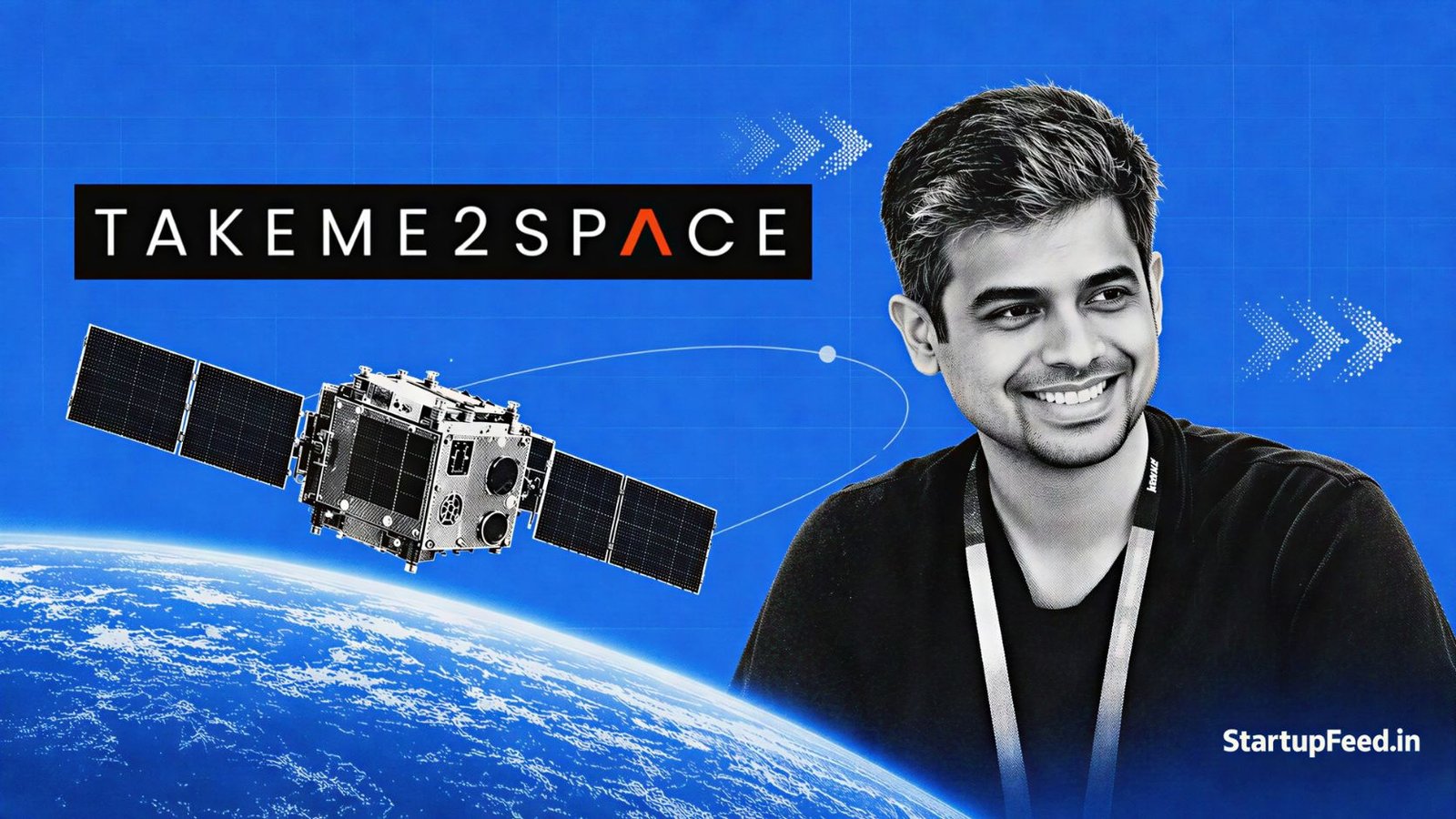
Indian spacetech startup TakeMe2Space plans to launch what it calls the country’s first orbital computing satellite on October 1, aboard a SpaceX rocket. The satellite is named MOI-1A.
The spacecraft will fly on SpaceX’s Transporter-18 rideshare mission. It processes data in orbit instead of sending raw information back to Earth. Founder and chief executive Ronak Kumar Samantray confirmed the plan to Reuters.
MOI-1A is a sub-50 kg satellite. It carries Nvidia Orin NX edge-computing processors. The satellite has about 150 watts of power, Samantray said.
TakeMe2Space said on Monday it has signed 23 customers for the mission. They include geographic information system companies and educational institutions. US-based space data analytics firm Little Place Labs is one customer.
Who is TakeMe2Space?
TakeMe2Space is a Hyderabad-based spacetech startup founded in 2024 by Ronak Kumar Samantray. It builds AI-inferencing infrastructure in low Earth orbit. Its flagship product is called OrbitLab.


Samantray is not a first-time founder. He earlier co-founded the software firm NowFloats. Reliance Industries acquired NowFloats in 2019.
The startup raised $5 Mn in a seed round announced in January 2026. Chiratae Ventures led the round. Artha Venture Fund, SeaFund and Unicorn India Ventures also took part.
TakeMe2Space raised $629.5K in pre-seed funding the year before. Total funding stands at about $5.69 Mn across three rounds, according to data platform Tracxn.
How does orbital computing work?
Orbital computing means processing data on the satellite itself. A normal satellite sends raw data to ground stations. TakeMe2Space runs the compute in space and sends down only the results.
Customers can upload their own AI models to the satellite. The satellite runs the AI inference in orbit. It then downloads the finished results.
The economics rest on bandwidth cost. Downloading high-resolution raw data from a satellite is expensive. Processing in orbit and sending only refined insights cuts that cost.
Samantray explained the trade-off plainly. The customer paying to download large volumes of raw data is the one who sees value in the first-generation satellites. The saving on not downloading data offsets the premium they pay for compute in orbit.

OrbitLab lets users run compute in orbit at $2 per minute. The company designs and makes most satellite subsystems in India. It sources chips, solar cells and propulsion systems from outside the country.
What happened to the first satellite?
This is not the company’s first attempt. A technology-demonstration mission in late 2024 tested the core idea. It validated the ability to upload applications, run AI inference in orbit and download results.
A later satellite, MOI-1, was then lost. It went down after a launch-vehicle third-stage failure. The satellite was one of several co-passengers on ISRO’s PSLV-C62 mission in January 2026.
That failure destroyed the main payload, the EOS-9 Earth observation satellite. It also took 15 co-passenger satellites with it. TakeMe2Space then moved to SpaceX for the earliest available launch slot.
What comes next?
Commercial users span several sectors. They include agriculture, mining, supply-chain management and insurance. The 23 signed customers will use the satellite’s data crunching.
TakeMe2Space plans larger satellites from 2027. The goal is to raise computing capacity and cut costs further. The longer-term plan is networked satellites that serve many customers at once.
The company is also chasing bigger infrastructure. It aims to offer cold storage in orbit for critical data. It has outlined plans for megawatt-scale compute satellites over time.
Rivals are building on the same idea. Firms like SpaceX and Starcloud plan to use more advanced Nvidia chips of the kind used in ground data centres. TakeMe2Space is starting smaller and cheaper.
What this means for you: If you buy satellite data for agriculture, mining or logistics, watch the October 1 launch. It offers a live test of whether in-orbit compute can cut your data bills.
StartupFeed Insight
The number that matters is 23 paying customers before launch. Most Indian spacetech firms fly a demo first and sell later. TakeMe2Space has flipped that order, which tells you the bandwidth cost problem is real and current. The bigger risk is not technology but launch luck. This is the company’s second try after losing MOI-1 on PSLV-C62. If MOI-1A reaches orbit and holds 150 watts of stable compute, expect the 2027 larger-satellite plan to attract a Series A by mid-2027. If it fails, the funding math gets hard fast.
— Avinash Mishra, Business Correspondent
Frequently Asked Questions
Have a tip? Write to us at editorial@startupfeed.in.
Liked this story? Follow StartupFeed on Google so our reporting reaches you first.