

Quick Take
- GalaxEye will get Rs 63.84 crore of government support to build a new OptoSAR satellite.
- The project has a total approved cost of Rs 247.69 crore.
- It comes months after GalaxEye lost contact with its first satellite, Drishti, in orbit.
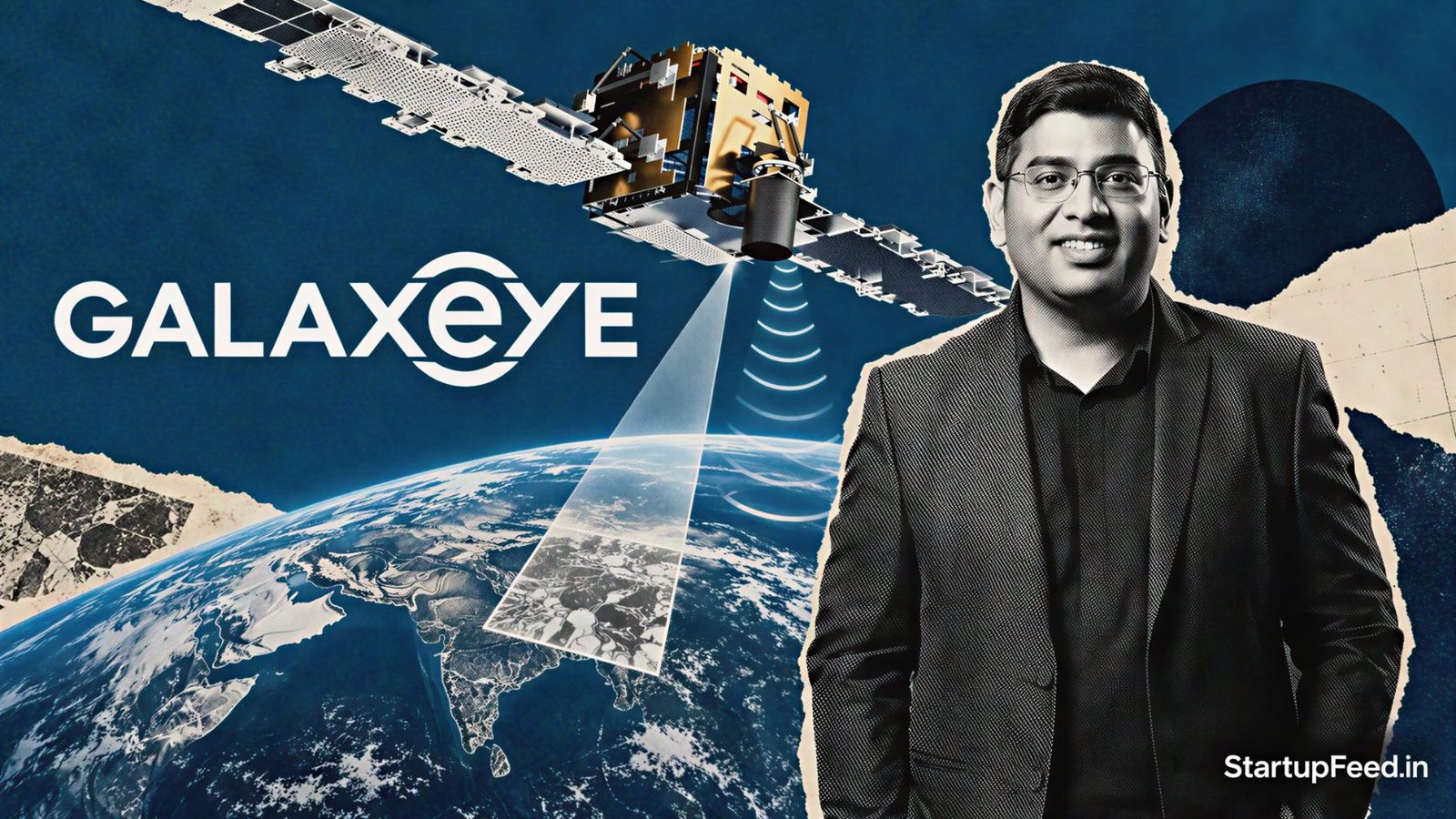
Bengaluru-based GalaxEye Space Solutions will get Rs 63.84 crore of government support to build a new Earth-observation satellite. The money comes from the Technology Development Board.
The support is not a simple grant. It will be paid through Optionally Convertible Debentures, a form of debt that can later turn into equity. The full project has an approved cost of Rs 247.69 crore.
The timing matters. GalaxEye’s first satellite, Drishti, was lost in orbit just months ago. The government is now backing the next version of the same technology.
The Technology Development Board works under the Department of Science and Technology. It signed the agreement with GalaxEye under the Research, Development and Innovation Fund, called the RDI Fund.
The government said the money will help GalaxEye with further development, engineering, testing and validation. The aim is to move the technology from Technology Readiness Level 6 to Level 9. Level 9 means the technology is proven in real use.


What is GalaxEye building?
GalaxEye is building a satellite that produces OptoSAR imagery at a resolution finer than 0.5 metres. OptoSAR combines two ways of seeing the Earth from space.
The first is optical imaging. It gives clear, detailed pictures of the surface. But clouds and darkness can block it.
The second is Synthetic Aperture Radar, or SAR. It uses radar, so it can see through clouds and works at night. GalaxEye’s system fuses both sensors on one satellite.
This gives a more continuous picture of the Earth across weather and lighting conditions. The government said uses include wide-area surveillance, long-range surveillance, human and vehicle detection, and target classification.
“By combining SAR and optical sensing, we are working towards an Earth-observation capability that can provide high-resolution information across a wider range of weather and lighting conditions,” promoters of GalaxEye said. They added that the partnership will help take the technology to Level 9 and deployment.
Why does the Drishti failure matter?
GalaxEye was founded in 2021 by five engineers from a team at IIT Madras. They are Suyash Singh, Denil Chawda, Pranit Mehta, Kishan Thakkar and Rakshit Bhatt.
Its first satellite was Mission Drishti. It launched on 3 May 2026 on a SpaceX Falcon 9. At launch, the government called it the world’s first OptoSAR satellite and India’s largest privately built satellite.


Then came the setback. In July, GalaxEye said communication with Drishti became intermittent in the final stage of its early-orbit phase. Contact was then lost.
The company linked the fault to a geomagnetic solar storm. Radiation from the storm likely hit a critical onboard system. An investigation into the exact cause was still going on.
Drishti had still completed a large part of its early-orbit work and validated several systems before contact was lost. GalaxEye said it would use the lessons in future spacecraft. It plans to launch two more OptoSAR satellites within 24 months.
In September, GalaxEye secured a US patent for technology that synchronises optical and radar sensors on one satellite. That is the core idea behind the new government-backed project.
How big is the government’s RDI Fund?
The GalaxEye deal sits inside a much larger scheme. The RDI Scheme is meant to increase private-sector research and to help commercialise Indian technology.
The Union Cabinet approved the scheme on 1 July 2025. It has an outlay of Rs 1 lakh crore over six years. It was formally launched on 3 November 2025.
The scheme runs through a two-tier structure. A Special Purpose Fund inside the Anusandhan National Research Foundation holds the money. It sends funds through Second-Level Fund Managers.
The Technology Development Board is one such fund manager. The table below shows how much it had committed by July 2026.
| Measure (as of July 2026) | Figure |
|---|---|
| Projects approved by TDB | 22 |
| Combined project cost | Rs 4,744 crore |
| RDI Fund support committed | Rs 2,192 crore |
| GalaxEye project cost | Rs 247.69 crore |
| GalaxEye RDI support | Rs 63.84 crore |
“The agreement with GalaxEye reflects TDB’s focus on enabling indigenous capabilities in emerging spacetech,” TDB Secretary Rajesh Kumar Pathak said. He said the fund helps technology firms through the hard stage between advanced development and deployment.
GalaxEye is not the only Indian firm chasing this market. A consortium led by Pixxel is building India’s first privately led national Earth-observation constellation of 12 satellites, backed by more than Rs 1,200 crore. Pixxel also raised $100 Mn in a Series C round in September.
What this means for you: Government risk capital is now flowing to deep-tech founders even after a public failure, so a lost mission need not end a spacetech company.
StartupFeed Insight
The number that tells the real story is not Rs 63.84 crore. It is the gap between that and the Rs 247.69 crore total cost. The government is funding about a quarter of the project, and through convertible debt, not a free grant. GalaxEye still has to raise the rest and prove the hardware after losing Drishti. This is a vote of confidence with strict terms attached. Watch for GalaxEye’s next equity round: the size and the valuation will show whether private investors read the Drishti loss the same way the Technology Development Board does. Expect that round to close before the first of the two promised OptoSAR satellites reaches orbit.
— Avinash Mishra, Business Correspondent
Frequently Asked Questions
Liked this story? Follow StartupFeed on Google so our reporting reaches you first.