
India has opened missile and bomb production to private firms for the first time. The shift could hand large contracts to Indian defence startups.
The Defence Research and Development Organisation, known as DRDO, wants private partners for its missile work. It has floated an expression of interest to find them. The Economic Times reported the move on August 19, 2026. It is the first such call from this department.
Until now, strategic weapons were built mostly by state-owned firms. Bharat Dynamics Ltd made most of them. That monopoly is ending.
The department behind this call built the Agni missile series. It also works on future variants of nuclear weapons, including submarine-launched systems. These are among India’s most sensitive defence programmes.
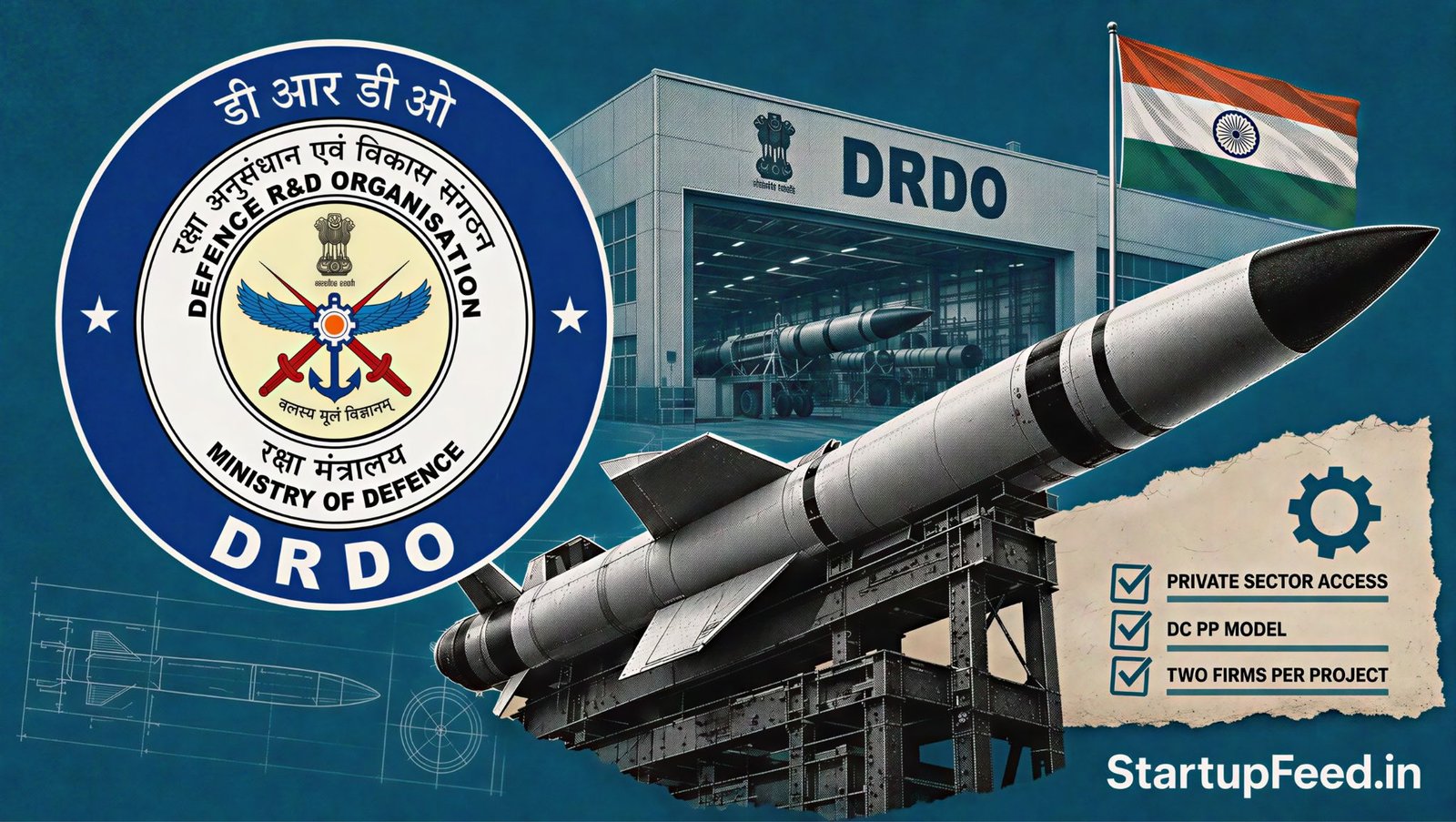
Two firms will be picked for each project. The model is called development-cum-production partner, or DcPP. Both firms work with DRDO to build prototypes for testing. Both then get production orders if strategic forces buy in bulk.



The rules favour firms that can already handle heavy manufacturing. A qualifying company needs an industrial licence for defence work. It also needs a PESO licence to handle and store explosives.
Money is the next filter. A firm’s net worth must be more than 5% of the expected value of the work. It must also clear a minimum turnover bar. DRDO has not made that bar public.
Scale is the final test. DRDO will check whether a firm can build more than 50 or 100 units in bulk. It will also judge project management skill and past delivery on large orders.
There is a physical check too. A DRDO expert panel will visit each applicant’s site before shortlisting. The panel assesses infrastructure, technical strength and overall capability on the ground.
Two established private names are already expected to feature. Solar Aerospace and Defence is one. Tata Advanced Systems Ltd is the other. Both are seen as likely contenders for major new projects.
The timing tracks a wider push. On August 18, 2026, India added 405 items to its defence indigenisation list. That list bars their import. Defence stocks rose on the news.
This is not DRDO’s first opening to private firms. The DcPP model has run for a few years on tactical missiles and land systems. Strategic weapons, until now, stayed off-limits.



What this means for you: A defence startup with an industrial licence, a PESO licence and bulk capacity can now bid for missile work. A week ago that door was shut.
Have a tip? Write to us at editorial@startupfeed.in.
Liked this story? Follow StartupFeed on Google so our reporting reaches you first.