

Quick Take
- Union Cabinet approved the PM-KISAN scheme from 2026-27 to 2030-31, outlay Rs 3,15,614 crore.
- Each eligible farmer family keeps getting Rs 6,000 a year via DBT, unchanged since 2019.
- Rs 4.47 lakh crore already sent across 23 instalments, so the five-year renewal continues that flow.
In This Article
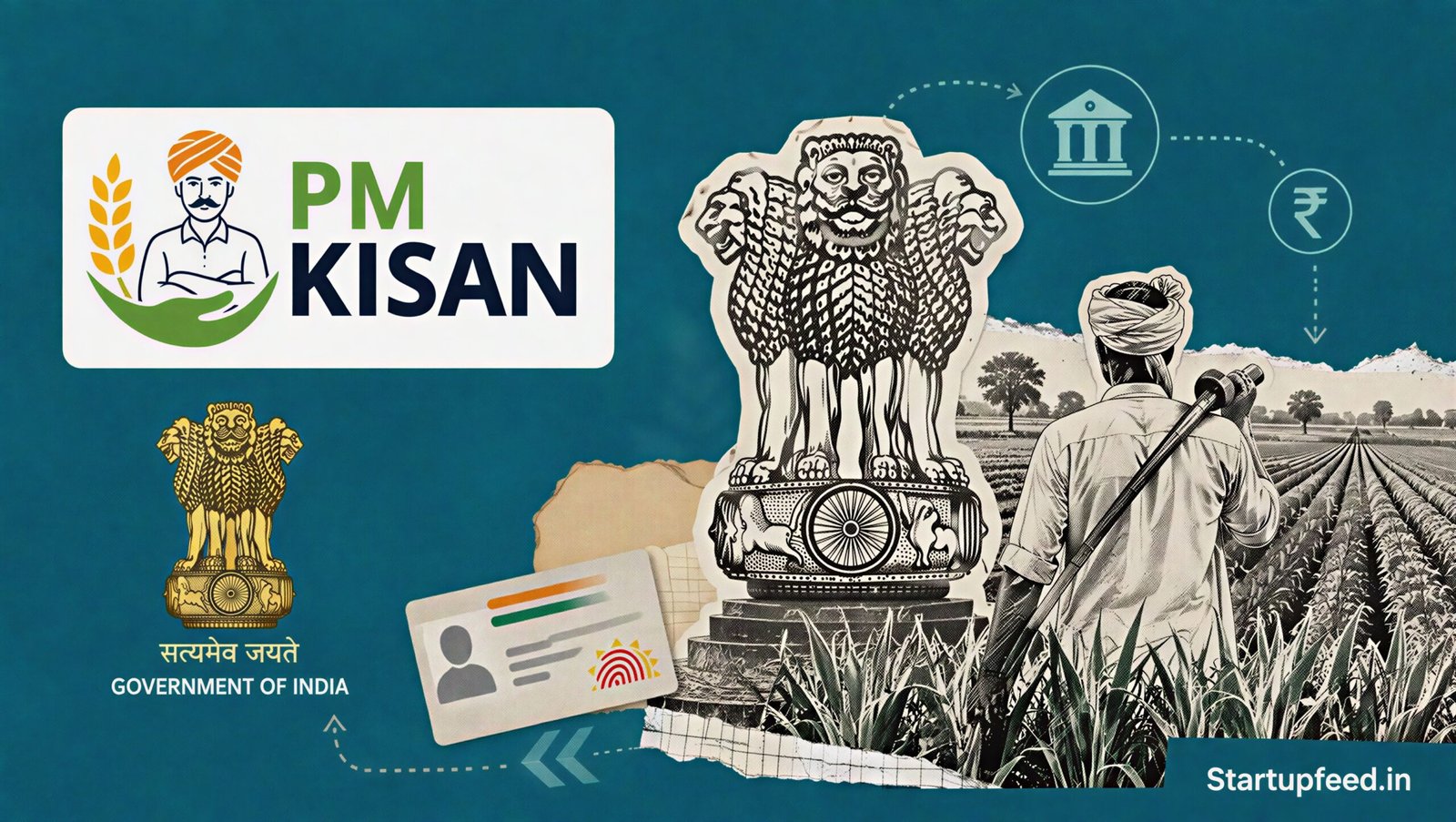
The Union Cabinet approved the PM-KISAN Scheme Extension on Friday, July 31, 2026, continuing the farmer income scheme from 2026-27 to 2030-31 with a total outlay of Rs 3,15,614 crore (government statement). The PM-KISAN Scheme Extension keeps Rs 6,000 a year flowing to every eligible farmer family.
Information and Broadcasting Minister Ashwini Vaishnaw announced the decision after the Cabinet meeting in New Delhi. The Rs 6,000 is paid in three equal instalments of Rs 2,000, sent straight into Aadhaar-seeded bank accounts through the Direct Benefit Transfer (DBT) system, as detailed on the official PM-KISAN portal. The renewal keeps this support running for five more years without a break.
StartupFeed Insight
The headline number is big, but the real story is what stayed still: Rs 6,000 a year has not moved since 2019, even as input costs climbed. Renewing the amount rather than raising it signals the government is prioritising fiscal predictability and DBT reach over per-farmer top-ups. Agritech founders and rural fintech players should watch this closely, because a locked five-year DBT pipeline of over 9.4 crore verified, Aadhaar-linked farmer accounts is a distribution rail worth building on. Expect fresh credit, insurance, and input-supply products layered on PM-KISAN identity data before the first 2026-27 instalment lands. By Avinash.
PM-KISAN Scheme Extension: Numbers That Matter
The PM-KISAN Scheme Extension carries a fixed five-year financial outlay set by the Cabinet, not an open-ended commitment. The table below breaks down the key figures confirmed in the government statement.
| Metric | Detail | Notes |
|---|---|---|
| Approved period | 2026-27 to 2030-31 | Five fiscal years |
| Total outlay | Rs 3,15,614 crore | Government statement, July 31, 2026 |
| Annual benefit | Rs 6,000 per farmer family | Three instalments of Rs 2,000 |
| Disbursed so far | Rs 4.47 lakh crore | Across 23 instalments since 2019 |
| 23rd instalment | Rs 18,984 crore | Over 9.49 crore farmers benefited |
| Women beneficiaries | Rs 1.06 lakh crore received | Nearly one in four beneficiaries |
The most striking figure is the gap between the fresh five-year outlay of Rs 3,15,614 crore and the Rs 4.47 lakh crore already spent since 2019, which shows how large the scheme has grown over six years.
About PM-KISAN
Pradhan Mantri Kisan Samman Nidhi (PM-KISAN) is a central sector scheme launched on February 24, 2019, run by the Ministry of Agriculture and Farmers’ Welfare. It provides Rs 6,000 a year to eligible landholding farmer families through DBT into Aadhaar-seeded bank accounts. The scheme is fully funded by the central government and has grown into one of the world’s largest direct cash-transfer programmes, reaching over 9.49 crore farmers in its latest instalment.


How will the PM-KISAN money reach farmers?
PM-KISAN money reaches farmers directly through the DBT system, with no state or middleman handling the cash. The payment is timed to the crop cycle so farmers get support when they need it most, and eligibility rules are published on the government’s official scheme page.
Farmers receive an income support of Rs 2,000 three times a year. This support helps them purchase seeds, fertilisers, and other agricultural inputs at the beginning of each crop cycle, Ashwini Vaishnaw said.
Each Rs 2,000 instalment is aligned with the Kharif sowing season, the Kharif harvest, and preparation for the Rabi season. This timing lets farmers meet sowing-season expenses without leaning on high-cost informal loans, which the government says has strengthened rural household finances.
Is the PM-KISAN scheme actually working?
Independent evaluation suggests the PM-KISAN scheme is meeting its core goal of supporting farm spending. The Development Monitoring and Evaluation Office (DMEO) of NITI Aayog assessed the scheme’s impact on the ground.
According to the evaluation cited by the government, more than 92 per cent of beneficiaries reported using the assistance for agricultural activities and investment. Around 85 per cent said their agricultural income improved and their dependence on informal credit fell. The government also linked broader gains to the support, noting the area under foodgrain cultivation rose between 2020-21 and 2025-26, though such output shifts also depend on rainfall, irrigation, and minimum support prices.
How does PM-KISAN compare with other farm schemes?
PM-KISAN is India’s flagship income-support scheme, but it sits alongside other central farm programmes with different designs. The comparison below shows how it differs from two recent schemes.
| Scheme | Type | Scale |
|---|---|---|
| PM-KISAN | Direct income support | Rs 3,15,614 crore, five years |
| PM Fasal Bima Yojana | Crop insurance | Rs 69,515 crore till 2025-26 |
| Seven-scheme farm package | Research and infrastructure | Rs 14,235 crore outlay |
What sets PM-KISAN apart is its simplicity: a fixed cash amount paid directly to farmers, with no claims process, premiums, or project approvals standing between the government and the beneficiary.
What’s Next
With the PM-KISAN Scheme Extension cleared, attention now turns to the first 2026-27 instalment and whether the Rs 6,000 amount stays frozen through the full five-year window. The 24th instalment is the next milestone farmers will be watching for. Will the government eventually revisit the payout size as input costs keep rising, or hold the line on fiscal discipline?


Frequently Asked Questions
Have a tip? Write to us at editorial@startupfeed.in.
Liked this story? Follow StartupFeed on Google so our reporting reaches you first.