
From Waste to Wi-Fi: Startups in Indian Colleges Are Solving Urban Chaos
Discover how India’s institutional incubators are helping startups build tech-driven solutions for urban issues like waste, mobility,

By Soumya Verma, Correspondent
Updated 2 min read
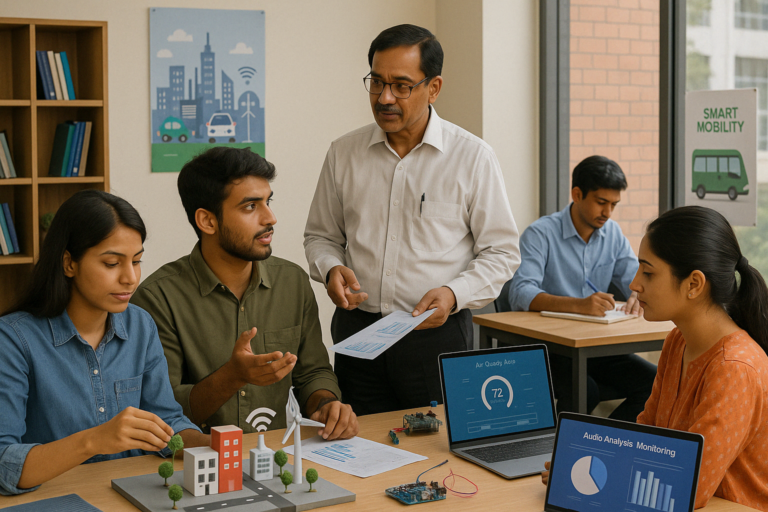
India’s cities are growing—and so are their problems.
Overflowing waste, traffic congestion, polluted air, and strained public health systems affect millions every day. But solutions often remain stuck at the policy level.
Now, institutional incubators across India are working with startups to build and test scalable, tech-based fixes. These aren’t just ideas. They’re functioning pilots with real impact.
What Problems Are Startups Solving?
Institutional incubators are guiding startups that address real-world urban pain points:
- Waste Management:
Smart bins, AI-powered segregation, and route-optimized garbage collection. - Air Pollution:
Low-cost air quality sensors and localized alert systems. - Urban Mobility:
Battery-swapping EV stations, ride-sharing platforms, and last-mile logistics solutions. - Water and Sanitation:
Portable water purifiers, greywater recycling, and leak detection tools. - Public Health:
AI-based diagnostics, smart clinic scheduling, and telemedicine platforms for urban slums.
Where Are These Innovations Coming From?
- IIT Madras Incubation Cell supports ventures like Ather Energy (EV) and air purification solutions.
- CIE at IIIT Hyderabad works with smart city startups in AI and mobility.
- IIMT Ladder Business Foundation supports health-tech and waste-tech startups piloting in Tier-2 cities.
- AIC-Banasthali Vidyapith incubates social innovations around hygiene and women’s urban safety.
- SINE at IIT Bombay backs cleantech solutions for high-density housing.
What Do Incubators Actually Provide?
Incubators are not just buildings. They offer:
Also read
- Workspaces and Labs: Where product design and prototyping happen.
- Seed Grants and Access to Public Schemes: Including Rs 5–50 lakh through Startup India, BIRAC, and AIM.
- Mentorship: Sector-specific guidance from experienced professionals.
- Testing Grounds: Many colleges work with local municipalities to test solutions on the ground.
- Investor Connects: Demo days and VC exposure help scale successful pilots.
Urban Innovation at Campus Scale
College-based incubators are unique because they combine three assets:
- Technical skill from students and faculty
- Low-cost experimentation space
- Proximity to real-world municipal problems
They act as a soft-landing pad for startups solving India’s most complex city challenges—without the overheads or red tape.