
Quick Take
- IT Minister Ashwini Vaishnaw directed MeitY to summon Meta over Instagram child abuse ads on July 3, 2026.
- A BBC Eye probe found about 30 paid Instagram ads promoting CSAM, linking to Telegram channels selling videos for Rs 99.
- The summons lands as IT Secretary S Krishnan says the time has come for a separate AI law in India.
In This Article
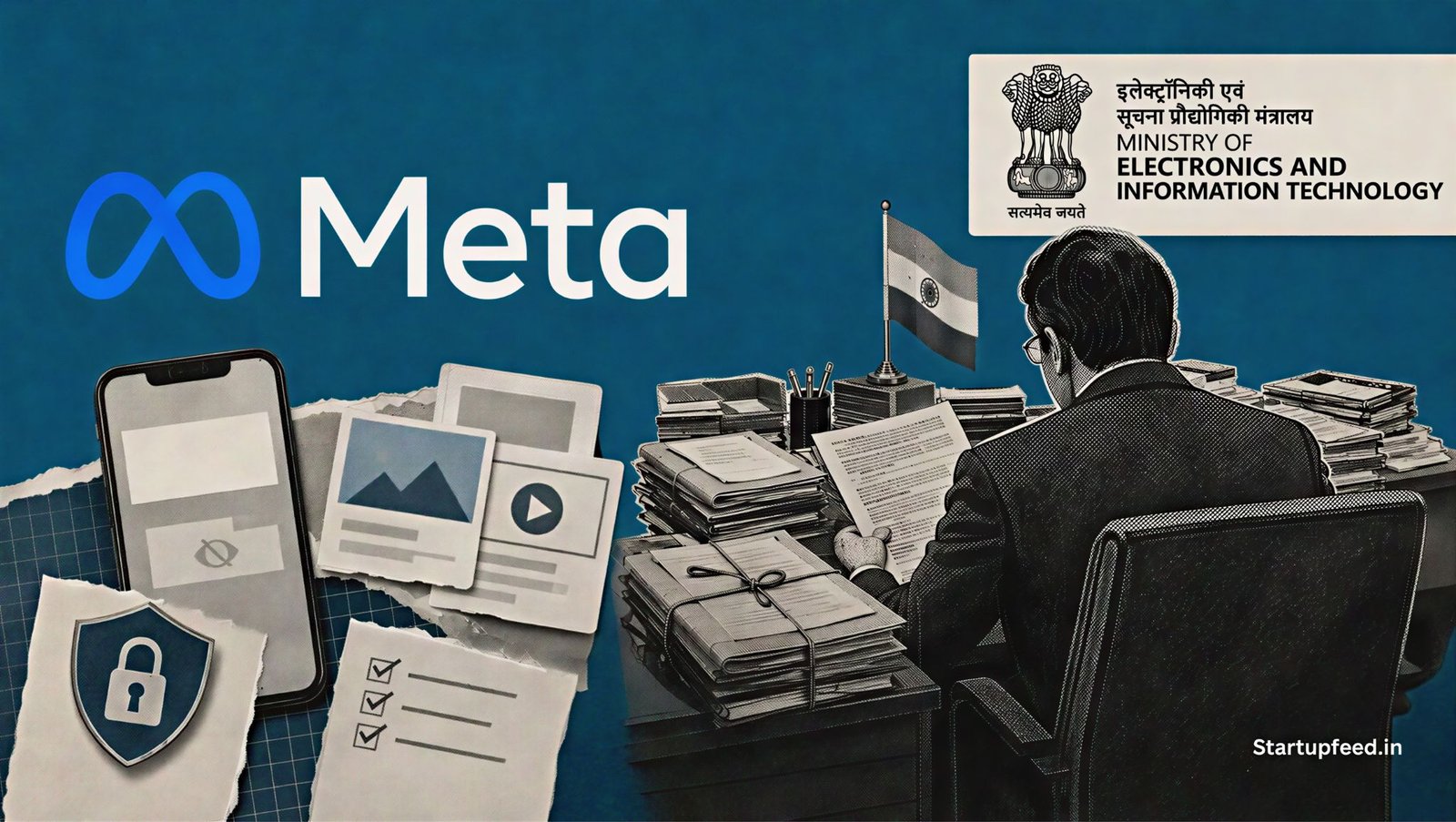
Meta Faces Harsh CSAM Summons in India after IT Minister Ashwini Vaishnaw directed the Ministry of Electronics and Information Technology (MeitY) to summon the company on July 3, 2026, over Instagram advertisements that allegedly promoted child sexual abuse material.
The order followed a BBC Eye investigation. The probe found that Instagram carried paid ads using terms like “rape video” and “child video,” which redirected users to Telegram channels where such material sold for as little as Rs 99 (about $1, at a rate of Rs 95.44 to the dollar), the MeitY-administered IT Rules, 2021 framework being the likely basis for any action.
StartupFeed Insight
The real story here is not one bad ad batch, it is ad-system accountability. Meta cut human moderators and leaned on AI review, yet CSAM ads still cleared approval and one was first cleared as “within community standards.” That gap is what regulators will target. Watch trust and safety leads, ad-tech founders, and policy teams at every large platform: the next compliance ask will be pre-publication ad screening, not post-hoc takedown. StartupFeed predicts MeitY will issue a formal ad-moderation directive to significant social media intermediaries before the end of Q3 FY27 (September 2026). By Avinash.
The Summons: Key Facts
The Meta CSAM summons is an official demand for the company to explain how banned ads passed Instagram’s ad review. MeitY officials are expected to ask Meta how such advertisements were approved and displayed on one of its largest platforms, according to government sources cited by PTI. India is Meta’s biggest market by users.
| Detail | Fact | Notes |
|---|---|---|
| Action | MeitY to summon Meta | Directed by IT Minister Ashwini Vaishnaw |
| Date directed | July 3, 2026 (Friday) | Sources cited by PTI |
| Trigger | BBC Eye investigation | Around 30 CSAM ads identified |
| Ad content | Terms like “rape video,” “child video” | Linked to Telegram channels |
| Price flagged | Rs 99 per video (about $1) | Rate: Rs 95.44 to the dollar |
| Report scale | 1.9 million CSAM reports (2025) | India second only to the United States |
The most striking number is 1.9 million. That is the volume of child abuse reports India logged last year, per tipline data cited in the BBC probe, second only to the United States.
About Meta
Meta Platforms runs Facebook, Instagram, and WhatsApp. It was founded in 2004 by Mark Zuckerberg, with headquarters in Menlo Park, California. The company earns most of its revenue from digital advertising and counts India among its largest user bases across all three apps. Meta recently expanded its use of AI-driven content review while cutting reliance on outside human moderators.

What does the Meta CSAM summons mean?
The Meta CSAM summons signals that India expects platforms to catch banned ads before publication, not after a news exposé. Instagram approves ads only after they pass its moderation technology, so ads promoting abuse should never have gone live. When the BBC reported one such ad, Instagram replied within 24 hours that it did not breach community standards.
“In order to find the tentacles of organised crime, the entire chain of demand and supply needs to be tracked,” said Bhuwan Ribhu, founder of Just Rights for Children.
Meta later said it disabled several ads, suspended the responsible accounts, and blocked linked URLs after the BBC sought comment. The firm added that no system is perfect and it refers suspected child exploitation to the US National Center for Missing and Exploited Children.
Is India moving to a standalone AI law?
India appears set to move towards a dedicated AI law, a shift from its earlier light-touch approach. On the same Friday, IT Secretary S Krishnan said the time has come to look at separate AI legislation, noting that existing rules had so far been adequate but that an additional law may now be needed.
MeitY has leaned on the Information Technology Rules, 2021 and their February 2026 amendments to govern deepfakes and synthetic content. Those amendments already require intermediaries to block high-risk unlawful content, including CSAM. A standalone statute would give regulators firmer ground when platform ad systems fail.
Why is Meta in the spotlight twice this week?
This is the second Meta-related action in one week. On July 1, 2026, MeitY sent Meta a notice over WhatsApp’s planned username feature, warning it could raise online fraud, phishing, digital arrest scams, and impersonation attacks. The ministry asked Meta to pause the rollout until consultations finish.
Together, the two moves show a sharper regulatory stance on user safety. Rivals like Signal and Telegram already offer usernames, but India’s concern centres on impersonation risk in a market with heavy WhatsApp Pay use. What safeguards regulators will accept before Meta’s next feature launch remains the open question.
What’s Next
Meta is expected to appear before MeitY officials and submit a written explanation on the Instagram ads. Watch for a possible formal directive on ad moderation and any draft text of a dedicated AI law in the coming months. Will pre-publication ad screening become a hard compliance rule for large platforms in India?


Frequently Asked Questions
Written by Avinash. Have a tip? Write to us at editorial@startupfeed.in.
Liked this story? Follow StartupFeed on Google so our reporting reaches you first.