
Quick Take
- BigBasket cuts footprint from 76 cities to nearly 40 profitable ones under new CEO Amit Nanda.
- The Tata Digital grocery arm runs around 800 dark stores, trailing Blinkit, Zepto and Swiggy Instamart.
- Nanda targets profitability in 12 to 15 months using a denser big-city cluster strategy.
In This Article
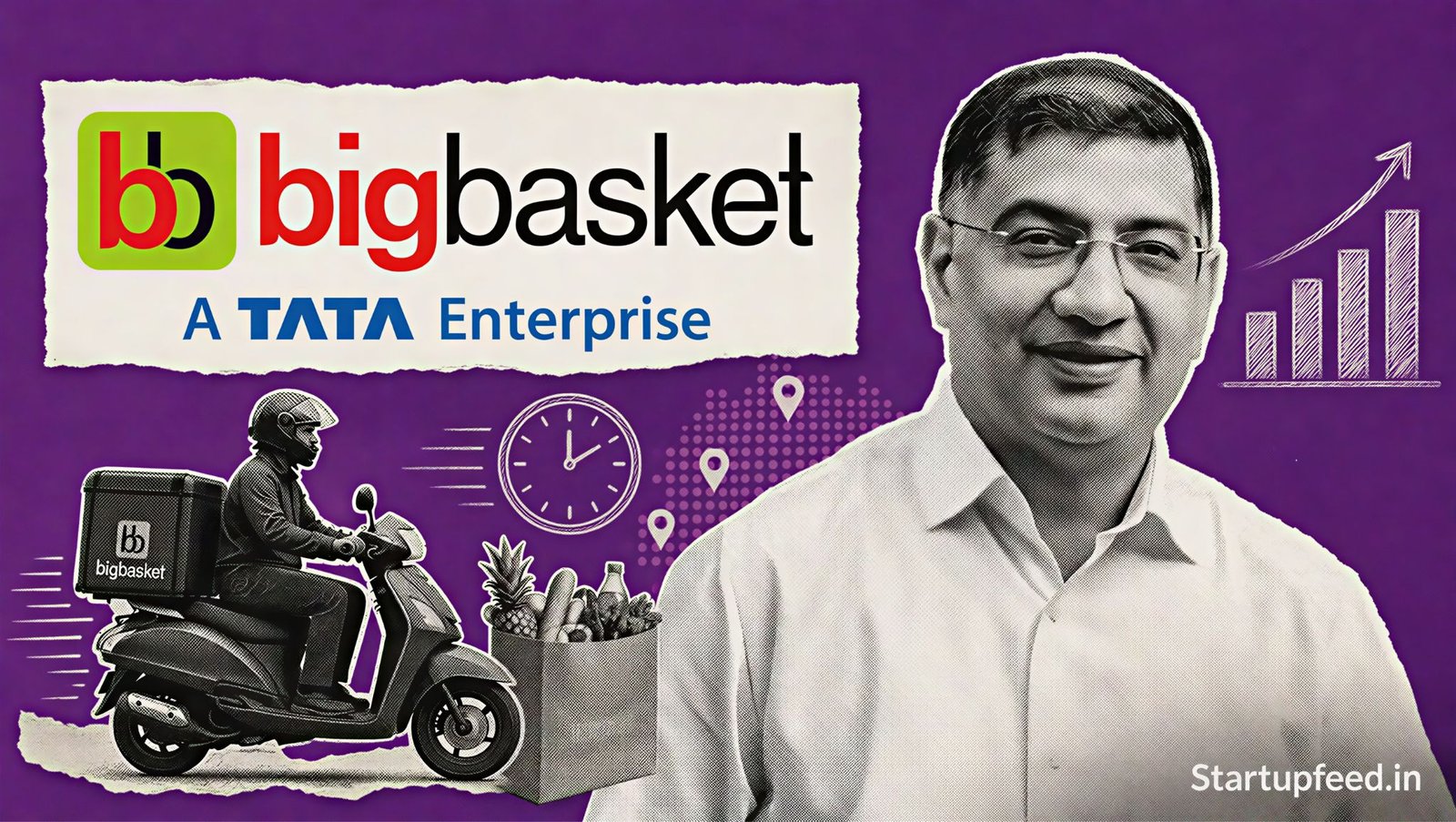
BigBasket cuts footprint from 76 cities to nearly 40 profitable ones, as new CEO Amit Nanda takes on a clear profitability mandate for the Tata Digital grocery arm on July 15, 2026.
The move nearly halves the operating base of one of India’s oldest online grocery names. Nanda, a former Amazon India executive, joined the company in June 2026. His task is to make the business profitable while quick commerce rivals spend hard to grab market share.
StartupFeed Insight
The interesting signal here is not the exit from tier-2 towns but the timing. BigBasket is retreating just as Amazon and Flipkart pour money into the same small cities it is leaving. That gap could hand rivals a permanent lead outside metros. Founders and investors watching India’s grocery war should track BigBasket’s contribution margin per order, not its city count, because density is the only path to profit at this scale. StartupFeed expects BigBasket to report a narrower loss for the first half of FY27 by December 2026, with the 40-city base doing most of the heavy lifting. By Avinash.
BigBasket Cuts Footprint: The Numbers
BigBasket cuts footprint to nearly 40 cities from a prior presence across 76 markets, according to the company. The pullback centres on larger cities where population density and quick commerce usage are higher. Management calls it a cluster strategy that tries to tap a denser user base in big cities rather than spread thin across the country.
About BigBasket
BigBasket is an online grocery and quick commerce platform founded in 2011 by Hari Menon, VS Sudhakar, Vipul Parekh, VS Ramesh and Abhinay Choudhari. Headquartered in Bengaluru, it delivers groceries, fresh produce, medicines and daily goods. The company is backed by Tata Digital and runs around 800 dark stores across India.
| Metric | Detail | Notes |
|---|---|---|
| City Count | 76 to nearly 40 | Almost half the network trimmed |
| Dark Stores | Around 800 | Referred to internally as stores |
| New CEO | Amit Nanda | Former Amazon India executive |
| Profit Target | 12 to 15 months | Stated by outgoing CEO Hari Menon |
| FY25 Revenue | Around Rs 9,900 Cr | Combined B2C and B2B, per Tata Sons FY25 filings |
The most striking number is the losses. The combined business reported consolidated losses of over Rs 2,000 Cr in FY25, per Tata Sons disclosures, even as roughly 80% of revenue now comes from quick commerce.

Why Is BigBasket Shrinking Its City List?
BigBasket is shrinking its city list to chase profit rather than raw scale. The company has faced scrutiny for heavy cash burn and rising losses inside the Tata Digital ecosystem. Its new leader now leans on a denser big-city model to improve unit economics.
“The focus will be on larger cities where BigBasket will tap the higher density of population and rising usage of quick commerce,” one of the officials said.
The shift also signals a change in how the company is run. People close to the matter said the business is moving from a founder-led model toward more professional day-to-day management. Amit Nanda’s appointment as CEO reflects that push, as detailed in the company’s official leadership announcement.
How Does BigBasket Compare With Rivals?
BigBasket trails its main quick commerce rivals on dark store count. Blinkit ended the March quarter with 2,243 dark stores, nearly double the networks of Swiggy Instamart and Zepto. BigBasket’s roughly 800 stores leave it well behind the leaders.
| Company | Dark Stores | Position |
|---|---|---|
| Blinkit | 2,243 | Segment leader |
| Swiggy Instamart | 1,143 | Ended FY26 |
| Zepto | 1,139 | Ended FY26 |
| BigBasket | Around 800 | Now narrowing its base |
The pressure is rising from new entrants too. Amazon plans to expand its Now service to 300 cities, while Flipkart Minutes has been adding around 100 dark stores a month. What sets BigBasket apart is its deep grocery roots and its Tata parentage, which give it patient capital that pure startups may lack.
What Comes Next for BigBasket
The firm now expects to transition toward professionally managed execution, with sharper accountability and faster decisions. Customer experience, pricing and product range are the areas Nanda will focus on first. The company says it is showing signs of recovery, with weekly active users at an all-time high. Can a leaner 40-city base finally turn a profit where 76 cities could not?
Frequently Asked Questions
Written by Avinash. Have a tip? Write to us at editorial@startupfeed.in.

Liked this story? Follow StartupFeed on Google so our reporting reaches you first.