

QUICK TAKE
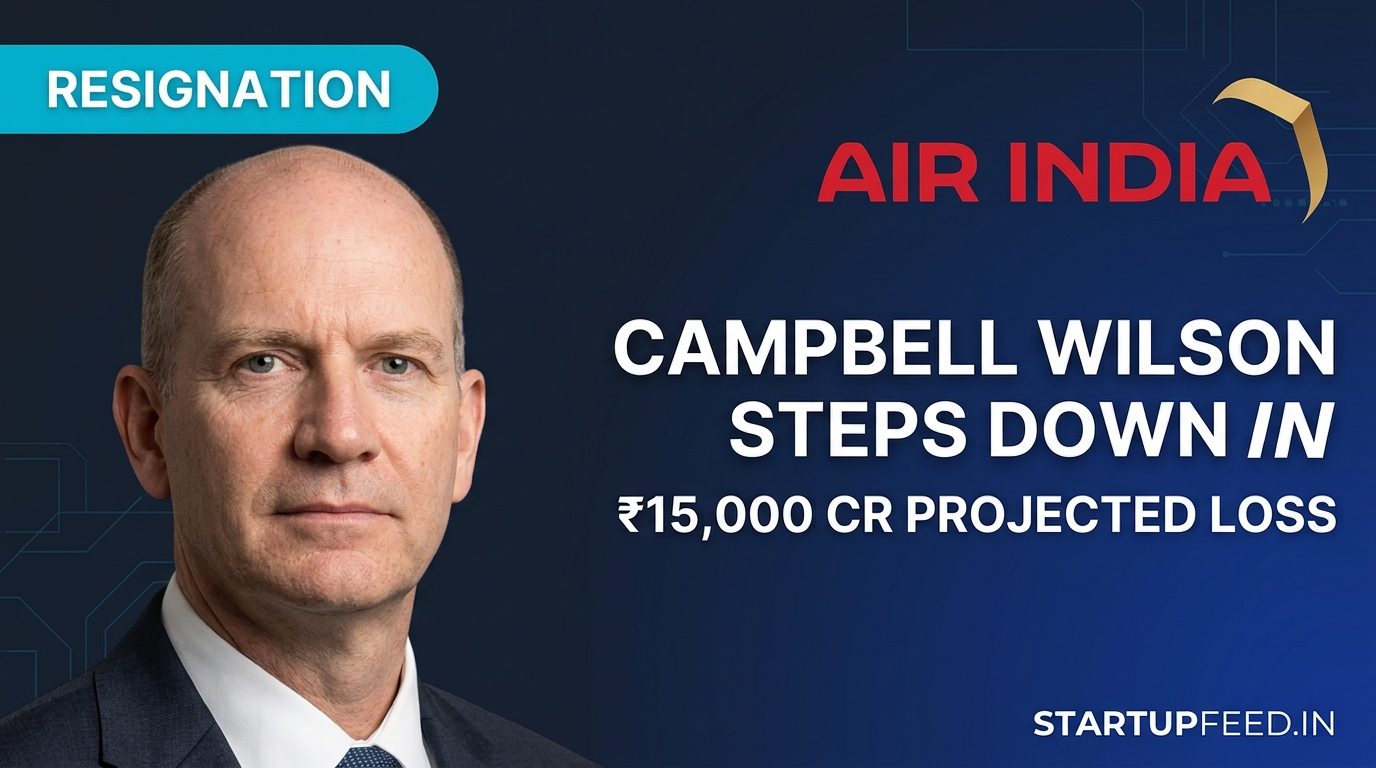
| Who’s Leaving | Campbell Wilson, CEO & MD of Air India |
| Timeline | Announced April 7, 2026; remains in role until successor appointed (May 2026 board meeting) |
| Context | Projected ₹15,000 Cr loss in FY26 (vs ₹9,568 Cr in FY25); highest since Tata takeover 2022 |
| Pressure Points | June 2025 crash (260 deaths), Pakistan airspace closure, supply chain delays, safety lapses |
| Previous Role | Founding CEO of Scoot (Singapore Airlines’ low-cost arm); 26 years at Singapore Airlines |
| Legacy | Merged 4 airlines, ordered 470+ aircraft, but profitability target now pushed to 2029-2030 |
| Key Question | Can any CEO turn around Air India’s losses, or are structural challenges insurmountable? |
The Resignation
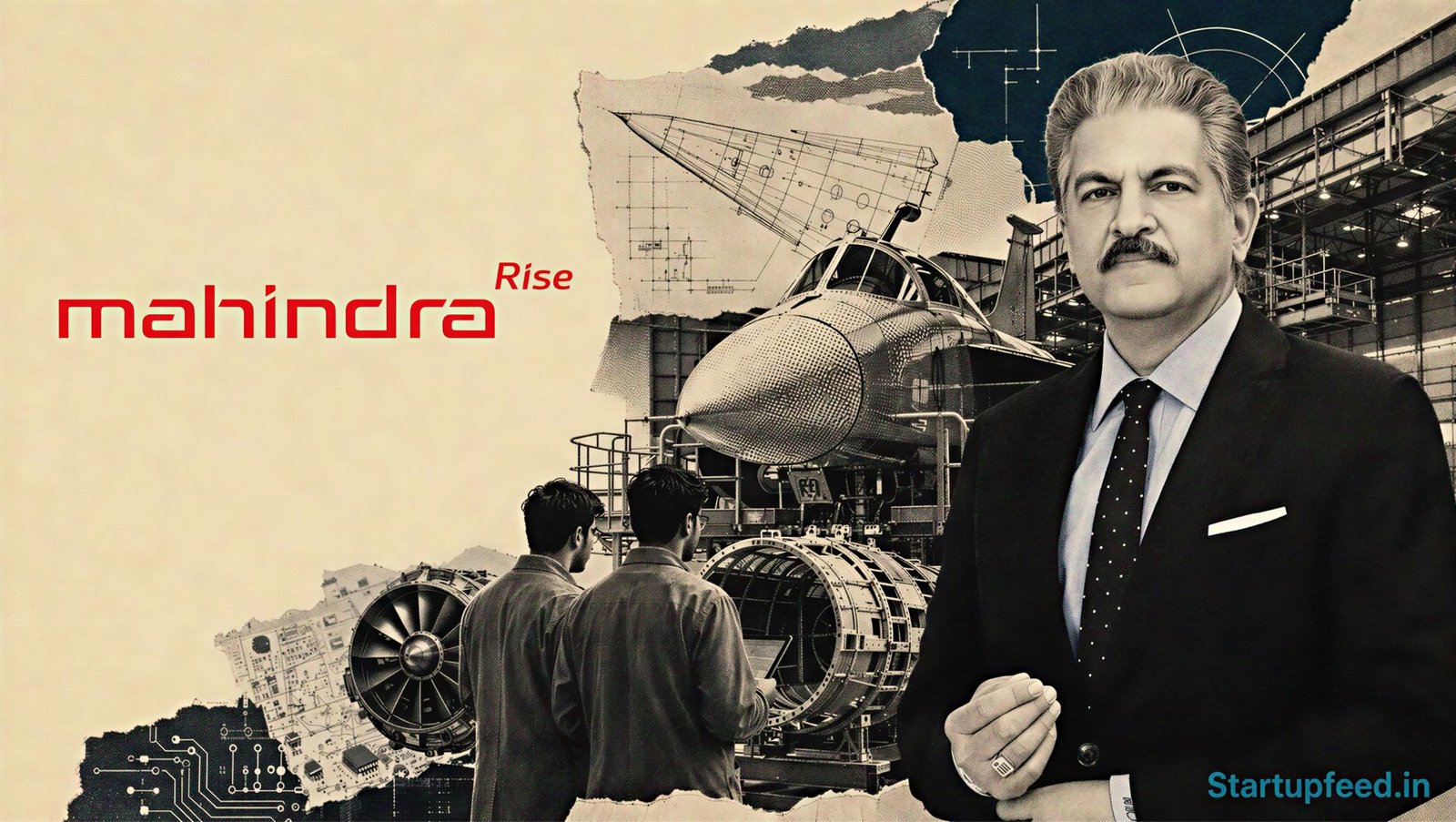
Campbell Wilson, the New Zealand-born CEO of Air India, announced his resignation on April 7, 2026, concluding a turbulent four-year tenure marked by ambitious transformation efforts and mounting financial losses. Wilson informed Air India Chairman N. Chandrasekaran of his intention to step down as early as 2024, but the formal announcement comes as the airline braces for a record ₹15,000 crore loss in the current fiscal year ending March 31, 2026. The resignation—signal that even the Tata Group’s handpicked reformer sees the scale of the challenge ahead—marks a critical juncture for Air India’s long-promised turnaround.
Who Is Campbell Wilson? The Profile
| Full Name | Campbell Wilson |
| Nationality | New Zealand |
| Age | 55 years old |
| Tenure at Air India | July 2022 – April 2026 (3.75 years of 5-year contract) |
| Previous Experience | 26 years at Singapore Airlines (SIA); founding CEO of Scoot (2011-2016); returned as CEO (2020-2022) |
| Key Role at SIA | Senior Vice President, Sales & Marketing (before Air India) |
| Notable Achievement | Built Scoot from zero to a profitable low-cost carrier; Singapore Airlines’ competitive answer to AirAsia |
| Why He Was Hired | Low-cost airline turnaround expertise; international credibility; appointed after Tata Group acquired Air India for ₹18,000 Cr in 2022 |
Why the Timing Matters (Even If Wilson Claims It Doesn’t)
The Official Story: Wilson says he informed Chairman Chandrasekaran in 2024 of his intention to leave in 2026, after completing the ‘foundational blocks’ of Air India’s transformation. Air India’s statement frames this as a planned transition, not a forced exit.
The Reality: Wilson is leaving as Air India faces its worst financial crisis since Tata’s acquisition. The projected ₹15,000 crore loss for FY26 represents a 57% increase over FY25’s ₹9,568 crore loss. The airline went from nearly achieving operational break-even to drowning in losses—a stunning reversal that no CEO can credibly claim was part of a two-year-old plan.
Compounding Headwinds: (1) The June 12, 2025 Ahmedabad crash of Flight AI171 killed 260 people and triggered regulatory scrutiny over safety lapses, crew fatigue, missing emergency checks, and delayed engine parts. (2) Pakistan’s airspace closure to Indian carriers forces ₹4,000 crore+ in additional routing costs annually. (3) Supply chain delays are pushing aircraft deliveries further out, constraining revenue growth. (4) Regional geopolitical tensions (Middle East instability) have dampened travel demand.
Wilson’s Tenure: The Rise and Fall
| Period | Achievements (The Rise) | Setbacks (The Fall) |
| 2022-2023 | Announced Vihaan.AI transformation plan; placed record 470 aircraft order; merged Vistara | Faced initial resistance from old public-sector culture; supply chain disruptions post-COVID |
| 2023-2024 | Narrowbody fleet retrofit 95% complete; regional expansion; enterprise segment growth | Widebody aircraft delayed; long-haul product still incomplete; accumulating losses |
| 2024-2025 | FY25 standalone loss dropped 21% YoY; revenue rose 13.5%; cumulative improvements | Regulatory safety lapses discovered; accumulated group losses ₹32,210 Cr over 3 years |
| June 2025 | — | Catastrophic: Flight AI171 crash kills 260; operational disruption; reputation damage |
| FY26 (Current) | — | Projected ₹15,000 Cr loss; Pakistan airspace closure adds ₹4,000 Cr cost; profitability pushed to 2029-2030 |
| April 2026 | Transformed organizational structure; created modern operating model | Resignation announced; successor search begins amid uncertainty |
The Financial Cliff: Why the Numbers Forced This Moment
Wilson leaves behind one undeniable reality: Air India’s turnaround is not on schedule. Here’s the trajectory:


| Fiscal Year | Revenue | Loss | Loss Trajectory |
| FY25 (Ended Mar 2025) | ₹78,636 Cr | ₹9,568 Cr (~$1.1 Bn) | Improving (down from prior year) |
| FY26 (Current, Ends Mar 2026) | ₹80,000-82,000 Cr (est) | ₹15,000 Cr (~$1.6 Bn projected) | DETERIORATING (57% worse) |
| Cumulative (FY23-FY26 4 years) | ₹300,000+ Cr | ₹45,000+ Cr | Unsustainable without intervention |
The Setback: In January 2026, Air India’s board rejected a management proposal that projected profitability only by FY28/FY29. The board demanded a more aggressive turnaround strategy—essentially saying Wilson’s plan wasn’t moving fast enough. Now, with the Ahmedabad crash and Pakistan airspace closure, even the revised timelines are unrealistic. The airline is now projecting profitability by 2029-2030 at the earliest.
What Went Wrong? The Root Causes
- Fleet Deliveries Lagged / Capacity Mismatch: Air India ordered 470 aircraft but deliveries have been delayed. The airline took on aggressive growth targets without the aircraft to support them, leading to inefficient utilization and higher per-flight costs.
- Integration Complexity Was Underestimated: Merging Vistara (a high-quality, low-cost carrier) into Air India (a recovering legacy carrier) was culturally and operationally complex. The savings promised from consolidation took longer to realize. Air India Express losses exploded post-merger, reaching ₹7,000+ crore.
- Long-Haul Product Transformation Stalled: As of April 2026, Air India has only ONE Dreamliner in service with proper long-haul interiors. The refitting of hundreds of international widebodies remains incomplete. This starves the airline of premium revenue (long-haul international = 40%+ of airline gross margins).
- Pakistan Airspace Closure Was Catastrophic: When Pakistan closed its airspace to Indian carriers in February 2026, flights to Europe and the US had to reroute via Middle Eastern airways, adding 2-4 hours to flights, increasing fuel burn, crew duty violations, and costs. Wilson estimated ₹4,000 crore annual impact.
- The Ahmedabad Crash Destroyed Momentum: The June 2025 crash of AI171 killed 260 people and raised questions about Air India’s safety culture, crew training, and management competence. Beyond the immediate tragedy, it triggered regulatory investigations, passenger hesitancy, and reputational damage at a critical time when the airline needed growth.
What Campbell Wilson Said (and Didn’t Say)
The four years since Air India’s privatisation has seen the acquisition and successful merger of four airlines, an evolution from public to private sector practices along with renewal of the leadership team, workforce, culture and ways of operating. With foundational blocks now settling and a brief window until deliveries from the nearly 600-strong aircraft orderbook commence in earnest from 2027, the time is right for the organisation to have new leadership to take it to the next level.”
— Campbell Wilson, in his resignation statement
Translation & Analysis: Wilson’s statement is carefully crafted. He highlights the ‘foundation-building’ phase (mergers, culture change) as his contribution, then says the next phase (aircraft deliveries, revenue growth) requires ‘new leadership.’ This is diplomatic code for: ‘I’ve done the dirty work of restructuring; now someone else needs to fix the profitability and losses.’ He’s right—but it also admits his turnaround plan has stalled.
What’s Unsaid: Wilson doesn’t mention the ₹15,000 crore loss, the crash investigation, safety lapses, or the Pakistan airspace crisis. By framing his exit as a natural transition point rather than an exit under pressure, Wilson preserves his reputation. Whether the Tata Group and board believe this narrative is another question.
Context: Leadership Chaos Across Indian Aviation
Campbell Wilson’s resignation is the SECOND major airline CEO exit in two weeks. On March 24, 2026, IndiGo CEO Pieter Elbers stepped down following a catastrophic operational meltdown (flight delays, cancellations, system failures). IndiGo then appointed Willie Walsh, former CEO of International Air Transport Association (IATA) and ex-IAG (British Airways parent), as his replacement.
Key Difference: Elbers was forced out (public pressure, obvious failure). Wilson is claiming a planned exit (but timing + losses suggest otherwise). Both point to a deeper crisis: India’s aviation sector is in chaos. IndiGo faces operational meltdown; Air India faces financial collapse + safety scrutiny. The duopoly that once looked stable is imploding.
The Successor Search: What Tata Is Looking For
According to reports, Tata Group has already begun discussions with CEO candidates from UK and US airlines. The board is expected to finalize a successor by May 2026 board meeting. Here’s what the next CEO needs to deliver:
| Requirement | What It Means |
| Restore Profitability by FY29 | Must cut costs by ₹5,000-7,000 Cr/year or increase revenue by 20-25% without adding capacity (hard target given aircraft delays) |
| Fix Safety/Regulatory Issues | Resolve Ahmedabad crash investigation fallout; restore DGCA trust; improve safety culture perception |
| Accelerate Widebody Retrofit | Complete long-haul cabin refit on all widebodies by FY27 to unlock premium revenue (₹3,000-4,000 Cr opportunity) |
| Navigate Geopolitical Risks | Develop contingency routing strategies if Pakistan airspace remains closed; manage Middle East tensions; optimize Middle Eastern hub partnerships |
| Secure Funding | Air India needs ₹10,000+ Cr fresh funding by FY27. Next CEO must convince Tata, Singapore Airlines, and lenders that recovery is real |
StartupFeed Insight
| What the numbers reveal: | Air India’s turnaround has hit structural limits—not operational ones. The losses aren’t from mismanagement alone; they’re from simultaneous shocks (crash, airspace closure, geopolitical tensions) that no CEO can solo-navigate. |
| For aviation industry: | India’s duopoly (IndiGo + Air India) is destabilizing. IndiGo’s ops meltdown + Air India’s financial spiral suggests the sector can’t sustain two sick giants. Expect consolidation pressure or government intervention by 2027. |
| For investors (Tata Group, Singapore Airlines): | Tata has invested ₹18,000+ Cr in Air India. Singapore Airlines holds 25.1% post-Vistara merger. Neither can afford failure, but both are now trapped. Expect one of three outcomes: (1) Tata doubles down with ₹15,000+ Cr additional capital, (2) SIA exits stake (takes ₹3,000+ Cr writedown), (3) government bail-in/merger mandate. |
| For the next CEO: | This is a career-ending role if turnaround fails. High-profile CEO appointment (ex-Walsh at IndiGo, possibly ex-international airline CEO at Air India) signals stakes are life-or-death. No second chances. |
| Our prediction: | By Q2 FY27, if Air India doesn’t show ₹2,000+ Cr quarterly loss improvement, Tata will be forced to either merge Air India Express upward or seek government strategic partner (unlikely). Wilson’s exit is essentially Tata admitting the current model doesn’t work. |
What’s Next: Timeline & Expectations
Immediate (April-May 2026): Successor search concludes. New CEO expected to be announced by May board meeting. Wilson remains in role during transition (expected 1-2 months handover period).
Short-term (May-August 2026): New CEO takes charge and announces revised turnaround strategy. Expect announcements on cost-cutting, route rationalization, or potential partnerships. First earnings under new CEO (Q1 FY27 results in August) will be closely watched.
Medium-term (FY27-FY28): Aircraft deliveries accelerate (600+ on order). If widebody refits complete and capacity growth translates to revenue, losses should narrow. If geopolitical tensions persist and passenger growth stalls, losses could widen further.
Critical Milestone: Ahmedabad Crash Investigation Conclusion (Expected June 2026): The final DGCA report will either clear Air India of systemic safety failures (bullish for morale/perception) or identify deeper issues (triggers restructuring/leadership reviews). This will heavily influence investor confidence in the new CEO’s credibility.
Campbell Wilson is 55 years old and from New Zealand. He joined Air India as CEO on July 25, 2022, after the Tata Group acquired Air India for ₹18,000 crore in October 2021. Air India is now in a 50-50 strategic partnership with Singapore Airlines (25.1% stake post-Vistara merger). The airline operates a fleet of 191 aircraft with orders for 600+ more. As of April 2026, Air India remains India’s second-largest carrier by domestic market share (37.6%), trailing Reliance Jio-backed IndiGo. The airline’s turnaround success will be critical not just for Tata Group’s aviation ambitions but for India’s broader aviation sector stability.
Liked this story? Follow StartupFeed on Google so our reporting reaches you first.