


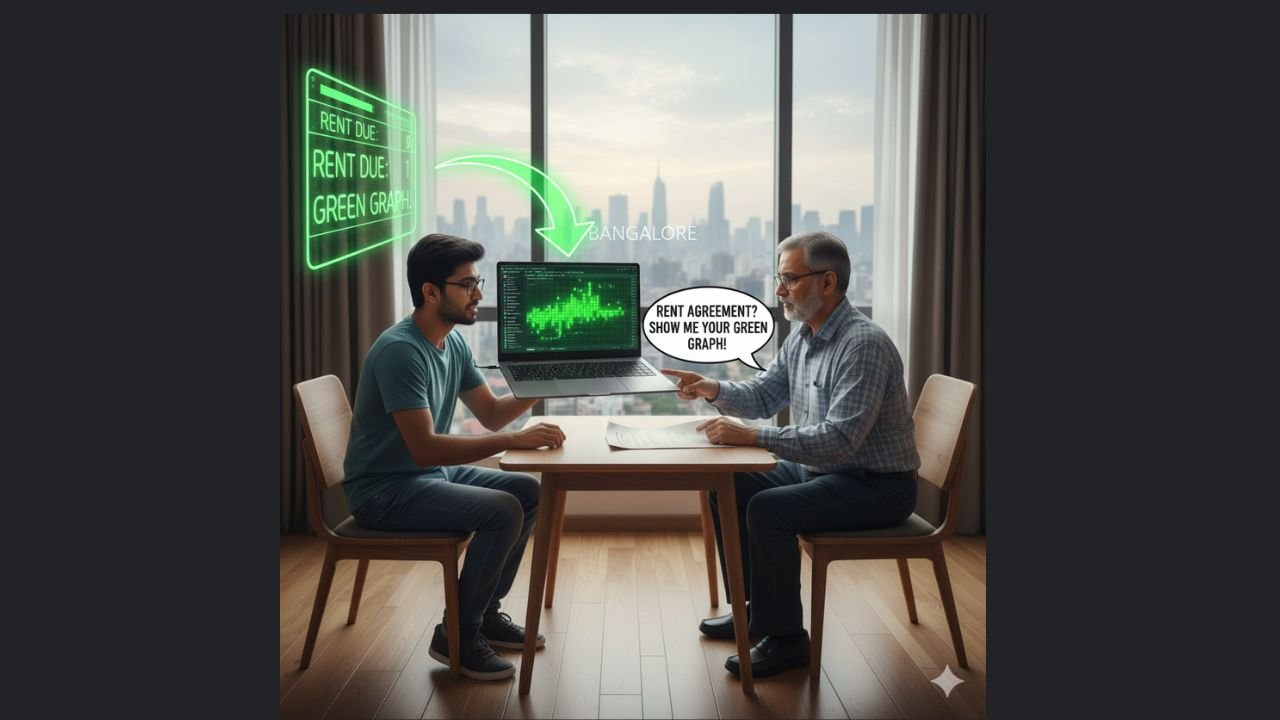

A Bangalore landlord GitHub graph screenshot went viral this week, and honestly, we’re not even surprised anymore. The city that brought you “rent negotiations over Zoom” and “PG rooms with mandatory standup meetings” has outdone itself once again.
The story: A software developer searching for accommodation in Koramangala was told by a prospective landlord that traditional documents—salary slips, offer letters, bank statements—weren’t sufficient. Instead, the Bangalore landlord GitHub graph requirement specified a “minimum 365-day commit streak with at least 80% green tiles” as proof of “professional stability and work ethic.”
Yes, you read that correctly. Your coding consistency now determines your housing eligibility.
The Viral Bangalore Landlord GitHub Graph Tweet That Broke the Internet
The incident surfaced when Twitter user @BengaluruVibes (handle withheld for privacy) posted a screenshot of WhatsApp messages with the property owner. The Bangalore landlord GitHub graph conversation included gems like: “Salary can be faked, but GitHub contributions don’t lie” and “I only rent to developers who ship code consistently.”
The tweet accumulated 2.3 million views, 47,000 retweets, and spawned 8,000+ quote tweets ranging from horrified to amused. Within hours, #PeakBangalore was trending nationally, with developers sharing their own absurd rental experiences.
“I showed my LeetCode rating instead of Aadhaar,” joked one developer. “The landlord asked if I solve problems in O(n) time or O(n²)—apparently, algorithmic efficiency impacts rent amount now.”
Another user claimed their landlord requested live coding interviews: “a 30-minute session to reverse a linked list before viewing the property.”
Why the Bangalore Landlord GitHub Graph Story Resonates Beyond Comedy
Beneath the absurdity lies an uncomfortable truth about Bangalore’s rental market dynamics. The Bangalore landlord GitHub graph incident, while possibly exaggerated or fabricated for viral impact, reflects genuine pressures developers face in India’s startup capital.
Bangalore’s rental market operates by different rules. The city’s 10-month advance deposit system (compared to 2-3 months elsewhere) already creates barriers. Add skyrocketing rents—areas like Bellandur seeing 100% increases in five years—and desperate tenants accept increasingly bizarre landlord demands.
“The Bangalore landlord GitHub graph story might be satirical, but I’ve seen landlords ask for LinkedIn endorsements, portfolios of shipped products, and even references from tech leads,” explains Rohan Mehta, co-founder of a rental assistance startup. “When housing supply can’t meet demand from 4+ lakh tech professionals, landlords can afford to be selective to the point of absurdity.”
The GitHub graph becomes a proxy for perceived reliability. Active contributors signal discipline, consistency, and—critically for landlords—stable employment and are unlikely to default on rent. In a city where defaulting tenants can tie up properties in legal battles for years, landlords seek unconventional risk assessment methods.
The Real Story Behind Bangalore Landlord GitHub Graph Culture
The viral post likely originated as satire, but it landed because it almost sounds plausible in Bangalore’s context. The city has a legitimate “Peak Bangalore” phenomenon that blurs the line between reality and parody:
Tech-first verification: Some landlords do request GitHub profiles, not for commit graphs but to verify claimed employment at startups with ambiguous online presence.
Cultural alignment screening: Landlords in areas like Indiranagar and Koramangala explicitly prefer “tech crowd” tenants, believing they’re quieter, more professional, and less likely to cause disputes.
Digital-native processes: Bangalore pioneered digital rent agreements, e-stamping, and online police verification—making tech proficiency an implicit rental requirement.
Professional reputation linking: A landlord checking LinkedIn profiles, GitHub accounts, or even Twitter presence to assess tenant credibility isn’t unheard of, though demanding specific commit frequencies crosses into satire territory.
EXPERT TAKE:
“The Bangalore landlord GitHub graph meme works because it exaggerates a real dynamic to absurd extremes,” explains Dr. Priya Sharma, an urban sociologist studying Bangalore’s housing market. “Tech culture has so thoroughly permeated Bangalore society that professional identity bleeds into personal life decisions in ways unimaginable elsewhere. A landlord in Mumbai wouldn’t know what GitHub is, let alone request it. But in Bangalore, where everyone from cab drivers to vegetable vendors discusses ‘funding rounds’ and ‘equity,’ these requests almost make sense. The satire reveals how normalized extreme tech culture has become. When we laugh at the GitHub graph demand, we’re laughing at ourselves—at a city where your code commits might genuinely feel more relevant than your credit score. That’s both Bangalore’s charm and its cautionary tale.”
What This Says About Bangalore’s Housing Crisis
Strip away the humor, and the Bangalore landlord GitHub graph story highlights serious structural issues:
Supply-demand imbalance: Bangalore adds 60,000+ tech professionals annually while housing construction lags, giving landlords asymmetric bargaining power.
Verification gaps: Traditional rental verification—salary slips, employment letters—proves inadequate in an ecosystem of stealth startups, contractor arrangements, and equity-heavy compensation.
Cultural homogenization: Landlord preferences for “tech tenants” create unofficial segregation, making housing inaccessible for non-tech professionals in tech-dominated neighborhoods.
Digitization without regulation: While online rental agreements improve efficiency, they lack standardization—enabling arbitrary demands like GitHub graph requirements.
The Model Tenancy Act 2021 theoretically caps security deposits at two months’ rent, but enforcement remains inconsistent. Until regulatory frameworks catch up with Bangalore’s unique rental market, expect more “Peak Bangalore” moments.
The Bottom Line: Should You Show Your GitHub Graph to Landlords?
If you’re apartment hunting in Bangalore and a landlord genuinely requests your GitHub graph, here’s the real advice: run.
Not because the request itself is inherently problematic—though it arguably is—but because it signals a landlord who views tenancy as employee-employer relationship rather than contractual arrangement. Today it’s commit streaks; tomorrow it’s mandatory code reviews or productivity tracking.
Sustainable rental relationships require boundaries. Your professional metrics aren’t your landlord’s business unless directly relevant to rent payment capacity—which GitHub activity fundamentally isn’t.
For landlords: screening tenant creditworthiness makes sense. Verifying employment makes sense. Checking professional reputation through public profiles? Borderline acceptable. Demanding specific GitHub activity patterns? That’s Peak Bangalore gone too far.
The city’s tech culture is simultaneously its greatest strength and most absurd liability. The Bangalore landlord GitHub graph story—whether real or fabricated—perfectly encapsulates that duality.
SUMMARY POINTS:
1. Viral demand: Landlord requests 365-day GitHub commit streak over traditional rental documents
2. Peak Bangalore moment: The incident symbolizes extreme tech culture infiltrating everyday life
3. 2.3M views: Social media explodes with reactions, spawning #PeakBangalore trend nationwide

