


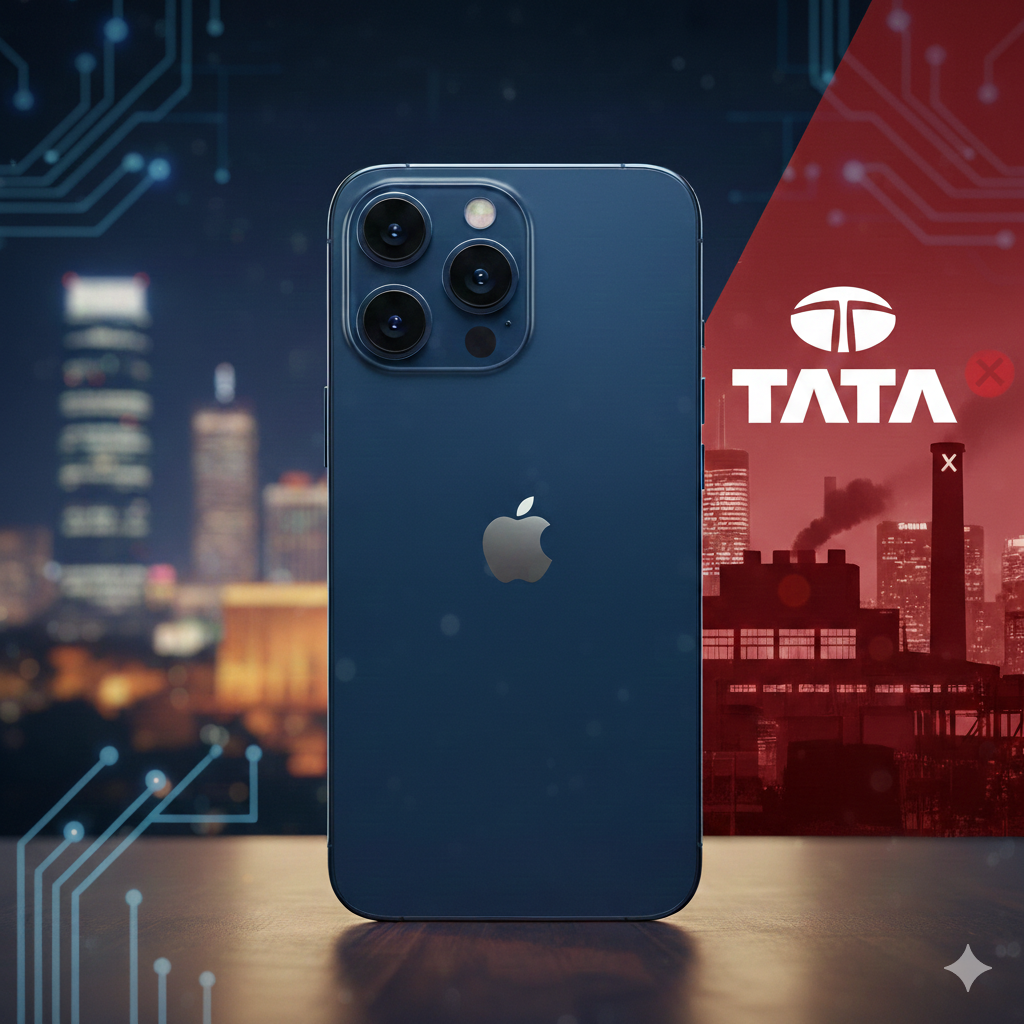

SUMMARY POINTS:
- Production Scale-Up: India aims to manufacture 32% of global iPhones by volume and 26% by value by 2026, up from 18-20% currently—representing roughly 60+ million units annually covering all US-bound iPhones.
- Tata’s Strategic Position: As Apple’s first Indian manufacturing partner, Tata operates multiple facilities specifically being prepared for premium device production, with trial runs already underway for next-generation models, including iPhone 17 components.
- Policy Windfall: Budget 2026’s five-year tax exemption allows Apple to directly fund sophisticated manufacturing equipment in India, removing the critical bottleneck that previously made Day One production of premium models challenging.
In a seismic shift that could redefine India’s tech manufacturing landscape, reports suggest Apple’s flagship iPhone 18 Pro models—set to launch in September 2026—may roll off Tata Electronics’ production lines from day one. This isn’t just another “Make in India” story. This is India entering the big leagues.
The Big Picture: India’s iPhone Revolution Just Got Real
September 2026. Tim Cook walks onto the stage at Apple Park. The iPhone 18 Pro gleams under the spotlight. But here’s the kicker—those premium devices heading to American stores might have “Assembled in India” stamped on their backs from launch day itself, not months later as an afterthought.
According to multiple supply chain reports, Apple is orchestrating one of the most ambitious manufacturing pivots in tech history. The company plans to shift production of over 60 million iPhones annually to Indian facilities by the end of 2026—essentially doubling the country’s current output and covering virtually all iPhones sold in the United States.
“These are logical and necessary steps to scale up production in India with a medium-term goal of reducing dependency on China, especially given the high tariffs on Chinese products going into the U.S.,” says Navkendar Singh, Associate Vice President at IDC India.
At the center of this transformation stands Tata Electronics, India’s homegrown industrial giant rapidly emerging as Apple’s most strategic partner.
Tata’s Meteoric Rise: From Zero to Apple Hero in 24 Months
Rewind to October 2023. That’s when Tata Electronics acquired Wistron’s iPhone manufacturing facility in Karnataka for $125 million, becoming the first Indian company to manufacture iPhones domestically. Fast forward to today, and Tata isn’t just playing catch-up—it’s positioning itself as a cornerstone of Apple’s global supply chain.
The Hosur Powerhouse: Tata’s brand-new facility in Tamil Nadu started operations in April 2025, designed for massive scale-up with plans for 20 assembly lines and 50,000 workers.
The Bangalore Expansion: Tata’s existing plant near Bangalore has already begun trial production for the iPhone 17 series, developing critical casing components for next-generation devices.
Production Velocity: In March 2025 alone, Tata and Foxconn shipped approximately 600 tons of iPhones—roughly 1.5 million units—valued at $2 billion to the United States. That’s a monthly record signaling serious manufacturing muscle.
The numbers tell a compelling story: India assembled $22 billion worth of iPhones in fiscal 2025—a staggering 60% jump from the previous year, representing 20% of global iPhone production.
Budget 2026: The Game-Changing Policy Shift
Here’s where things get revolutionary. For years, Apple faced a peculiar problem: if it directly funded manufacturing equipment for contract partners, Indian tax law could trigger taxes on iPhone sales profits—even though assembly was handled by third parties.
Enter Finance Minister Nirmala Sitharaman’s Budget 2026 announcement: foreign companies can now supply machinery to Indian contract manufacturers for up to five years without triggering tax liability.
Revenue Secretary Arvind Shrivastava confirmed, “If you bring your machine, and that machine is used by a local manufacturer to produce something, we will exempt you for 5 years. We are giving them certainty.”
This seemingly technical policy change is actually revolutionary. It allows Apple to directly fund cutting-edge production equipment, dramatically accelerating India’s capability to manufacture the most sophisticated iPhone models from launch day—not months later.
The iPhone 18 Pro Timeline: Why “Day One” Makes Sense
Multiple supply chain reports paint a clear picture:
Early 2026: Trial production for iPhone 18 Pro models begins, with production lines already being set up as of late 2025.
February-March 2026: Small-scale manufacturing runs start following Lunar New Year, with Pro hardware designs locked in.
September 2026: Official launch of iPhone 18 Pro and iPhone 18 Pro Max.
This staggered launch strategy—where Pro models debut first—actually strengthens India’s Day One role. With Tata and Foxconn operating five iPhone factories in India, the infrastructure exists. India has already demonstrated it can match China’s production timelines for current models, with trial production happening simultaneously in both countries.
The China Challenge: The Elephant in the Room
Let’s be realistic: China still manufactures over 75% of global iPhone production. Reports indicate Chinese authorities are actively slowing Apple’s diversification by extending approval times for equipment exports from two weeks to over four months.
Additionally, India currently relies on China for approximately 80% of iPhone components. Building that component ecosystem will take years. Building iPhones in India costs 5-8% more than in China due to elevated import duties on components.
But U.S. tariffs on Chinese goods exceeding 100%—potentially expanding to electronics—mean Apple simply cannot risk having all premium production in China.
What This Means for India Inc.
Beyond Apple and Tata, this shift has profound implications:
Job Creation: The expansion could create hundreds of thousands of direct and indirect jobs across Karnataka, Tamil Nadu, and other states.
Supply Chain Ecosystem: As Apple scales up, tier-2 and tier-3 suppliers will establish operations in India, creating a robust electronics manufacturing ecosystem.
National Pride Factor: An iPhone 18 Pro “Made in Bangalore” from Day One isn’t just a phone—it’s a statement that India can compete at the absolute pinnacle of global manufacturing sophistication.
Retail Expansion: Apple plans four new stores in Bengaluru, Pune, Delhi-NCR, and Mumbai, while Tata announced plans for 100 retail stores dedicated exclusively to Apple products.
EXPERT TAKE:
“Apple’s India strategy transcends simple cost arbitrage or tariff avoidance,” explains a leading supply chain consultant. “This is about resilience architecture. In a world where geopolitical tensions can disrupt trillion-dollar supply chains overnight, India offers something unique: democratic stability, a massive consumer market, strong intellectual property protections, and increasingly sophisticated manufacturing capabilities.”
The consultant adds, “What makes this particularly significant is the timing. Apple isn’t waiting until production issues force their hand. They’re proactively building redundancy while they have resources to manage the transition. The iPhone 18 Pro potentially being ‘Made in India’ from launch day would validate a decade-long bet on the country as a legitimate alternative to China for the most complex consumer electronics on Earth.”
The Bottom Line
Whether the iPhone 18 Pro is truly “Made in Bangalore from Day One” in September 2026 remains to be officially confirmed by Apple—a company notorious for supply chain secrecy. But the pieces are falling into place for India to play a starring role.
Tata’s rapid transformation from iPhone newcomer to strategic Apple partner demonstrates what Indian industry can achieve when ambition meets opportunity. Budget 2026 tax reforms show the government understands what’s at stake.
China’s manufacturing dominance isn’t ending overnight. But for the first time in iPhone history, there’s a realistic possibility that India could be a Day One production hub for Apple’s most advanced devices—not a follow-on market getting last year’s models.
That’s not just a Tata win over China. That’s India announcing it belongs in the conversation about where the world’s most sophisticated consumer electronics are built.

