QUICK TAKE:
|
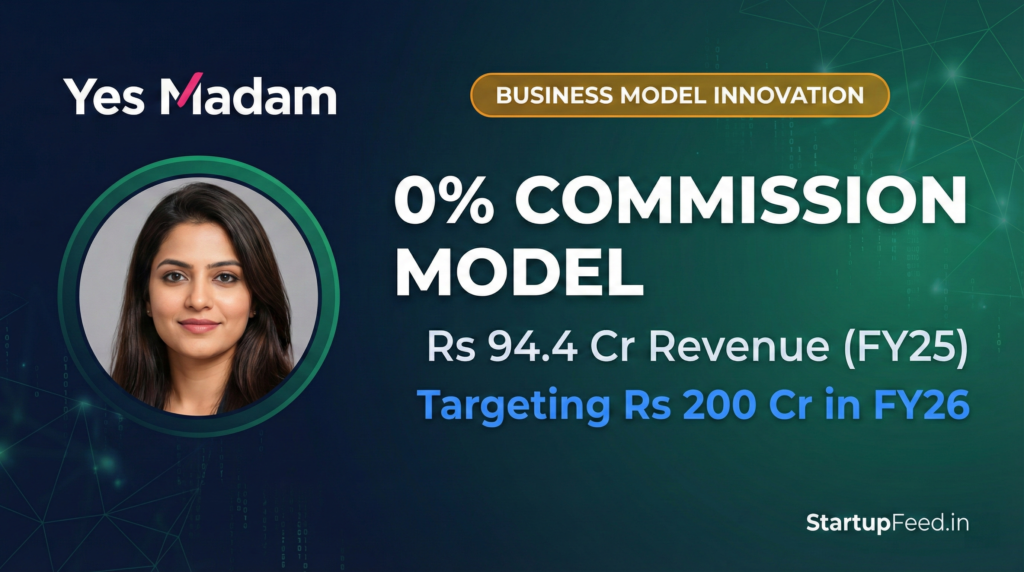
Yes Madam, the Noida-based bootstrapped home salon platform founded by brothers Mayank and Aditya Arya in 2016, has made a structural move that no platform-economy company of its scale has attempted in India: eliminating commissions entirely for its top-performing beauty professionals, giving them 100% of their service earnings. The decision — the culmination of a deliberate journey from 20% commission to 15% to 8% and now to 0% for top performers — is not charity. It is a business model reinvention funded by product margins and platform fees, and it appears to be working: the company posted Rs 94.4 Cr in FY25 revenue and is targeting Rs 200 Cr in FY26 while remaining bootstrapped.
Yes Madam’s 0% commission model is the most credible challenge yet to Urban Company’s commission-extraction playbook — and it is being built without venture capital, from a Noida base, by founders who started this business after their wives got skin burns from a botched at-home beauty service. If Yes Madam proves that quality, partner loyalty, and profitability can coexist at scale, every platform-economy company in India — from food delivery to home services — will be forced to answer an uncomfortable question: how much of their growth is built on the backs of underpaid gig workers?
StartupFeed Insight
| The math that makes this possible: Yes Madam earns on every booking through two non-commission streams: a nominal platform fee per booking, and product margins on its in-house mono-dose kits (facial sets, cleanup kits, wax strips) used during each service. Because Yes Madam manufactures and supplies these single-use kits directly to its partners — and partners are required to use them for every service — each booking generates product revenue regardless of the commission rate. The 0% commission for top performers is not a subsidy; it is a confidence bet that high-quality, loyal professionals generate more repeat bookings — and therefore more product margin — than revolving-door gig workers paying 20% commission. The winner nobody expected: • Yes Madam’s 80% customer repeat rate is the metric that unlocks this model — a partner doing 20 services a month for mostly returning customers generates more lifetime product revenue than a high-churn partner doing 30 services a month for first-timers at 20% commission • BWSSC-certified partners with advanced makeup and skincare skills unlock premium services (Rs 3,000+ facials, laser treatments, pre-bridal packages) — widening both the customer bill and Yes Madam’s product margin per booking The uncomfortable context: • In December 2024, Yes Madam faced significant reputational damage when it allegedly fired 100+ employees who reported stress in a company survey — a controversy that went viral with #BoycottYesMadam trending. The company claims it was a mental-health awareness campaign misread as actual layoffs. The incident raises questions about internal culture even as the partner-welfare narrative is being amplified publicly • The 0% commission applies to top performers only — the majority of Yes Madam’s 7,500+ active professionals still pay commissions; the model is an aspirational ceiling, not a baseline right Profitability math: EBITDA growing from Rs 0.15 Cr (FY23) to Rs 1.26 Cr (FY24) to Rs 2.56 Cr (FY25) — a 17x improvement in 2 years — while simultaneously cutting commissions from 20% to 0% for top performers proves the model’s unit economics hold. The product margin and platform fee substitution works. Our prediction: Yes Madam will raise its first institutional round (Series A) at Rs 600–900 Cr valuation before September 2026, using the 0% commission model as the lead investor narrative. If revenue hits Rs 180 Cr+ by March 2026, the company has the numbers to command a 5–6x revenue multiple and fund geographic expansion into South India and Northeast without sacrificing the bootstrapped culture that built its moat. |
From Skin Burns to a Rs 94 Cr Business — The Origin

In December 2016, Mayank and Aditya Arya — brothers from Amroha, UP, who had built careers as mariners — watched their spouses develop painful skin irritations after a botched at-home beauty service. The experience was not unusual; unmarked product bottles, dubious equipment, and professionals with no standardised training were endemic to India’s fragmented home salon market.
The brothers saw what they called an ‘unserved middle segment’ — urban, value-seeking customers priced out of premium salons but dissatisfied with local parlours that couldn’t guarantee hygiene, consistency, or accountability. They launched Yes Madam to solve the trust problem first, and figure out scale second. In 2019, Akanksha Vishnoi joined as co-founder and CMO, bringing growth and brand strategy to what had been an operations-first company.
The Covid-19 pandemic, which devastated most home service companies, became Yes Madam’s defining inflection point. The crisis forced the team to rebuild from scratch — introducing disposable mono-use product kits, strict sanitisation protocols, a convenience fee, and the first version of an in-house product line. These moves, taken out of necessity, became the architecture for the revenue model that now supports 0% commission.
How the 0% Commission Model Works — The Full Architecture
| Component | How It Works |
| Commission Tier 0% | Top performers (tracked via 3-4 KPIs) keep 100% of service earnings. No cuts on any booking from this tier. |
| Commission Journey | 20% (original) → 15% → 8% (July 2024) → 0% for top performers (April 2025 — ongoing) |
| Platform Fee | Nominal fee charged per booking — sustains tech infrastructure without dipping into partner wages |
| In-House Product Revenue | Partners are supplied mono-dose single-use kits (facials, cleanup, wax) manufactured in-house by Yes Madam — company earns product margin on every service regardless of commission rate |
| Performance KPIs | 3-4 metrics tracked (exact metrics undisclosed) — likely customer ratings, rebooking rate, hygiene compliance, and booking volume |
| Schedule Control | Partners in 0% tier retain full control over when and how much they work — no minimum booking quotas reported |
| Top Earner Potential | Rs 70,000/month — some partners crossing Rs 1 Lakh/month |
Financial Performance — The Numbers Behind the Model
| Metric | FY20 | FY23 | FY24 | FY25 |
| Revenue | Rs 13.44 Cr | Rs 28.33 Cr | Rs 45 Cr | Rs 94.4 Cr |
| EBITDA | — | Rs 0.15 Cr | Rs 1.26 Cr | Rs 2.56 Cr |
| Net Profit | Negative | Negative | Negative | Rs 1.83 Cr |
| Annual Bookings | — | 4.9 Lakh | — | ~14 Lakh (cum.) |
| Revenue Growth (2-yr CAGR) | — | 233% total jump FY23–FY25 | 80–100% YoY target | ||
| FY26 Target | Rs 200 Cr revenue (+112% YoY) | EBITDA +368% YoY projected | |||
Training, Safety & the RRR Philosophy
Yes Madam’s 0% commission model works only because the product it delivers is consistent enough to sustain an 80% customer repeat rate. That consistency comes from one upstream investment: mandatory 15-day training for every partner before their first booking, covering standard operating procedures, hygiene standards, and Beauty & Wellness Sector Skill Council (BWSSC) certification — a government-recognised industry credential.


Beyond technical skills, Yes Madam invests in personality development and advanced makeup and skincare training to help partners graduate to higher-margin services — the Rs 3,000+ facials and bridal packages that anchor the platform’s premium positioning. The company runs training centres across cities and maintains regular direct interactions between partners and founders, structured around what it calls its RRR philosophy: Rewards, Recognition, and Respect.
On safety — a critical differentiator in a category where professionals enter customers’ private homes — Yes Madam provides accident and safety coverage during active service duties, and uses transparent per-service itemised billing that separates product costs from service fees. The company was also among the first in the home services segment to implement tamper-proof packaging and mono-dose single-use product kits — a feature that emerged from post-Covid hygiene requirements but has since become a permanent brand differentiator.
How Yes Madam Stacks Up
| Feature | Yes Madam | Urban Company | Nykaa On The Go |
| Commission Model | 0% for top performers; tiered for others | ~20–25% (industry standard) | Commission-based |
| Funding Model | Bootstrapped (Rs 1.5 Cr Shark Tank, $181K angel) | VC-backed ($267 Mn+ raised) | Parent: Nykaa (listed, Rs 23,000 Cr market cap) |
| Training | 15-day mandatory + BWSSC + personality | Training via UC Academy | Basic onboarding |
| In-House Products | Yes — mono-dose kits (core revenue driver) | Partial | No |
| Repeat Rate | 80% | ~60%+ (estimated) | Not disclosed |
| Safety Coverage | Yes — accident coverage during active duty | Yes (partial) | Limited |
| Top Partner Earnings | Rs 70K–1 Lakh+/month (at 0% commission) | Rs 30–60K/month (after commissions) | Not disclosed |
What the Founders Say
|
|
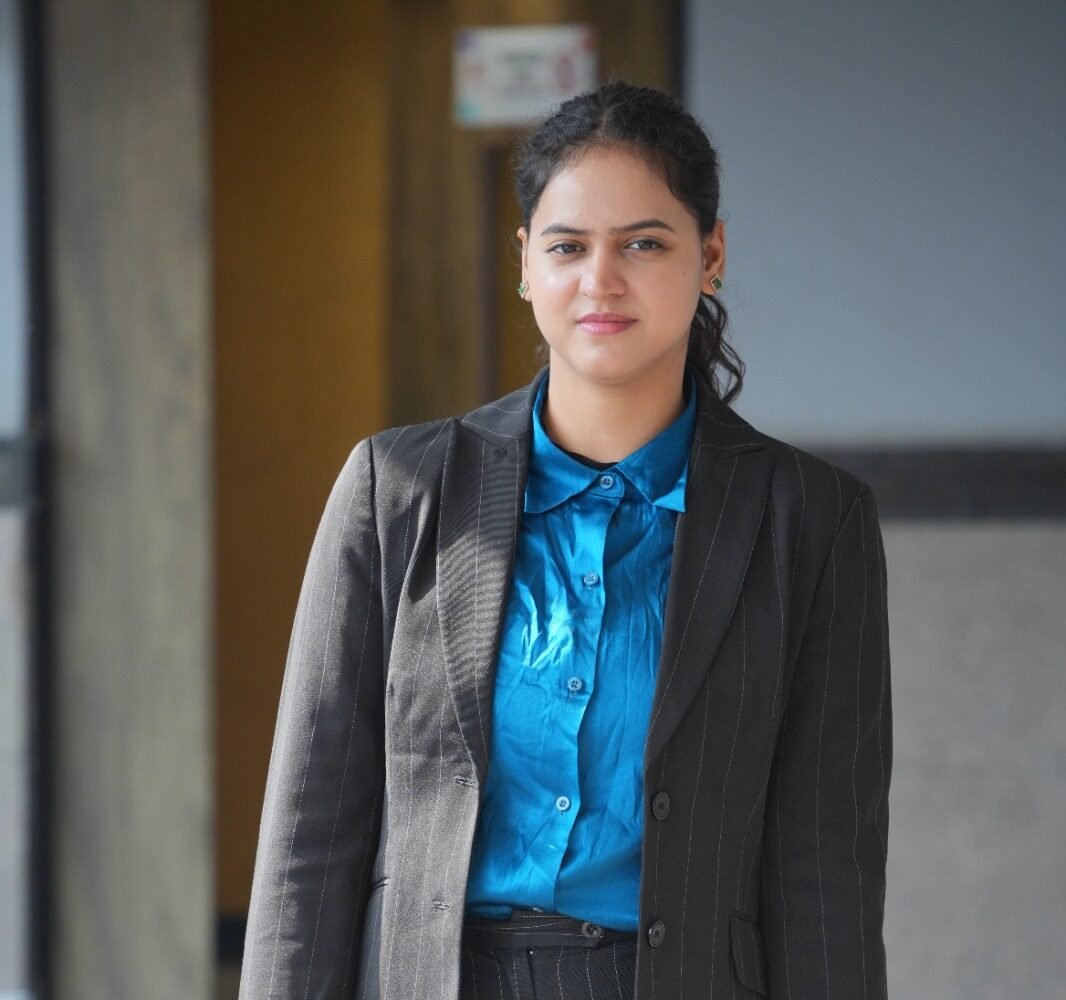
Vishnoi’s framing — ‘true entrepreneurship‘ — is deliberate. Yes Madam is not positioning its partners as gig workers with upgraded benefits; it is positioning them as independent business owners who happen to use Yes Madam’s platform, brand, products, and customer acquisition engine. That distinction matters because it changes the retention calculus: an entrepreneur loyal to a platform is stickier than a gig worker optimising for the highest commission rate.
Company Snapshot
| Parameter | Details |
| Founded | December 2016 — Noida, Uttar Pradesh |
| Founders | Mayank Arya (CEO), Aditya Arya (Co-founder) — mariners-turned-entrepreneurs; Akanksha Vishnoi (CMO, joined 2019) |
| Funding | Rs 1.5 Cr (Shark Tank India S3, Feb 2024 — Aman Gupta, Vineeta Singh, Peyush Bansal, Ritesh Agarwal) + $181K angel round | Bootstrapped beyond that |
| Revenue FY25 | Rs 94.4 Cr | +233% jump from Rs 28.33 Cr in FY23 |
| Revenue Target FY26 | Rs 200 Cr (+112% YoY) | EBITDA growth +368% projected |
| Profitability | Net profit: Rs 1.83 Cr (FY25) — first profitable year | EBITDA FY25: Rs 2.56 Cr |
| Partners / Professionals | 7,500+ active | 12,000+ total | 60+ cities |
| Customers | ~10.71 Lakh (1.07 Mn) active | 80% repeat rate | 2.4 Lakh bookings/month |
| Employees | 193 (as of August 2025, per Tracxn) |
| Competitors | Urban Company (dominant, VC-backed), Nykaa On The Go, MakeO, Belita, Avataar Skincare |
| Controversy | December 2024: Viral backlash (#BoycottYesMadam) after 100+ employees reportedly fired post ‘stress survey’ — company later clarified it was a mental-health awareness campaign |
What’s Next
Yes Madam’s path to Rs 200 Cr in FY26 runs through two parallel expansions: geographic and categorical. On geography, the company is shifting attention south and east — regions with rising disposable incomes and beauty and wellness spending that is moving from indulgence to routine. The Tier II growth engine — cities like Jaipur, Lucknow, Bhopal, and Nagpur — is already running, and the 60+ city network will likely cross 100 cities by FY27.
Categorically, Yes Madam is no longer a waxing and facial platform. Laser hair removal, high-end facials, pre-bridal packages, men’s grooming, and tech-powered offline experience centres are the new revenue frontiers — all of which carry higher average order values and, critically, higher in-house product margins. The company is also setting up tech-powered salons (offline touchpoints) as brand anchors in key cities — a defensive move against Urban Company’s own experimentation with hybrid physical-digital service models.
The bigger question is whether Yes Madam’s partner welfare model can survive an institutional funding round. Venture capital and 0% commission coexist only if investors believe the platform fee and product margin substitution generates enough return. Yes Madam’s FY25 numbers make the case — but a VC board optimising for fast growth may eventually push for commission reintroduction. The founders’ track record of resisting that pressure — even while bootstrapped — is the real moat. How long that holds post-Series A will determine whether this is a business model innovation or a phase.
Liked this story? Follow StartupFeed on Google so our reporting reaches you first.