Summary:
- San Francisco startup Marathon Fusion claims mercury can be turned into gold using nuclear fusion.
- Process involves neutron-driven transmutation of mercury-198 into gold-197.
- Company says it could reshape the economics of fusion energy and deliver new industrial value.
From Alchemy To Atomic Reality
For centuries, alchemists dreamed of turning base metals into gold. Today, San Francisco-based startup Marathon Fusion says it may have found a scientific way to achieve what was once considered pure fantasy.
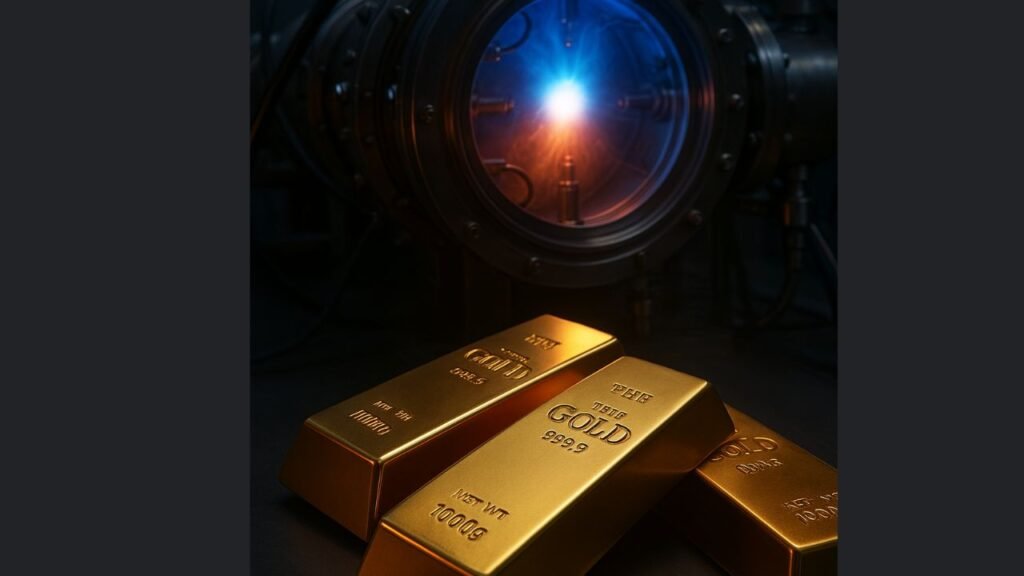
The company claims that by using neutron particles inside a fusion reactor, mercury can be transformed into mercury-197, which then decays into gold-197 — the only stable form of gold. In an unreviewed academic paper, the startup argued that this “fusion-driven transmutation” could convert nuclear fusion from being just an energy source into a multi-product industrial platform.
Gold That Needs Time To Mature
While the concept sounds futuristic, there’s a catch. Adam Rutkowski, CTO of Marathon Fusion, told the Financial Times that any gold produced through this process would need to be stored for 14 to 18 years before it could be considered entirely safe.
The company believes that because of gold’s massive global demand, lab-grown supply would not crash prices. Interestingly, the same process could also be applied to produce other precious metals, potentially opening up new industrial opportunities.



Dan Brunner, former CTO of Bill Gates-backed Commonwealth Fusion Systems and now an adviser to Marathon Fusion, added:
“Gold is in that sweet spot. From a scientific perspective, it all hangs together. The challenge is turning it into a practical engineered system.”
Fusion’s Golden Value Proposition
Marathon Fusion isn’t just chasing gold for novelty. By linking fusion energy with the production of high-value byproducts, the startup is trying to reimagine the economics of fusion power. If successful, this approach could accelerate the adoption of fusion technology by making it commercially viable sooner.
The company summed up its vision in its paper:
“The goal of classical alchemy is now achievable through practical engineered solutions.”
If validated, this breakthrough could not only reshape the global energy sector but also redefine how we view the role of nuclear fusion in the economy — a power source and a gold mine rolled into one.
Liked this story? Follow StartupFeed on Google so our reporting reaches you first.